
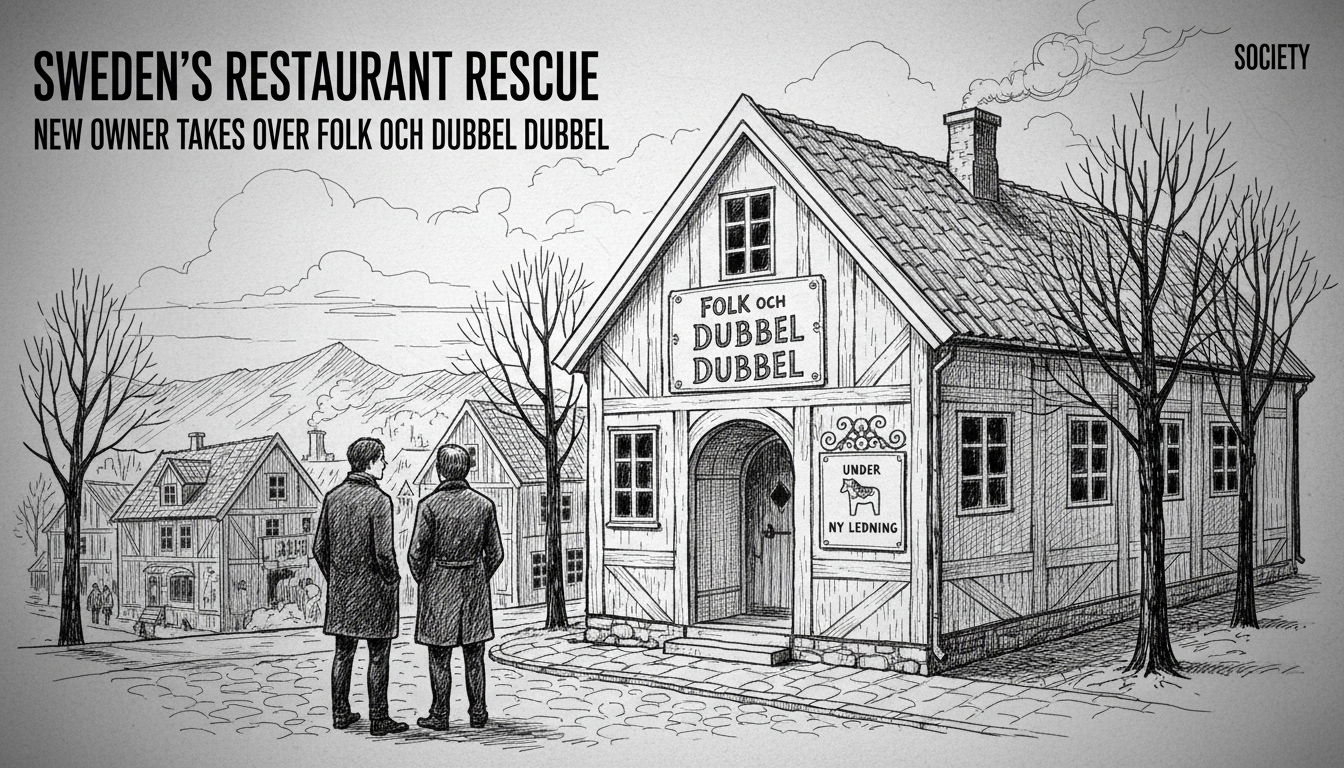
Sweden's restaurant industry faces a critical test as veteran operator Daniel Klamborn acquires the struggling Folk och Dubbel dubbel group. The move follows years of financial difficulty for the once-expansive chain, which has shrunk from around ten locations to just two remaining restaurants in Gothenburg. Klamborn enters this challenging arena fresh from a contentious and public dispute over the operation of another prominent Gothenburg venue, Oceanen. His acquisition signals a potential turning point for two beleaguered brands in a market defined by fierce competition and shifting consumer demands.
A Decade of Decline Meets a New Strategy
The story of Folk och Dubbel dubbel is a familiar one in the Nordic hospitality sector. Founded with ambition, the group expanded rapidly across Gothenburg, capitalizing on a period of strong consumer spending. However, the combined pressures of rising operational costs, increased competition from new dining concepts, and changing post-pandemic habits created a perfect storm. The group's portfolio contracted severely, a common trend for mid-market chains that failed to differentiate themselves. Today, only the flagship Folk and Dubbel dubbel restaurants remain, representing both the group's legacy and its greatest challenge.
Daniel Klamborn's decision to step in is not based on sentimentality. It is a calculated bet on underlying value. "These are established names with prime locations and a loyal, if diminished, customer base," said Klamborn in an exclusive statement to Nordics Today. "The foundation is solid. The task now is to rebuild the concept, refine the offering, and restore profitability. It's about operational excellence and clear brand identity." Industry analysts note that such acquisitions often occur at a low point in the market cycle, allowing new owners to purchase assets at a favorable entry price before implementing a turnaround plan.
The Ghost of Oceanen: Lessons from a Public Battle
Klamborn does not arrive with a blank slate. His recent and very public conflict over the management and permits for Oceanen, a well-known cultural venue and restaurant in Gothenburg, provides crucial context. That dispute, which involved local authorities, community groups, and other stakeholders, highlighted the complex regulatory and community relations landscape facing restaurant owners. Permits for outdoor seating, alcohol licenses, and noise regulations are constant battlegrounds in dense urban areas like Gothenburg.
"The Oceanen situation was a crash course in stakeholder management," admitted a source close to Klamborn, who spoke on condition of anonymity. "It taught hard lessons about navigating local politics, community expectations, and municipal bureaucracy. Anyone taking over established venues needs that experience." This background suggests Klamborn is entering the Folk och Dubbel dubbel venture with eyes wide open to the non-culinary hurdles. He will need to apply those lessons to stabilize and grow the businesses without sparking similar controversies.
The Gothenburg Gauntlet: Competition and Consumer Tastes
Gothenburg's restaurant scene is both vibrant and brutally competitive. New establishments open constantly, particularly in trendy districts, while consumers have become more value-conscious and experience-driven. The mid-range, all-day dining segment that Folk och Dubbel dubbel occupies is especially tough. Diners choose between fast-casual convenience, high-end culinary experiences, and the comfort of reliable chains.
"The market has bifurcated," explained Lena Forsberg, a hospitality industry analyst based in Stockholm. "Success is found either in exceptional gastronomy with high price points or in hyper-efficient, concept-driven casual dining. The middle ground is shrinking. For Folk and Dubbel dubbel to survive, they must decisively move into one of these camps. A simple refresh of the old model will not be enough." She points to successful turnarounds in other Swedish cities, where historic venues were reinvented with updated menus, targeted branding, and improved customer service protocols, often involving strategic reinvestment from new owners.
The Road to Recovery: Menu, Margins, and Market Position
The immediate focus for Klamborn will be operational. This involves scrutinizing supply chains to manage soaring food costs, which have impacted margins across the industry. Menu engineering will be critical—streamlining offerings to reduce waste and highlight profitable, popular dishes. Staff training and retention are also key pain points in a sector struggling with labor shortages. Creating a stable and motivated team can significantly impact service quality and, ultimately, customer retention.
Brand positioning is the parallel challenge. What do Folk and Dubbel dubbel stand for in 2024? Klamborn must define this clearly. Potential paths include leaning into local provenance, emphasizing sustainable practices, or creating unique event-driven dining experiences that cannot be replicated at home. The physical spaces themselves may also require renovation to attract a contemporary clientele. This process requires capital, and Klamborn's ability to secure and wisely deploy investment will be a major factor in the venture's success or failure.
A Bellwether for Sweden's Broader Hospitality Industry
This acquisition is more than a local business story. It serves as a microcosm for the Swedish restaurant industry's current state. Many groups that over-expanded during the 2010s are now consolidating. Entrepreneurial individuals and investment groups are stepping in to pick up the pieces, betting on their ability to manage better. The outcome of Klamborn's effort will be closely watched by other operators in Gothenburg, Malmö, and Stockholm.
Success could inspire similar rescue missions and inject confidence into the market. Failure, however, would reinforce the narrative that certain segments of the market are no longer viable, potentially leading to further consolidation and loss of familiar venues. The stakes extend beyond two restaurants to the character of Sweden's urban dining culture. Can established names adapt, or will they be entirely replaced by new concepts?
Daniel Klamborn now carries that question into the kitchens and dining rooms of Folk and Dubbel dubbel. His journey from a fraught dispute at Oceanen to the helm of these struggling institutions encapsulates the modern reality of the restaurant business. It is a blend of finance, logistics, public relations, and, ultimately, a deep understanding of what makes people choose to spend their time and money in one place over another. The revival project begins now, and its progress will offer a definitive case study on resilience in Sweden's evolving culinary landscape.