
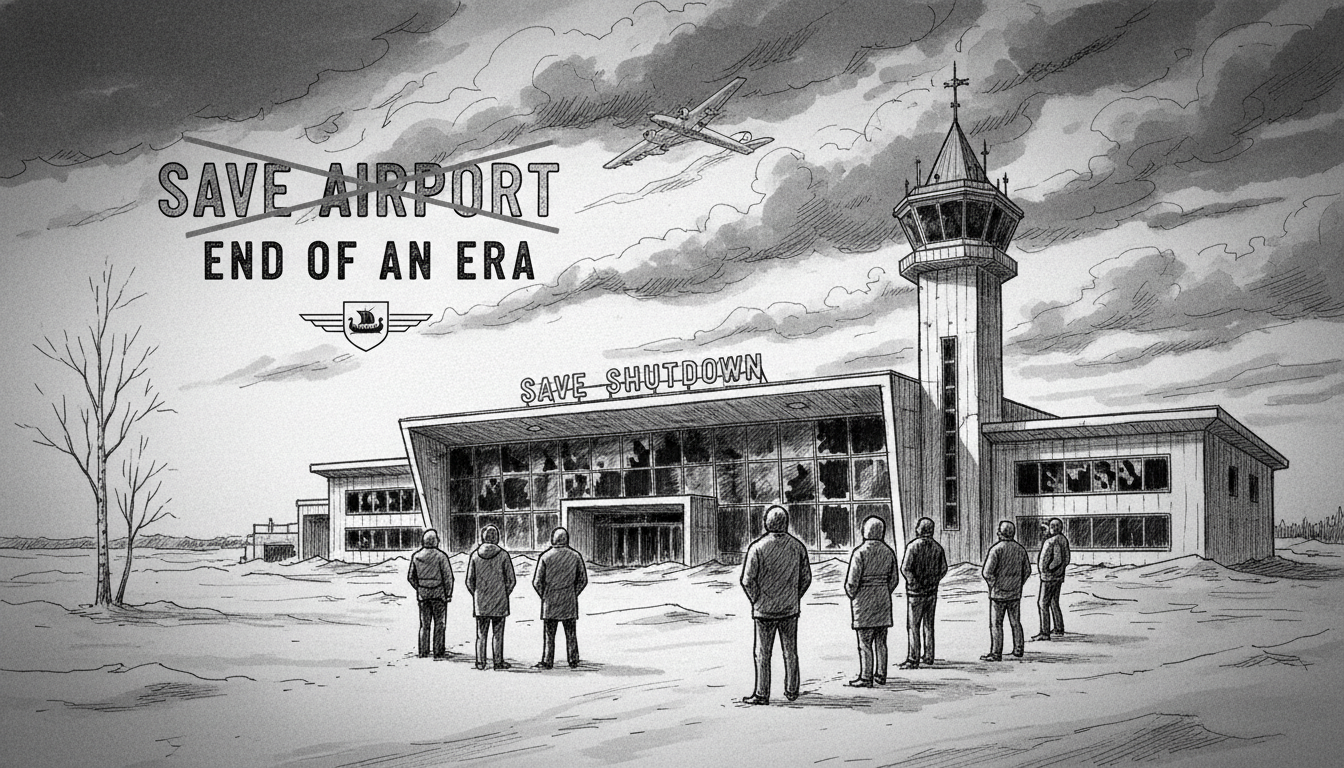
Sweden's Save Airport will lose its air traffic control services at year's end, marking the final chapter for general aviation at the historic Gothenburg site. The decision by landowner Castellum to redevelop the area into a business park closes a runway that once buzzed with over 800,000 passengers annually. For local pilots and aviation enthusiasts, the news feels like losing a piece of the city's soul.
"The most important thing for us is that the socially vital functions, in the form of blue light helicopters, will remain," said Örjan Rystedt, regional CEO for Castellum West. His statement highlights the compromise. Emergency medical and police helicopters will keep their base. But the vibrant community of private flyers, flight schools, and maintenance crews must find new homes. The silence settling over the tarmac tells a story of urban progress clashing with niche cultural traditions.
From Budget Flights to Business Parks
Save Airport, known officially as Gothenburg City Airport, sits 15 kilometers northwest of Gothenburg's center. For years, it was the city's scrappy, low-cost alternative to the major Landvetter Airport. Travelers seeking cheap European getaways passed through its modest terminal. That commercial era ended in 2015. Since then, the airport carved out a new identity in general aviation. It became a hub for private plane owners, pilot training, and aerial surveillance for the coast guard and fire service.
Castellum's vision for the land is purely terrestrial. The property giant plans a modern business park focused on logistics and technology. They promise this shift will create thousands of new jobs. It's a classic tale of urban development. Valuable land near a growing city is repurposed for what economists call 'higher value' use. The roar of small aircraft is replaced by the hum of warehouses and innovation labs. This trend is visible across Sweden, where regional airports face pressure from both economic forces and environmental concerns.
The Human Cost of Progress
The closure's impact is deeply personal for the tight-knit aviation community. I spoke with Erik Lundström, a flight instructor who has operated at Save for twelve years. "This isn't just a workplace; it's a community," he told me, looking out at the runway. "We've taught hundreds of people to fly here. Students get their first taste of freedom in these skies. That tradition ends now." His school must relocate, a costly and complex process. For private owners, storing or moving small aircraft becomes a sudden, expensive headache.
This loss extends beyond practicalities. Save Airport was part of Gothenburg's cultural fabric. Locals knew they could watch small planes take off on a summer evening. Aviation clubs hosted open days, introducing children to engineering and flight. The airport's control tower was a local landmark. Its closure severs a tangible connection to the age of aviation, replacing it with the more anonymous face of a corporate park. While blue-light helicopters remain, their operational presence is different. They don't foster public engagement or hobbyist passion.
A National Trend in Swedish Transport
Analysts see Save's fate as part of a broader Swedish pattern. "We are consolidating air traffic into larger, more efficient hubs," explains transport analyst Karin Moberg. "Smaller airports, especially those near major cities, are under immense pressure. Their land is incredibly valuable. The economic argument for logistics centers or housing often outweighs that for a niche aviation field." She notes this isn't unique to Sweden. Similar shifts happen across Europe. But it changes the accessibility of flying. General aviation moves further from city centers, becoming more exclusive.
Environmental considerations also play a role, though less explicitly in this case. Concentrating flight operations can, in theory, manage emissions more effectively. The redevelopment plans for Save likely include sustainability benchmarks standard for new Swedish business parks. But for supporters of small airports, this centralization argument rings hollow. They argue private aviation's carbon footprint is minimal compared to commercial traffic, which continues unabated at Landvetter.
What Remains on the Runway
As the final months count down, activity at Save is winding down. The air traffic control staff face relocation or redundancy. The distinct rhythm of radio chatter and flight coordination will cease. Castellum assures that the transition for emergency services will be seamless. Their helicopters are critical for rapid response across the West Coast region. This guarantee was likely a non-negotiable condition for local authorities approving the closure.
The future site, named Save Business Park, aims to be a cornerstone of the Gothenburg region's economy. Castellum's promotional material talks of innovation, green logistics, and digital infrastructure. It's a vision of Sweden's economic future: tech-driven, connected, and efficient. The old runway will likely become a vast foundation for warehouses or data centers. It's a pragmatic use of space, yet undeniably utilitarian.
The Silent Sky Over Gothenburg
For the average Gothenburger, life will continue mostly unchanged. Most residents haven't used Save Airport since its commercial flights stopped nearly a decade ago. But the city loses a layer of its character. The sight of a small Cessna climbing over the northern suburbs will become a memory. The specific soundscape of the area will alter. Urban development rarely pauses for nostalgia. Yet, these changes shape a city's identity in subtle ways.
Sweden often excels at managing transition, blending progress with respect for function. Preserving the blue-light helicopter base is a testament to that. It shows a commitment to vital public services even amid major change. Yet, one wonders about the space left for non-essential, passion-driven pursuits in modern urban planning. Hobbies like private flying require infrastructure. When that infrastructure vanishes, the hobby itself becomes harder to sustain. It risks becoming the domain of only the wealthy who can afford to base planes at distant, remaining airfields.
The story of Save Airport is more than a real estate decision. It's a microcosm of modern Swedish society balancing economic growth, practical needs, and cultural heritage. The runway may soon be gone, but its history as a gateway for budget travelers and a playground for aspiring pilots will linger in local lore. The final question is what we, as a society, choose to keep and what we let fade away in the name of progress. As Gothenburg looks ahead, the silence from Save will be a quiet reminder of the choices made.