
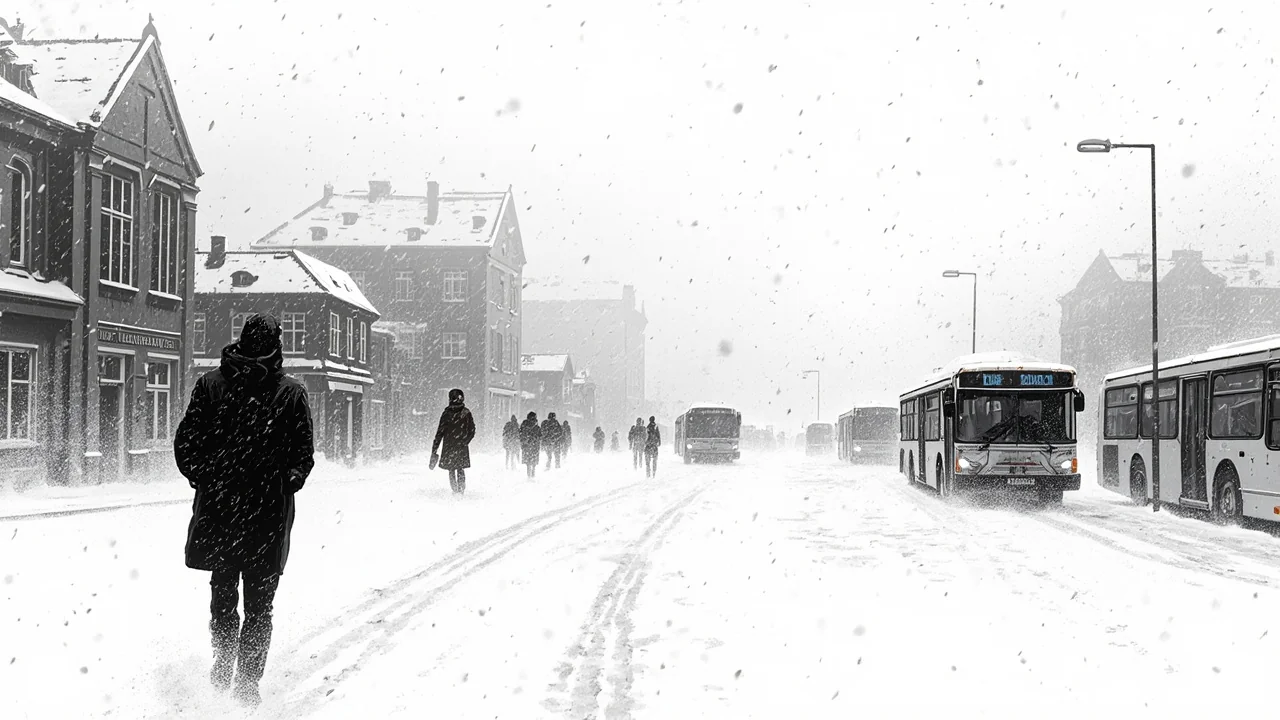
Sweden's second-largest city faces a starkly uneven recovery four days after a major snowstorm crippled its public transport network. While operator Västtrafik reports approximately 90 percent of buses are operational, entire districts like Gothenburg's Johanneberg remain completely cut off. This disparity exposes critical flaws in municipal crisis response and snow clearance prioritization, leaving thousands of residents stranded. The situation highlights a growing tension between regional transport authorities and city street maintenance departments, a divide with significant political ramifications.
A Tale of Two Cities Within One
The official statistics from Västtrafik present a picture of near-normal service. In many parts of Gothenburg, buses have been running as usual for days. However, the aggregate number masks a harsh reality for residents in specific neighborhoods. Areas such as Johanneberg have seen zero bus movement since the storm began. David Erixon, press chief for bus contractor Nobina, stated the reason is clear. "It's about snow and ice clearance lagging behind there," Erixon explained. "I believe everyone understands that we cannot risk the safety of our passengers or our staff." This safety-first stance from operators leaves the onus squarely on the City of Gothenburg's Street and Parks Department. Their capacity, or lack thereof, to clear secondary roads and bus stops dictates mobility for a significant portion of the population.
The Logistics of a Winter Breakdown
The crisis operates on a simple yet devastating logistical chain. Primary arterial roads, essential for emergency services and major traffic flow, receive immediate attention from city crews. Secondary streets, bus turnarounds, and pedestrian pathways to stops are deprioritized. A bus cannot safely navigate a narrow, snow-clogged residential street, nor can it pick up passengers from a stop buried under a meter of ploughed snow. This creates islands of immobility. The problem is compounded by the city's topography; hilly districts pose greater challenges for both clearing and driving, leading to longer recovery times. The Swedish Meteorological and Hydrological Institute (SMHI) had issued ample warning for this storm, raising questions about pre-emptive resource deployment. Municipal preparedness plans, often debated in the Gothenburg City Hall, are now being stress-tested in real time with visible public consequences.
Political Accountability and Public Trust
This transport failure quickly escalates from an operational issue to a political one. Opposition politicians on the Gothenburg City Council are already demanding explanations for the unequal clearance efforts. They are questioning budget allocations for winter maintenance and staffing levels within the Street and Parks Department. The governing coalition, led by the Moderates, must defend its resource distribution strategy. At the regional level, the Västra Götaland Regional Council, which oversees Västtrafik, faces criticism for communication. Announcing a 90 percent operational rate while knowing entire neighborhoods are isolated can be perceived as misleading, eroding public trust. This incident will likely fuel ongoing debates about centralizing control over crisis management, potentially moving some municipal responsibilities to the regional or even national level for more coordinated responses.
Historical Context of Swedish Winter Resilience
Sweden prides itself on a national identity built around handling harsh winters efficiently. This recent disruption in a major urban center challenges that self-image. Historically, winter preparedness was a cornerstone of municipal planning. However, urban densification, increased traffic volumes, and perhaps a degree of complacency have strained the old models. Climate change adds a layer of complexity, producing more frequent and intense winter weather events that existing systems struggle to manage. Analysts point to a gradual erosion of maintenance budgets over decades, favoring new construction over the upkeep of existing infrastructure. The current paralysis in parts of Gothenburg may be a symptom of this long-term trend, a warning that the nation's winter readiness requires reinvestment and modernization.
The Human Cost of Inaccessible Stops
Beyond the politics and logistics, the crisis has a profound human impact. For residents in affected districts without access to a car, daily life has ground to a halt. This includes essential workers needing to reach hospitals, elderly citizens unable to fetch groceries, and students missing critical education. The social contract of reliable public transport, a fundamental expectation in Swedish society, is broken for these communities. It creates a two-tiered city: one that functions and one that waits. Local businesses in isolated areas also suffer from a lack of foot traffic and absent employees. The economic ripple effects, though difficult to quantify immediately, will be felt for weeks. This event demonstrates how vulnerable modern urban life remains to elemental forces when coordinated public systems fail.
A System Under Microscope and Future Reforms
The coming weeks will see intense scrutiny from media and auditors. The City of Gothenburg will be required to publish a detailed review of its response timeline and decision-making process. Key questions will focus on why certain districts were deprioritized and whether contractor agreements for snow removal are fit for purpose. At the Riksdag level in Stockholm, MPs from the region may push for inquiries into national guidelines for municipal winter preparedness. The Swedish government could face pressure to establish stronger minimum service standards for public transport during crises, potentially tying infrastructure grants to compliance. This local disruption has all the ingredients to spark a national policy conversation about resilience, reminding citizens that efficient governance is tested not in fair weather, but in a storm.
The Road Ahead for Gothenburg's Commuters
Immediate resolution depends on clear skies and relentless work from ground crews. The long-term solution, however, is political and structural. Gothenburg must re-evaluate its winter maintenance maps, ensuring bus route accessibility is treated as critical infrastructure. Better real-time communication between Västtrafik's control room and the city's snowplough dispatchers is essential. Ultimately, this episode serves as a case study for all major Swedish cities. It exposes the fragility of interconnected systems when one link fails. For the residents of Johanneberg and other affected districts, the metric that matters is not the percentage of buses moving in the county, but the number of buses stopping on their street. As Sweden continues to urbanize, guaranteeing equitable access during crises will define the credibility of its public institutions. The snow will melt, but the demand for accountability and improved systems will remain.