
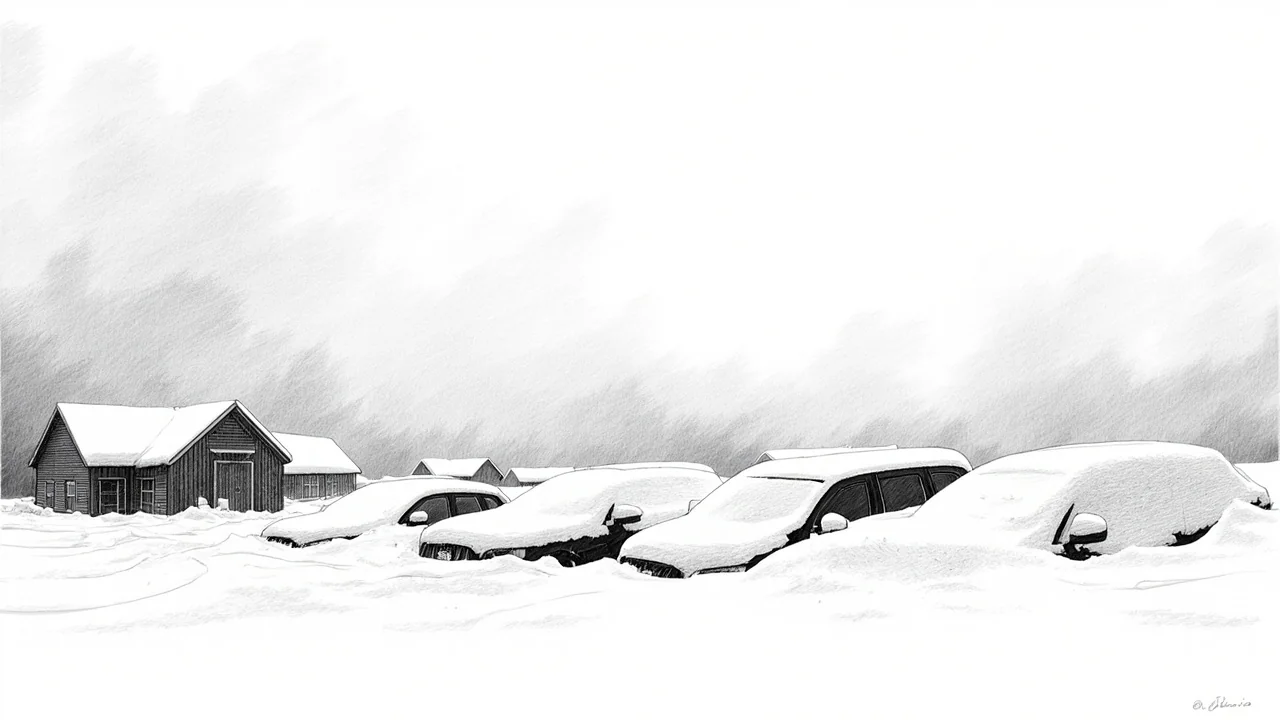
Sweden's recent heavy snowfall has revealed a surprising urban problem. Cars left unmoved for days are creating major obstacles for snow-clearing crews. This issue is causing significant delays and increasing costs across Stockholm and other cities.
Gustaf Grut, a team leader for contractor Peab, describes the intense effort. His crews have worked 13-hour shifts non-stop. "When it snows this much, we have long shifts and use all available resources," Grut said. About 50 snowplows under his command have operated around the clock. They are responsible only for the central Norrmalm district and parts of Södermalm.
Peab is one of two primary contractors for Stockholm's snow removal. The system relies on residents following parking rules during winter weather. Many are not complying.
The Core of the Problem
The issue is not just about snowfall volume. It is about urban behavior. Swedish law and local parking regulations require vehicle owners to move their cars to facilitate plowing after a heavy snow event. Clear signs are posted in residential areas. Notices are often published in local media and apps.
Despite this, a substantial number of drivers ignore the warnings. They leave their vehicles parked on the street for days. This forces plow operators to navigate around them. It leaves packed snow and ice underneath and around the cars. These patches then turn into dangerous, slippery mounds that are difficult to remove later.
"We can only clear where we have access," explained a Peab operator who asked not to be named. "When a car sits for a week, that space becomes a permanent ice patch. It's a safety hazard for pedestrians and cyclists."
The Ripple Effect on City Operations
The impact extends beyond a single blocked street. It creates a chain reaction of inefficiency. Plow routes are meticulously planned for maximum speed and fuel efficiency. A single blocked street can force a driver to double back or skip a section entirely. This wastes time and diesel.
Delays in primary road clearing then push back schedules for sidewalk plowing and bicycle path maintenance. Pedestrian safety is compromised. Public transport, especially buses, faces difficulties navigating narrowed streets. Emergency service response times can also be affected if access routes are not properly cleared.
Financially, the cost is substantial. Overtime pay for operators like Grut's team spikes. Fuel consumption increases due to inefficient routes. Contractors may face penalties from municipalities for not meeting service level agreements, even when the cause is citizen non-compliance.
A Cultural or Communication Failure?
Experts point to several potential causes. One is a simple lack of awareness, particularly among new residents or those unfamiliar with Swedish winter norms. Another is the rise of multi-car households in dense urban areas, where garage space is limited and street parking is the only option.
Some suggest it is a form of passive resistance to strict municipal rules. Others believe the communication from authorities is insufficient or not reaching all demographics. Digital alerts may not catch everyone, especially older residents.
"It's a classic case of the tragedy of the commons," said Lars Bengtsson, an urban planning researcher at KTH Royal Institute of Technology. "The street is a shared resource. An individual's decision to not move their car seems small. But when hundreds make the same choice, the shared system breaks down. The cost and risk are socialized, while the minor convenience is kept private."
He notes that Swedish society typically functions on high levels of civic cooperation. This snow-clearing paradox highlights a crack in that model.
Enforcement and Potential Solutions
Enforcement is a challenge. Traffic wardens can issue fines for violating snow removal parking bans. However, their resources are limited. They cannot be everywhere after every snowfall. The fine, while a deterrent, often feels like an after-the-fact penalty that doesn't solve the immediate clearing problem.
Some Swedish municipalities have experimented with stricter measures. These include immediate towing of vehicles that obstruct plows, a far more costly consequence for the owner. This is controversial but effective.
Technology offers other paths. Several apps and SMS alert services already exist. Enhancing these with targeted, location-based push notifications could help. Integrating snow-clearing schedules with popular navigation apps like Google Maps or Waze could provide direct alerts to drivers' phones.
A more radical solution involves urban design. Reducing the amount of on-street parking in favor of dedicated, off-street residential parking lots that are easier to manage. This is a long-term, costly infrastructure project.
The Human Element of the Cleanup
Behind the policy discussion are the workers. Gustaf Grut's team represents hundreds of operators who work through the night in difficult conditions. Their job is physically demanding and requires intense concentration. Dealing with blocked roads adds frustration and risk.
"You're tired, it's dark and cold, and you just want to clear a clean path," said one veteran plow driver. "Then you turn a corner and see a line of cars covered in a foot of snow, clearly not moved in days. It's discouraging. It means all our careful planning hits a wall."
Their work is crucial for the city's basic functionality. When their efforts are hampered, the whole city feels it. Businesses suffer from lower foot traffic. Delivery times slow down. Daily commutes become more stressful and dangerous.
Looking Ahead to Future Winters
Climate models suggest Sweden may experience more volatile winter weather. Periods of intense snowfall could become more common. This makes solving the parked car problem more urgent. A system that strains under current conditions may fail under increased pressure.
The solution likely requires a multi-pronged approach. Clearer, more aggressive communication is needed. Targeted enforcement for repeat offenders might change behavior. Technological integration can make compliance easier. Ultimately, it requires a renewed social contract between residents and the city.
Will Swedes, known for their consensus and rule-following, adapt their habits for the common good? Or will the sight of snow-covered cars, immobile for weeks, become a permanent feature of the urban winter landscape? The answer will determine how smoothly Sweden's cities function during the coldest months. It is a test of civic responsibility, one plow route at a time.