
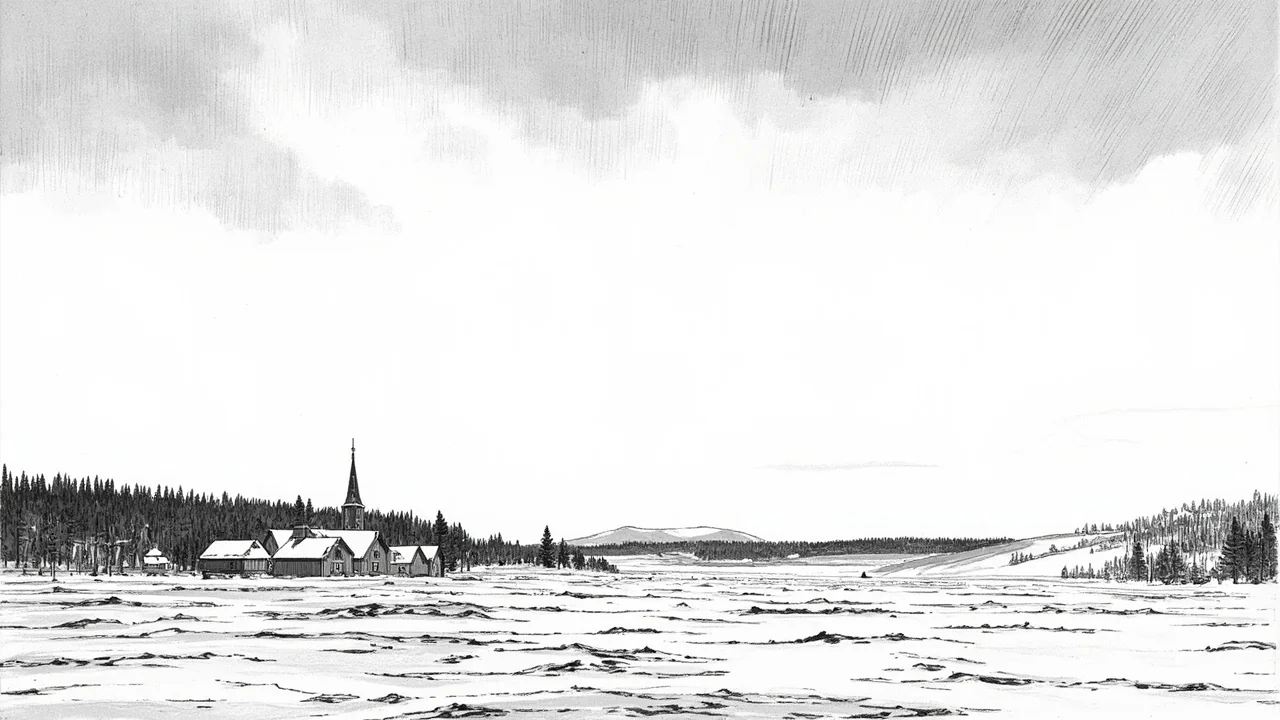
Sweden's winter landscape is behaving backward. Southern coastal counties are buried under unprecedented snow, while northern ski resorts stare at brown ground. This meteorological flip has stranded towns, canceled events, and left climate experts tracking a worrying pattern. Västernorrland County has endured three major snow cannons in rapid succession, following devastating storms. Yet Umeå, 400 kilometers north, celebrated a snowless Christmas Eve. The explanation lies in a capricious dance of wind and water.
A Winter Upside Down
In Härnösand, Västernorrland, municipal snowplows work around the clock. Sidewalks vanish overnight under fresh, heavy layers. "We've had three major snow events in as many weeks," says local resident Elin Mårtensson, shoveling her driveway for the third time this morning. "It's relentless. My brother in Umeå sent a photo of his kids on bicycles on Christmas Day. We're living in different countries." This contrast defines Sweden's current winter. The snow cannons—intense, localized bands of heavy snowfall—are consistently targeting regions like Gävleborg and Västernorrland, not the traditional snowbelt of inner Norrland.
Meteorologists point to wind direction as the primary culprit. "In the current setup, winds are pulling inland over Västernorrland," explains one weather expert. The longer cold air travels over the open, unfrozen Baltic Sea, the more moisture it absorbs. This creates the perfect conditions for a snow cannon when that laden air hits the coast. The direction determines the target. Northeasterly winds batter Gävleborg and the Skellefteå area. Westerly flows, like now, pummel Västernorrland.
The Science of the Missing Snow
Why is the far north missing out? A persistent high-pressure system has settled over Norrbotten and Västerbotten. High pressure means stable, sinking air, which inhibits cloud and snow formation. Meanwhile, the Gulf of Bothnia is beginning to freeze. "As the bay ices over, there's a smaller area of open water to generate moisture," says Sverker Hellström, a climate researcher. The Baltic Sea further south remains largely open, fueling the southern snow machines. It's a simple, brutal formula: open water plus cold air plus specific wind direction equals a community buried overnight.
This isn't just an inconvenience. It's a logistical and economic headache. Storm Johannes and Storm Anna left communities in Västernorrland recovering from landslides and flooding. The repeated snow dumps strain municipal budgets and weary emergency services. Roads are treacherous. In contrast, event organizers in Umeå are growing anxious. The prestigious SM Week (SM-veckan) national sports championships and a Rally World Cup event are scheduled soon. Both require reliable snow cover.
Cultural Calendar on Thin Ice
The lack of snow threatens a core part of Swedish winter culture. "The anticipation for SM Week is huge here," says Lars Bengtsson, a sports enthusiast in Umeå. "It's a festival of winter sports. To have it here, in the heart of the north, and worry about snow is surreal." Organizers are reportedly considering contingency plans, including artificial snow where possible. But for cross-country skiing or biathlon events, natural, extensive snow cover is ideal. The rally event also needs packed snow and ice on its forest tracks. The region's identity is intertwined with reliable, deep winter snow. Its absence feels fundamentally wrong to locals.
Back in snow-heavy Härnösand, the mood is one of exhaustion. While picturesque, the constant snow removal is a burden. School commutes become complex puzzles. Elderly residents feel trapped at home. The snow creates a beautiful, silent world but also one of isolation and increased physical strain. This split winter reality—too much here, too little there—highlights Sweden's geographic vulnerability to shifting weather patterns.
A Glimpse of Winters to Come?
Climate researchers are careful about linking single seasons to long-term change. However, the pattern aligns with broader projections. A warmer climate can lead to more volatile precipitation and alter established storm tracks. Warmer sea surfaces can also intensify snowfall events when conditions are right. "What we see this winter is a pronounced example of how natural variability can create extreme geographical contrasts," Hellström notes. The question on many minds is whether this is a one-off bizarre season or a sign of a new, less predictable normal.
For businesses that depend on a stable winter, the uncertainty is troubling. Southern infrastructure, built for less snow, is overwhelmed. Northern tourism, built on guaranteed snow, is left waiting. The Swedish preference for lagom—just the right amount—has been completely upended by nature. As one Västernorrland municipal worker put it, "We'd gladly send some south if we could. We have plenty to share."
The coming weeks will be telling. Will the high pressure break and finally deliver snow to the north? Will the southern coast get a reprieve? For now, Sweden remains a nation divided by winter, waiting to see which half will get the snow next. The only certainty is that this winter will be remembered not for its uniform cold, but for its puzzling and disruptive imbalance.