
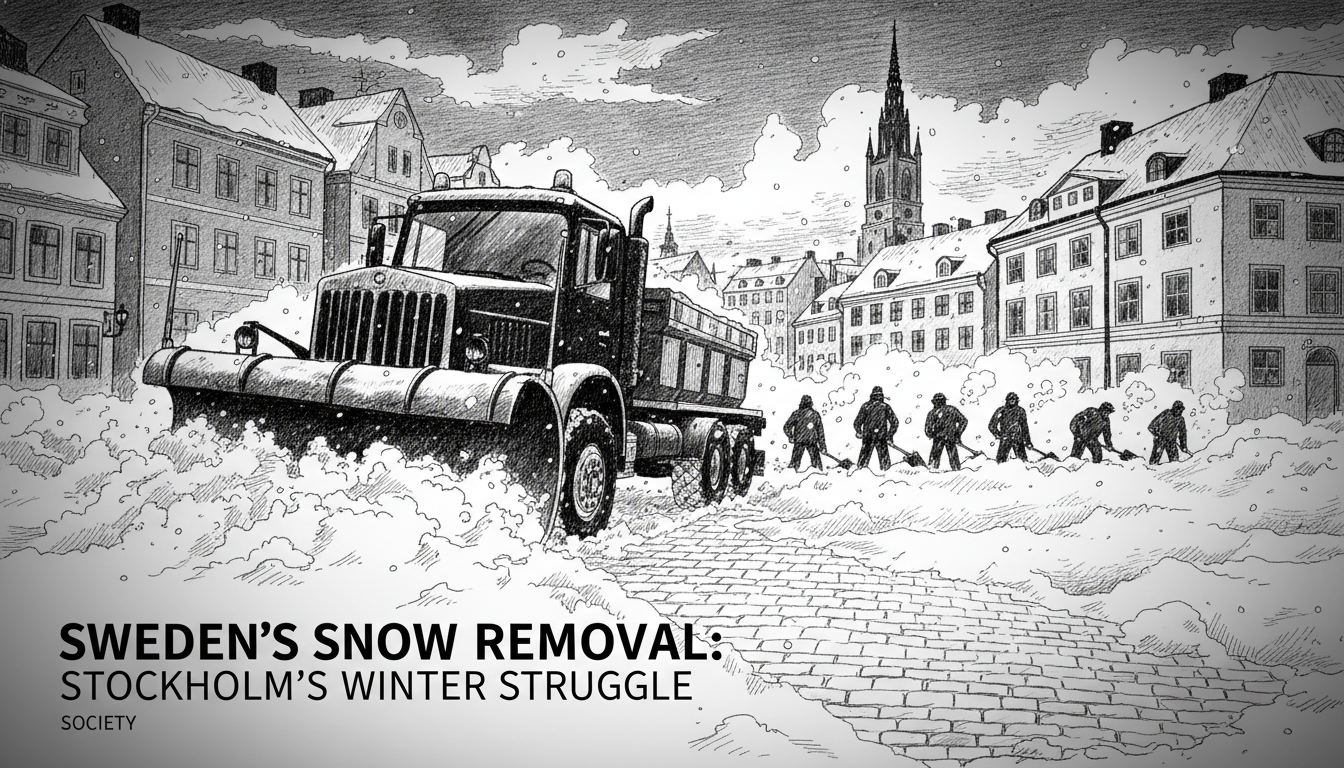
Stockholm's snow removal capacity is designed for most snowfalls, but the city's traffic authority admits recent heavy snow has pushed its systems to the limit. 'We have capacity for most snowfalls,' says Malinda Flodman of Stockholm's Traffic Office. 'If we were to dimension snow removal for even larger snowfalls, it would become very costly.' Her statement captures the annual winter dilemma facing Sweden's capital: balancing public expectation with budgetary reality.
For residents in southern suburbs like Skärholmen or Botkyrka, the reality this week has been buses stuck in drifts and local streets untouched by plows for days. The contrast is stark. While major arteries like Sveavägen and bus lanes are cleared quickly, residential areas wait. This prioritization is official policy, but it creates a two-tiered winter experience across the city.
The High Cost of a White Winter
Stockholm allocates a significant portion of its annual budget to winter road maintenance. The exact figure fluctuates, but it represents a major municipal investment in salt, sand, fuel, and manpower. The city receives an average of 53 centimeters of snowfall each year, though this varies wildly. Some winters are mild; others, like this one, deliver repeated heavy blows.
'The economic calculation is constant,' says Lars Bengtsson, a professor of urban infrastructure at KTH Royal Institute of Technology. 'You budget for a probable winter, not a worst-case scenario. The cost of being prepared for a historic snowfall every single year is astronomically higher than the cost of dealing with the occasional crisis.' He points out that snow removal isn't just about convenience. Inadequate clearing leads to economic losses from disrupted logistics and worker absenteeism, plus increased safety risks for pedestrians.
A Tale of Two Cities: Priority Roads vs. Neighborhood Streets
The city's snow removal hierarchy is clear. Main traffic routes, streets with bus traffic, and key pedestrian and bicycle paths are plowed first. This ensures the backbone of Stockholm's transport network keeps moving. The logic is sound from a systems perspective, but it feels different when you're the one digging out your car on a side street in Årsta or Högdalen.
'My street hasn't seen a plow since the snow started,' says Erik Lundgren, a teacher living in Bandhagen. 'The bus I take to work got stuck yesterday. I understand they have to prioritize, but it makes you feel like you're not a priority.' This sentiment is common in the outer districts, which often bear the brunt of heavier snowfall. Malinda Flodman acknowledged this strain, noting, 'The southern suburbs have received more snow, so it has been strained there.'
The Environmental Trade-Offs of a Clean Street
Beyond cost and logistics, there's an environmental dimension. The salt and sand used for de-icing run off into waterways, affecting water quality in the Stockholm archipelago. Some municipalities experiment with less harmful alternatives, like brine solutions, but these have their own limitations and costs. The quest for perfectly clear asphalt comes with an ecological price tag that is becoming harder to ignore.
'We are caught between public demand for safe, clear roads and our environmental goals,' explains an urban planner from the Stockholm Environment Department, who spoke on background. 'Every winter, we use thousands of tons of salt. The long-term impact on soil and water is a real concern, but so is immediate public safety.' This tension adds another layer to the city's winter management challenge.
Learning from Nordic Neighbors
How does Stockholm's approach compare? Helsinki, facing similar conditions, employs a robust fleet and emphasizes mechanical removal over salt. Oslo, built on hills, has legendary snow management but also a higher per-capita budget for it. Stockholm's model is arguably more cost-conscious, accepting a certain level of disruption during extreme events. This reflects a broader Swedish approach to public services: efficient and effective under normal conditions, but stretched during unusual stress.
'The Nordic model is about planning for the ordinary and mobilizing for the extraordinary,' Professor Bengtsson notes. 'The question is where you draw the line. What does 'ordinary' winter now mean in an era of changing climate patterns?' Recent years have seen more variable winters, with intense snowfall followed by rapid thaws, creating new challenges like ice flooding.
Life Goes On, Despite the Snow
Despite the complaints, Stockholm adapts. Parents fit strollers with ski attachments. Commuters swap dress shoes for rugged winter boots at the office. The city's famous winter markets, like the one in Skansen, carry on, their cozy glow contrasting with the grey slush outside. The snow reveals the city's social fabric—neighbors helping to push cars, the collective sigh on a bus that finally gets moving, the shared experience of another Nordic winter.
The snow removal policy, while frustrating for some, is a practical compromise. It keeps the city functioning for the majority, most of the time. As the days slowly grow longer, the immediate crisis will pass. The plows will eventually reach every street. But the debate they spark—about equity, cost, and what kind of winter city Stockholm wants to be—melts away much more slowly. Will the definition of 'most snowfalls' need to change as winters become more unpredictable? The answer will shape the city's streets for seasons to come.