
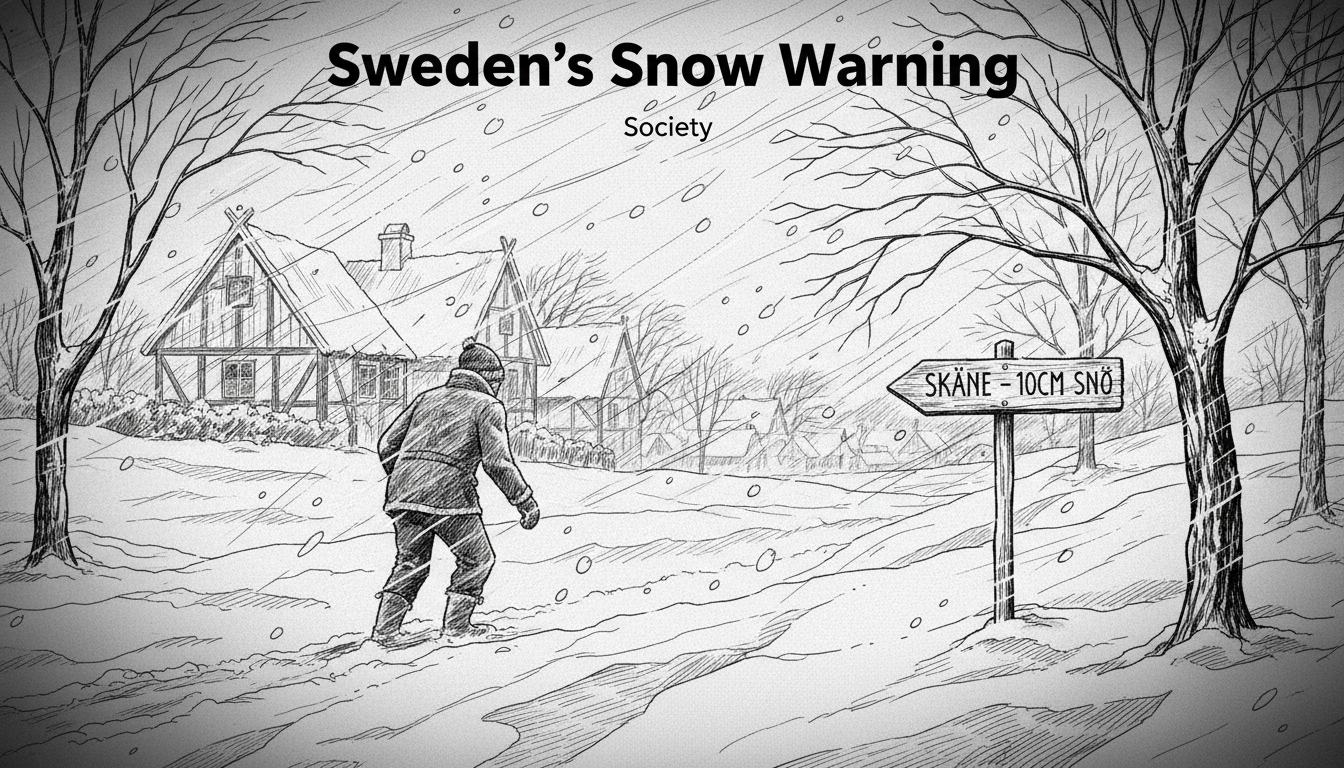
Sweden's SMHI has issued a yellow weather warning for up to a decimeter of snow in southern Skåne. The alert covers Monday from noon until 11 PM, predicting difficult travel conditions and potential traffic disruptions. For residents of Sweden's sunniest region, this sudden winter blast feels like a seasonal paradox.
I'm standing in a Malmö café, watching the first flakes dust the cobblestones of Lilla Torg. Barista Elin Karlsson, 28, laughs as she steams milk. "We just put away the winter tires last week," she says, shaking her head. "My summer bike is ready. This feels like a joke from the weather gods." Her sentiment echoes across Skåne. This region enjoys Sweden's mildest climate, with winters often characterized by rain and grey skies rather than deep snow. A sudden 10-centimeter dump here causes more chaos than 30 centimeters in the northern city of Umeå, where society is built around constant snow.
The Science Behind the Sudden Snow
The Swedish Meteorological and Hydrological Institute (SMHI) doesn't issue yellow warnings lightly. This level indicates weather that could cause some societal disruption. "It's not about the absolute amount of snow," explains meteorologist Lars Johansson, whom I reached by phone. "It's about the context. In Skåne, where roads and infrastructure aren't constantly prepared for heavy snow, even a moderate fall can create significant problems." He describes a perfect, brief clash of cold air meeting moisture-laden systems from the south. The snow will be wet and heavy, perfect for sticking to roads and power lines. The timing—starting at midday Monday—is particularly problematic. It coincides with the afternoon commute, when traffic is heaviest and visibility can quickly deteriorate.
SMHI's warning system is color-coded for clarity. Yellow means "be aware." Orange means "be prepared" for more severe impacts. Red, rarely used, means "take action" to protect life and property. Today's warning sits at the first level, but its location gives it extra weight. Johansson emphasizes that the public should view it as a nudge to plan. "Check your travel, allow extra time, and ensure your vehicle is suitable. A small adjustment in behavior prevents most problems."
A County Grinds to a Halt
What does a yellow warning mean in practical terms? Across Skåne's municipalities, pre-salted trucks are being loaded. In Malmö, Lund, and Helsingborg, street maintenance crews are on standby. For public transport, it means potential delays on bus routes and early checks on rail switches. "Our advice is always the same," says Pia Månsson, a press officer for Skånetrafiken, the regional transit authority. "Check the app before you travel. A ten-minute delay on a bus might not seem like much, but it can cause missed connections." She notes that while trains are more resilient, ice on the power lines can still cause issues.
For the average Swede, the warning triggers a familiar routine. It's a reminder to dig out the windshield scraper from the back seat. It prompts a second thought about taking the bicycle to work. In grocery stores, there might be a subtle run on essentials like milk and bread—a cultural quirk known humorously as "storm chips" and "panic bread" purchases. At schools, principals monitor updates to decide if after-school activities need canceling. The impact is societal, a ripple effect from a single weather forecast.
Cultural Contrasts in a Long Country
This event highlights Sweden's dramatic climatic diversity. The country stretches over 1,500 kilometers from north to south. In Kiruna, far above the Arctic Circle, a decimeter of snow is a trivial Tuesday. In Malmö, it's headline news. This difference shapes everything from car culture to fashion. In the north, studded winter tires are mandatory for months, and every home has a proper snow shovel. In Skåne, many get by with all-weather tires and hope for the best.
"There's a certain pride in the north about handling winter," says cultural geographer Anna Forslund. "But in the south, there's pride in the milder climate. A snow warning like this disrupts that southern identity. It's an unwelcome guest reminding you of the Swedish winter you thought you'd escaped." She connects it to broader Swedish society trends, where regional identity remains strong. The snow creates a shared, if grumbling, experience for Skåne's residents, a temporary unification against the elements.
Living with Nature's Whims
The Swedish relationship with weather is deeply pragmatic. There's a famous saying: "Det finns inget dåligt väder, bara dåliga kläder." There's no bad weather, only bad clothes. This warning tests that philosophy. It's not extreme, but it's inconvenient. It asks people to adapt. For Sweden's growing immigrant population, particularly those from warmer climates, these warnings are vital educational tools. They signal what locals know instinctively: the weather can change plans in an instant.
Back in Malmö, the snow is falling a little faster now. Elin the barista looks out the window. "I guess I'll walk home tonight," she says. "The bike can wait. It's just one day." That's the ultimate Swedish response—a blend of preparedness and acceptance. The snow will come. It will cause some delays, some minor chaos. Then it will likely melt within days, returning Skåne to its expected, damp grey winter. The SMHI warning is a short, sharp reminder of nature's power, even in the gentlest corner of Sweden. It underscores a fundamental truth of life here: you can plan, you can prepare, but you must always be ready to adjust. The weather, like Swedish society itself, is in a constant state of quiet, managed flux.