
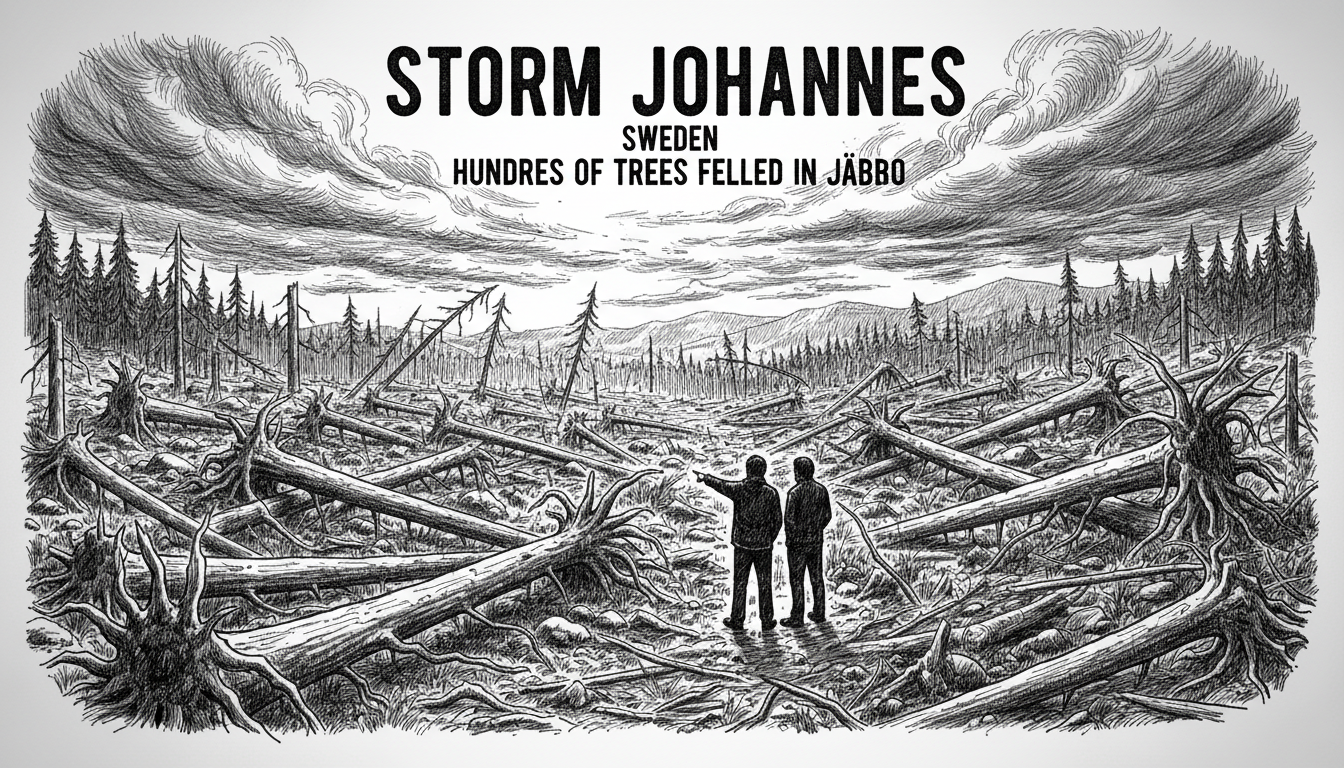
Storm Johannes battered central Sweden this week, leaving a trail of destruction where ancient trees fell like dominoes. For Tomas Bergqvist in the locality of Järbo, the sound of cracking timber is one he won't forget. 'The trees bent like bananas,' he said, describing the sheer force of the winds that swept through Gävleborg County. Despite the frightening spectacle, his community was spared the worst. Remarkably, no major injuries to people, or serious damage to vehicles and houses, were reported in his area.
Tomas is no stranger to handling a chainsaw. But the scale of this storm presented a new challenge. 'You have to take it easy and not stress,' he advised, standing amid the debris. 'If you stress, there’s a risk of accidents.' With ten trees down on his property alone, his practical calm is a resource as vital as any tool. His experience reflects a wider Swedish resilience to the autumn storms that frequently sweep in from the Atlantic.
An Ordinary Day Interrupted
For residents in towns like Järbo, part of Sandviken Municipality, severe weather is a seasonal reality. Yet each storm writes its own story. Johannes arrived with the ferocity that defines the worst of Sweden's autumn gales. The Swedish Meteorological and Hydrological Institute (SMHI) had issued high-level warnings, but hearing the alert and living through the event are different things. For many, the day shifted from ordinary routine to securing property and hunkering down as the winds howled.
The visual was apocalyptic for those in wooded areas. Mature pines and spruces, some standing for decades, succumbed to the saturated ground and relentless gusts. Roads were quickly blocked, and the familiar hum of electricity faded as power lines were brought down. In a country where forest covers over 70% of the land, fallen trees are the primary agent of disruption during such events, affecting transport, power, and daily life instantly.
The Sound of Breaking Forests
Tomas Bergqvist’s account of trees endlessly falling captures the visceral fear of these hours. 'It was just one after another,' he recalled. This auditory backdrop of crashes and snaps is common across central and southern Sweden during major storms. The damage in Järbo, while significant, represents just a fraction of the national picture. Every storm like Johannes results in thousands of fallen trees across the country, requiring a massive coordinated clean-up effort.
Local municipalities and private homeowners share the responsibility. For individuals like Tomas, the work is personal and immediate. The safe removal of storm-felled trees is a skilled and dangerous task, emphasized by authorities after every event. The Swedish Civil Contingencies Agency (MSB) consistently warns against untrained individuals attempting to clear large debris, especially near power lines.
Why Sweden is Vulnerable
Sweden's vast forested landscape is both a national treasure and a point of vulnerability. Storms like Johannes exploit this. Experts point to several factors. Widespread root systems are shallower than many assume, especially in wet autumn soil. Monoculture forestry practices in some areas can also create stands of trees with similar age and height, making them more susceptible to collective failure under wind stress.
Climate research adds another layer. While no single storm can be directly linked to climate change, SMHI and other agencies note a trend. The patterns of precipitation and wind intensity in Northern Europe are shifting. This could influence the frequency or character of future autumn and winter storms. For forest managers and emergency planners, this data is crucial for long-term strategy.
The Community Clean-Up Begins
In the aftermath, the spirit of 'dugnad'—a Scandinavian tradition of collective community work—often emerges. Neighbors check on each other, especially the elderly. Those with chainsaws and tractors help those without. The clean-up in Järbo and similar localities is a physical task, but also a social one. It reinforces community bonds in the face of shared disruption.
The economic impact is also being tallied. For forestry companies, storm-felled timber represents both a loss and a sudden surplus that must be processed quickly before the wood loses value. The Swedish Forest Agency monitors this closely, as a major storm can temporarily flood the market, affecting prices and logistics for the entire sector.
A Nation Prepared by Habit
Sweden's response to storms is built on experience. From SMHI's precise forecasting and tiered warning system to the public's general awareness, there is a cultural familiarity with disruptive weather. Most Swedes know to secure outdoor furniture, charge power banks, and have a stock of candles and food. This preparedness mitigates the worst potential outcomes and is a key reason why, despite the dramatic scenes, personal injury rates are often low.
Tomas Bergqvist’s calm demeanor personifies this. His focus on methodical, safe work reflects a national ethos of practical problem-solving. The storm was powerful, but the response is measured. As he and his neighbors clear the branches and log the timber, life in Järbo gradually returns to normal. The scars on the landscape will remain for years, new gaps in the skyline where giants once stood.
Looking to the Next Storm
The question isn’t if another major storm will come, but when. Storm Johannes serves as the latest reminder of nature’s force. It highlights the balance Sweden must maintain: managing its immense forest resources while protecting communities from the very real dangers those forests can pose when winds exceed 70 or 80 kilometers per hour. For experts, the discussion turns to forest management practices and infrastructure resilience. For Tomas and his neighbors, it’s about the ten trees in the yard, and making sure the woodpile is ready for winter.
The resilience is quiet, but deep-rooted. As the chainsaws finally go silent in Järbo, the lesson is reaffirmed. Respect the storm, help your neighbor, and take it one tree at a time. It’s a very Swedish way to weather the gale.