
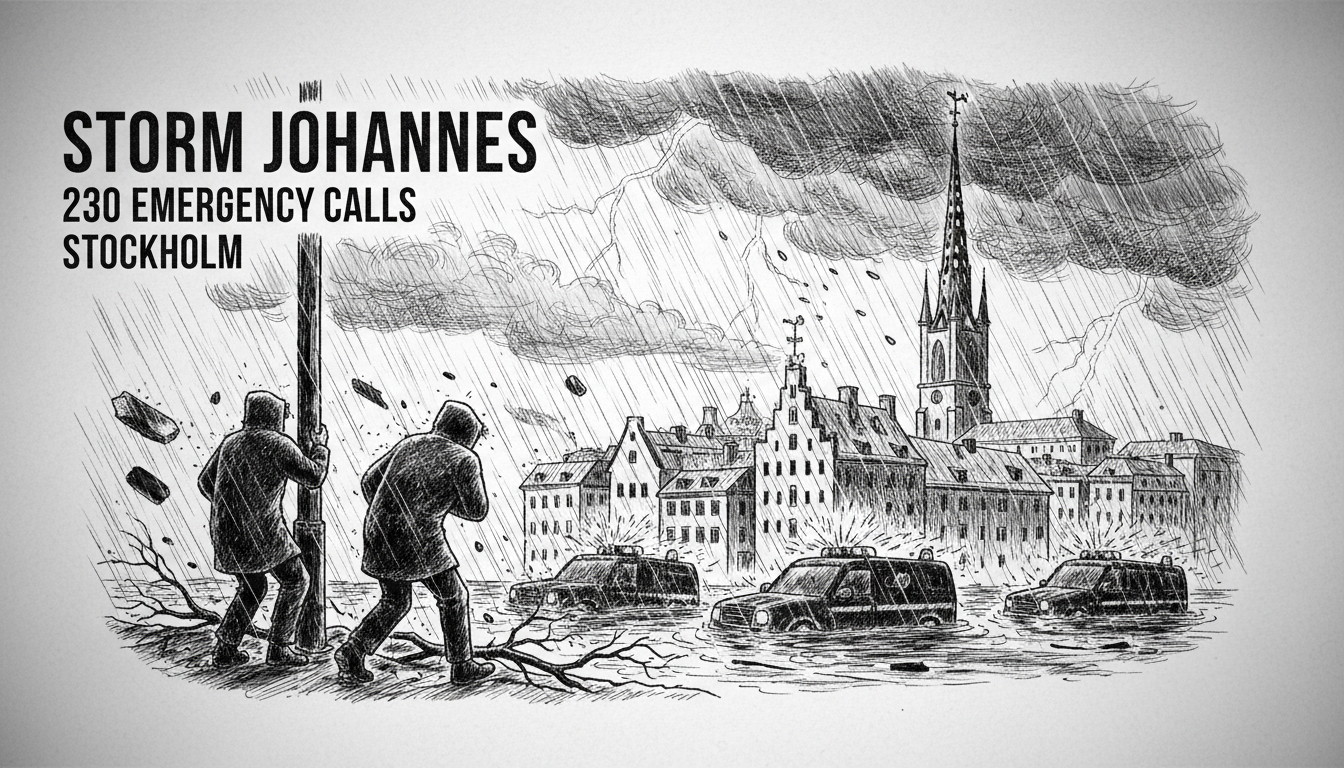
Sweden's Storm Johannes triggered a surge in emergency calls across Stockholm County this weekend. Storstockholm Brandförsvar, the Greater Stockholm Fire and Rescue Service, received 230 emergency calls on Saturday. This was a dramatic increase from the typical 80-90 calls they handle on an average Saturday. The vast majority of these calls reported the same urgent hazard: fallen trees blocking vital roadways after the storm's powerful winds swept through the region.
"A normal Saturday usually involves 80-90 calls," said Roger, a lead operator with the service, highlighting the scale of the disruption. For residents, the storm's impact was both sudden and familiar. The sound of cracking branches and the sight of blocked commuter routes marked a chaotic start to the weekend, testing the region's emergency response systems.
A Chaotic Saturday for Emergency Services
The operational center for Storstockholm Brandförsvar was unusually busy. Operators like Roger fielded call after call, each reporting a new obstacle on roads from the inner city to the outer suburbs. The primary task became a massive logistical operation: clearing dozens of fallen trees to restore traffic flow and ensure public safety. This type of weather-related damage is a recurring challenge in Sweden, where vast forests border countless highways and residential streets.
Emergency crews worked through the day, responding to incidents across a wide area. The concentration of calls highlighted specific vulnerabilities in the infrastructure, particularly older roadside trees or those weakened by previous weather. While no major injuries were reported from these incidents, the disruption was significant. Commuters found their routes blocked, and the constant risk of falling branches kept many people indoors.
The Calm After the Storm
By Sunday morning, the situation had changed dramatically. The fierce winds of Storm Johannes had passed, leaving behind a scene of clean-up and assessment. The contrast between the chaotic Saturday and the calm Sunday was stark. Where emergency lights had flashed, residents now surveyed the damage in the quiet daylight. The lull allowed municipal workers and home owners to start the process of clearing debris from gardens, parks, and smaller streets.
This pattern—intense activity followed by a quiet recovery—is a common rhythm in Swedish storm seasons. The Swedish Meteorological and Hydrological Institute (SMHI), which names significant predicted storms like Johannes, had issued warnings. These alerts likely helped prepare services and the public, contributing to the managed response and the absence of more serious outcomes. The calm morning represented a return to normalcy, but also a moment to consider future preparedness.
Expert Perspective on a Repeating Challenge
Emergency management experts point to storms like Johannes as a standard test for Swedish infrastructure. "These events stress-test our response systems and reveal recurring pressure points," says Lars Pettersson, a former crisis preparedness coordinator. "The most common issue is roadside vegetation. Proactive maintenance of trees near power lines and major roads is a continuous, and often underfunded, battle for municipalities."
The effectiveness of Sweden's public warning system, sent directly to mobile phones, is generally praised for raising public awareness. However, the physical reality of a storm often comes down to how well the environment has been managed beforehand. Fallen trees are not just a traffic problem; they can knock out power for thousands, as seen in past storms. The response from Storstockholm Brandförsvar, dealing with a 150% increase in call volume, demonstrates a system adapting under clear pressure.
Looking forward, analysts connect these events to broader climate trends. While Sweden has always experienced autumn and winter storms, research suggests a changing pattern. "The data we are seeing aligns with broader models that predict more frequent and intense precipitation events for our region," notes climate researcher Elin Mårtensson. "This doesn't mean every storm is caused by climate change, but the statistical likelihood of disruptive weather is increasing. Our planning must adapt to this new frequency."
Living with the Swedish Storm Season
For Stockholmers, storms like Johannes are part of the seasonal fabric. The event interrupted weekend plans, caused minor property damage, and filled social media with pictures of toppled trees in familiar neighborhoods like Vasastan, Södermalm, and the suburban communes of Täby and Nacka. Yet, there is a cultural acceptance of this weather. People know to secure patio furniture, charge power banks, and expect possible travel delays when SMHI issues an orange warning.
The human interest in these stories often lies in the small acts of community—neighbors helping to clear a shared driveway, or the shared frustration of a canceled weekend trip to a summer house. The storm is a temporary disruption that highlights both vulnerability and resilience. The efficient, if overwhelmed, response from emergency services provides a sense of security, a reminder of the system working as intended under strain.
A Look at the Forecast and Future Preparedness
The passing of Storm Johannes leaves questions in its wake. Is the current level of roadside tree management sufficient for the predicted weather of the coming decades? Are emergency services resourced for what may become a more common Saturday scenario? The calm Sunday offers a chance for reflection before the next low-pressure system arrives.
Municipalities across Stockholm County will now review their responses. They will note which roads were most affected and which trees caused the most critical blockages. This data is crucial for prioritizing future maintenance budgets. For the average resident, the storm is a reminder to check insurance policies, keep emergency supplies at hand, and pay attention to official weather warnings.
Sweden's relationship with its weather is one of respect. Storms like Johannes command attention, disrupt routines, and then fade into memory, becoming another story in the long narrative of Swedish winters. The 230 emergency calls from Saturday are a numeric snapshot of that relationship—a measure of nature's force and a community's effort to quickly restore order. As the clean-up continues and the chainsaws fall silent, the question remains: are we preparing enough for the next one?