
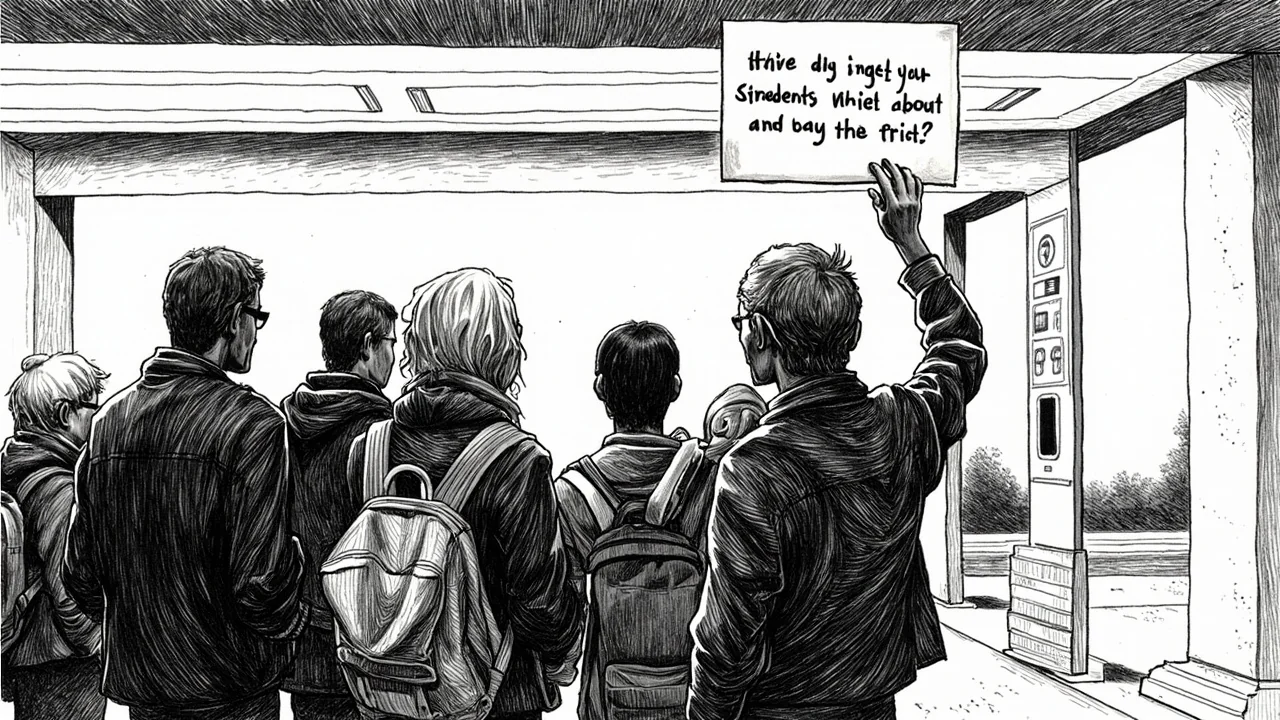
Swedish public transport faces an organized protest as activists urge commuters to evade fares this January. The group 'Alla åt alla' (All for All) has plastered subway stations with posters advocating a 'ticket strike,' encouraging passengers to purchase discounted monthly passes intended for youth, students, and pensioners. Their bold promise: 'We pay if you get a fine.' This direct action targets the rising cost of living and what organizers call unsustainable fare hikes by Stockholm's public transit authority, SL.
Emma Bastås, a spokesperson for the group, frames the action as economic relief. 'We want to make the everyday economy a little easier during the year's poorest month,' Bastås said in a statement. 'And to make politicians understand that this is a problem.' The campaign highlights a 14% increase in SL's standard 30-day pass over five years, rising from 930 to 1060 kronor. It also criticizes regional politicians for granting themselves full discounts on annual passes, a point of contention for regular commuters.
A Political Challenge for Regional Governance
The protest strikes at the heart of regional transportation policy, governed by the Stockholm Regional Council. This body, distinct from the national Swedish government in the Riksdag, sets fares and oversees SL's operations. The activists' strategy aims to convert personal financial strain into political pressure, bypassing traditional channels. By advocating for widespread non-compliance, they challenge the authority's revenue model directly. Posters appeared in the metro system without permits, an act SL classifies as vandalism regardless of the message.
Jakop Dalunde, the Green Party (MP) traffic regional councilor, responded with a warning about unintended consequences. 'The more people who cheat, the fewer ticket revenues for SL,' Dalunde stated. 'Then there are fewer resources to raise quality, increase frequency, or lower the price.' His argument centers on a vicious cycle: reduced income could lead to service cuts or justify further price increases, harming the very commuters the action intends to help. This debate encapsulates a core tension in Swedish public service funding between accessibility and financial sustainability.
The Mechanics and Risks of the 'Ticket Strike'
The campaign's operational advice is specific. It urges holders of standard adult passes to instead buy a 30-day card under discounted categories. This constitutes fare evasion, as passengers misrepresent their eligibility. The group's offer to cover fines is a calculated gamble, betting that the publicity and solidarity generated will outweigh the potential financial liability. SL has stated it does not plan to deploy additional ticket inspectors specifically for this protest period. However, standard controls continue, and fines for fare evasion remain substantial.
This action is not occurring in a policy vacuum. Dalunde pointed to a recent decision to freeze the standard monthly pass price for 2026. 'We have had high inflation, but we have frozen the monthly pass for 2026, so in relation to inflation that still amounts to a reduction,' he argued. This framing attempts to position the regional government as responsive, though activists counter that past increases have already pushed prices beyond the reach of many. The conflict illustrates the difficulty of balancing budgets against social equity in one of Europe's most expensive capital regions.
Broader Implications for Swedish Public Transport Policy
The 'ticket strike' transcends a simple act of civil disobedience. It questions the social contract surrounding public goods in Sweden. High-quality, reliable public transport is a cornerstone of the Nordic model, promoting equality, urban mobility, and environmental goals. When cost becomes a barrier, it undermines these principles. The protest implicitly asks who public transport is for and how it should be funded. Should it operate as a self-funding service or be subsidized as critical public infrastructure, akin to roads?
This comes amid national discussions on transportation subsidies and climate policy. The Swedish government has ambitious goals to reduce transportation emissions, heavily reliant on shifting citizens from cars to buses and trains. Affordability is a key lever in that transition. If potential riders are priced out, environmental targets become harder to meet. The protest, therefore, connects a local fare dispute to Sweden's broader climate commitments and the politics of the green transition, issues frequently debated in the Riksdag.
Historical Context and the Path Forward
Sweden has a history of collective action shaping public policy, though direct encouragement of law-breaking is a more confrontational tactic. The current economic climate, marked by persistent inflation, has squeezed household budgets, making transportation costs a flashpoint. The activists' focus on January—noted as a financially difficult month after holiday spending—is strategically timed for maximum public resonance.
The regional government's next moves are critical. A crackdown could galvanize support for the protesters. Ignoring the action might embolden further non-compliance. A policy response, such as reviewing discount structures or increasing general subsidies, could defuse tension. The situation tests the Stockholm Regional Council's ability to manage dissent while maintaining both fiscal responsibility and public trust. It also serves as a case study for other Swedish cities facing similar pressures on their transit systems.
Ultimately, the 'ticket strike' is a symptom of a larger debate about inequality and cost-of-living crises in urban Sweden. It challenges politicians in Stockholm and beyond to reconcile economic realities with the promise of universally accessible services. Whether this protest leads to a meaningful dialogue on fare structures or simply remains a symbolic act of defiance will depend on the responses from both the corridors of regional power and the crowded subway cars where the campaign's message resonates most powerfully. The coming weeks will reveal if this is a fleeting January phenomenon or the start of a more sustained challenge to Sweden's public transport economics.