
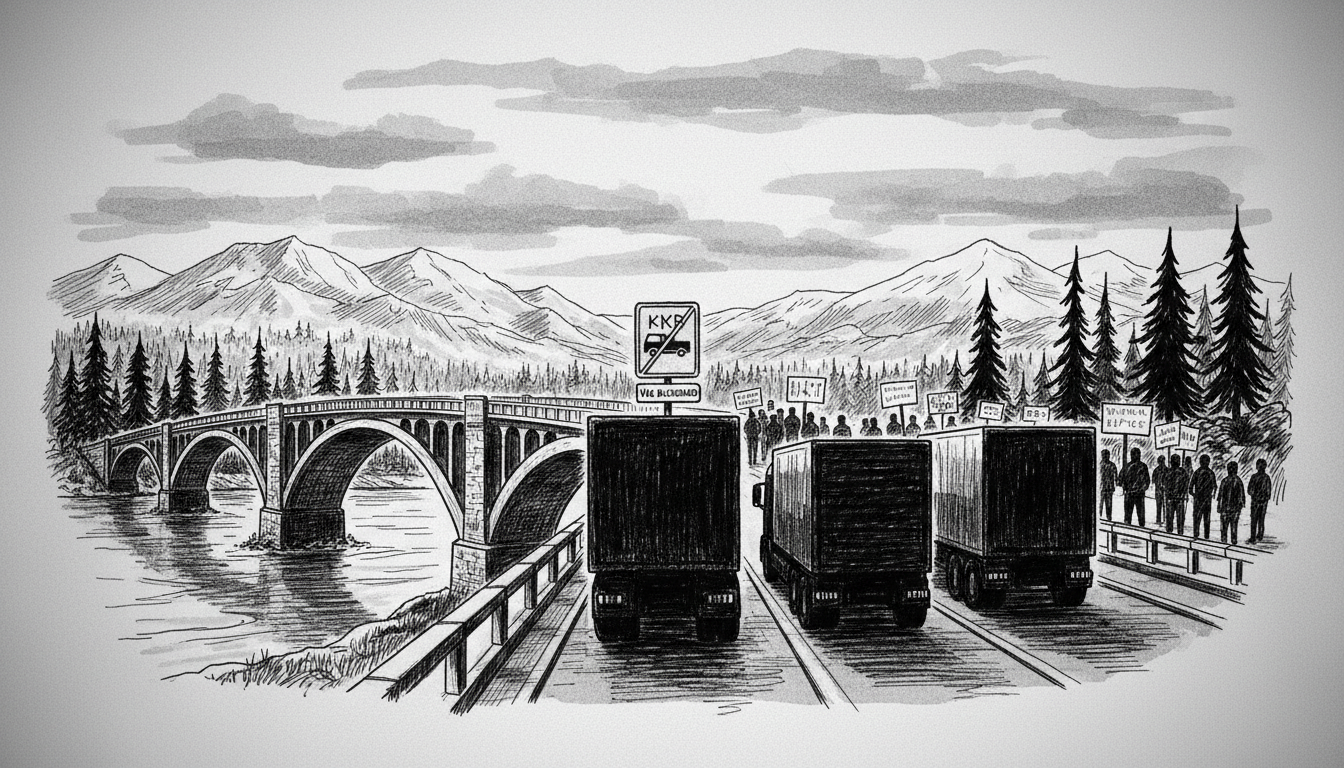
Sweden's transport network faces another major disruption after a truck became wedged under a railway bridge in Katrineholm. The incident on Fredsgatan has halted both road and rail traffic, with no clear timeline for a return to normal service. Trafikverket, the Swedish Transport Administration, has dispatched inspectors to assess potential damage to the critical structure. This single event has created a ripple effect, impacting long-distance train services across southern and central Sweden.
For residents of Katrineholm, a city defined by its railway crossroads, such scenes are frustratingly familiar. "It happens more often than you'd think," says local café owner, Lena Forsberg, whose shop overlooks the bridge. "You hear the scrape, then the sirens. Everything just stops." Her business relies on foot traffic from the station, now eerily quiet. The blocked route severs a main artery through the town, forcing drivers onto lengthy detours through residential areas.
A Junction City Grinds to a Halt
Katrineholm's identity is intertwined with the rails. Founded as a railway town in the late 19th century, its economy and layout are centered on its function as a major junction. Key lines connecting Stockholm with Gothenburg and Malmö converge here. When the bridges on these lines are struck, the consequences are national. Today's incident has directly affected services to and from Stockholm, Linköping, Norrköping, Malmö, Gothenburg, and Västerås, among others. Commuters and long-distance travelers alike are facing cancellations and significant delays.
Trafikverket's press team confirmed the immediate response but offered no prognosis for reopening. "Our first priority is safety," a spokesperson said in a statement. "We must ensure the bridge's structural integrity before any train can pass over it or the road beneath it can reopen." This meticulous process involves checking for cracks, assessing load-bearing capacity, and reviewing the alignment of the tracks. Even a minor shift can have serious implications for high-speed rail traffic.
The Cost of a Few Centimeters
Experts point to a persistent, preventable cause. "The vast majority of these strikes involve vehicles that exceed the posted height clearance," explains transport infrastructure analyst, David Lundgren. "Often, it's a matter of a driver not knowing the exact height of their load, misreading signage, or using an unapproved route." Swedish bridges, particularly older ones like many in railway towns, have fixed clearances. Modern trucks and specialized transport vehicles are getting larger, narrowing the margin for error.
Lundgren suggests technology could play a greater role. "We have systems that can detect over-height vehicles before they reach a bridge, using laser sensors or simple hanging bars that give an audible warning when struck," he says. "The investment is minor compared to the cost of a single strike." These costs are multifaceted: immediate repair bills, network disruption penalties paid to train operators, lost productivity for stranded passengers and freight, and environmental impact from idling traffic and replacement bus services.
A Recurring Swedish Headline
This is not an isolated event in Sweden. Bridge strikes make local news with regular frequency, from central Stockholm to smaller industrial towns. Each incident follows a similar pattern: the crash, the closure, the inspection, the slow return to normalcy. For a country proud of its efficient and punctual public transport system, they represent a glaring vulnerability. They highlight a tension between modern freight needs and historic infrastructure.
In Katrineholm, the Fredsgatan bridge has been hit before. Locals debate solutions over coffee. Some argue for better signage or mandatory local route planning for tall vehicles. Others wonder if certain routes should be physically restricted. "It's always a scramble," says taxi driver Mikael Öberg. "The detour adds 15 minutes to every trip. You explain to passengers that it's another truck under the bridge, and they just sigh. It's a Swedish cliché at this point."
Looking for Solutions on the Road and Rail
The solution likely requires a combined approach. Stricter enforcement and penalties for drivers and companies responsible for strikes are one part. Investment in smarter detection technology at known trouble spots is another. There's also an argument for improved national data sharing, ensuring rental companies and freight operators have immediate access to accurate vehicle height data and route-specific restrictions.
For Trafikverket, the challenge is balancing immediate safety with long-term network resilience. Each strike forces a re-evaluation of procedures. Could inspection times be shortened with new technology? Can traffic management systems react faster to implement detours? The answers to these questions matter for Sweden's economic cohesion, where reliable transport links between cities are non-negotiable.
As the inspectors work under the bridge in Katrineholm, the disruption spreads. A business meeting in Stockholm is missed. A family visit in Malmö is cut short. Fresh goods destined for a Gothenburg market are delayed. The incident is a blunt reminder of how fragile interconnected systems can be. It takes just one misjudgment, one overlooked detail on a cargo manifest, to bring a key part of the national infrastructure to a standstill.
When will the trains run again? Trafikverket cannot yet say. For now, Katrineholm returns to a quieter rhythm, its defining role as a connector paused. The wedged truck is more than a traffic nuisance; it's a symbol of an ongoing challenge for a modern society built on a historic framework. Solving it requires more than just pulling a vehicle free—it demands a concerted push to protect the bridges that link the country together.