
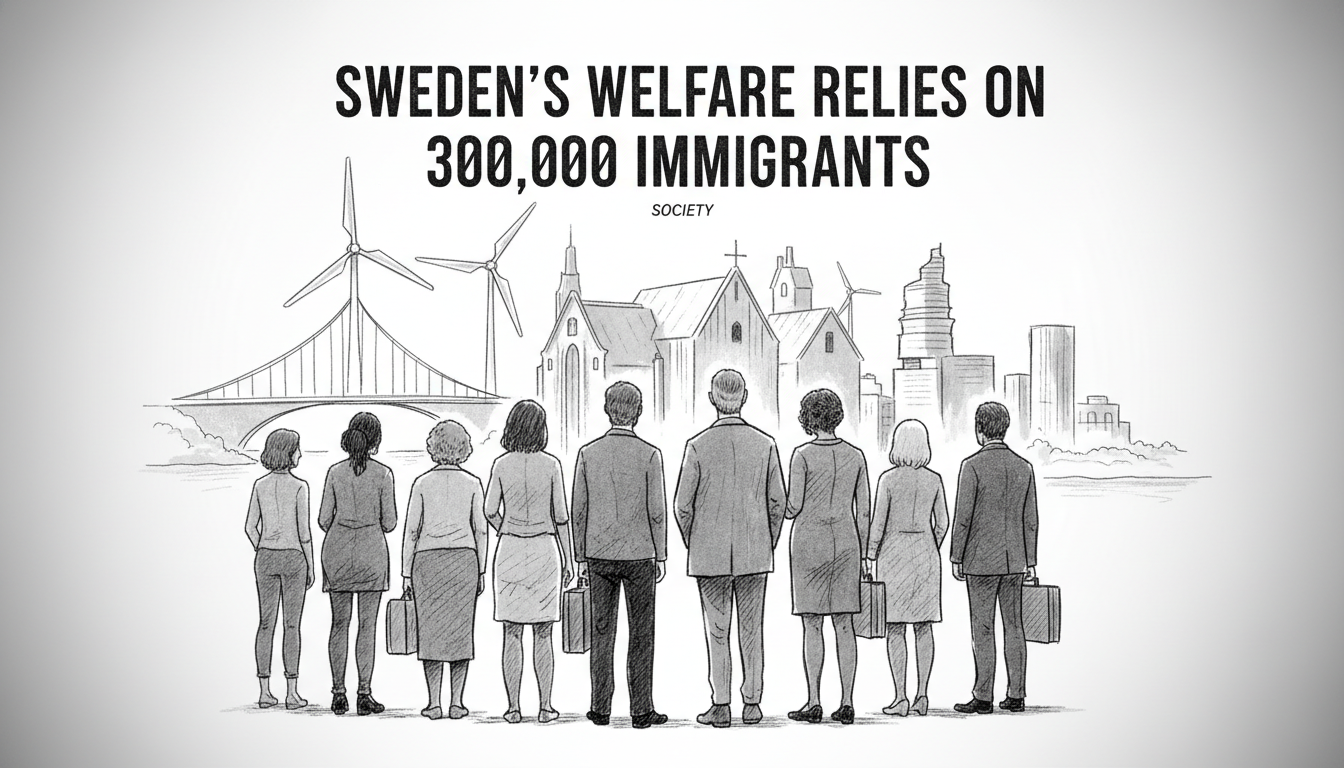
Sweden's welfare system now depends heavily on foreign-born workers, with nearly 300,000 employed in municipalities and regions. This shift is transforming daily life from Stockholm's care homes to regional hospitals.
Maria Fernandez starts her day before sunrise in a Södermalm apartment. She helps an elderly Swedish woman with morning routines, blending Spanish warmth with Nordic efficiency. "We are the hands and heart of care here," Maria says. Born in Chile, she represents a growing workforce propping up the welfare state.
Her story is not unique. A new report from Sveriges Kommuner och Regioner (SKR) confirms this trend. Foreign-born employees are increasingly carrying Sweden's famed welfare services.
A Quiet Transformation in Public Sector
The numbers tell a clear story. Between 2014 and 2024, the proportion of foreign-born monthly salaried employees in municipalities jumped from 13% to 22%. In regions, which handle healthcare, it rose from 14% to 20%. That means nearly one in four municipal workers today was born abroad.
This change is most visible in elderly care. As Sweden's population ages, demand for caregivers has soared. Domestic birth rates have not kept pace. Immigrant labor has filled this gap.
"We literally could not open some care homes without this workforce," says Lars Pettersson, a Stockholm municipality manager. He oversees facilities in neighborhoods like Hökarängen and Enskede. Pettersson notes the diversity in his teams. They include people from Syria, Somalia, and Poland.
The Backbone of Elderly Care
Walk into any äldreboende (elderly home) in Stockholm today. You will hear multiple languages in the corridors. Caregivers like Fatima from Morocco share recipes while assisting with meals. She incorporates Swedish traditions like fika (coffee break) into her routine.
"My residents teach me Swedish songs," Fatima says. "I teach them about Ramadan. We create our own culture." This exchange defines modern Swedish care. It blends universal welfare principles with global influences.
Sweden's welfare model is built on high taxes and universal access. Everyone contributes according to ability. Everyone receives according to need. This system faced strain from demographic changes.
The influx of immigrant workers has provided relief. They work in childcare, schools, and hospitals too. Their contributions allow the system to function.
Integration on the Front Lines
Not all stories are smooth. Recognition of foreign qualifications remains a hurdle. Doctors driving taxis is a cliché with painful truth. Many skilled immigrants start in entry-level care jobs.
Language proficiency is another challenge. Swedish language courses are available. Yet mastering enough for medical terms takes time. "I studied nursing in Iraq," says Ahmed, now working in a Uppsala clinic. "Here, I had to prove myself again. It took two years."
Experts point to these barriers. Anna Lindgren, a labor market researcher, emphasizes the need for better integration policies. "We recruit workers but don't always support their careers," she says. "This leads to wasted potential."
Wage disparities can occur. Union representatives note efforts to ensure equal pay. The Swedish model of collective bargaining helps. But gaps persist in some sectors.
Cultural Shifts in Swedish Society
This workforce change alters Swedish culture itself. Traditional midsummer celebrations might now include Lebanese meze. Preschools in Malmö celebrate both Lucia and Diwali.
Local events reflect this blend. The Stockholm Culture Festival features music from immigrant communities. It showcases how Sweden is evolving.
Some Swedes express concern about dependency. Others welcome the diversity. "My mother receives care from a Nigerian woman," says Erik from Gothenburg. "She brings joy and new perspectives. It enriches our lives."
The debate touches on national identity. Sweden has long prized egalitarianism and openness. This reality tests those values in practice.
Sustainability and Future Challenges
Can this trend continue? Sweden's aging population will grow. The need for care workers will increase further. Domestic training programs have not met demand.
Policymakers face tough choices. They must balance immigration with integration. Ensuring fair working conditions is crucial. So is maintaining service quality.
Some suggest automating certain tasks. Technology could assist with routine care. But human touch remains irreplaceable in elderly care.
Long-term sustainability requires systemic changes. Improving wages and status for care work might attract more Swedes. Yet current trends point toward continued reliance on immigrant labor.
A Personal Connection
Back in Södermalm, Maria Fernandez shares coffee with her client. They discuss Swedish weather and Chilean landscapes. This simple moment embodies the new welfare reality.
Foreign-born workers are not just statistics. They are individuals building lives while supporting Sweden's social fabric. Their contributions sustain the system that defines Swedish society.
As populations age across Europe, Sweden's experience offers lessons. It shows both the necessity and complexity of immigrant labor. The welfare state's future may depend on how well it integrates those who carry it.
The question remains: Will Sweden fully embrace those holding up its welfare model? The answer will shape next decade's society.