
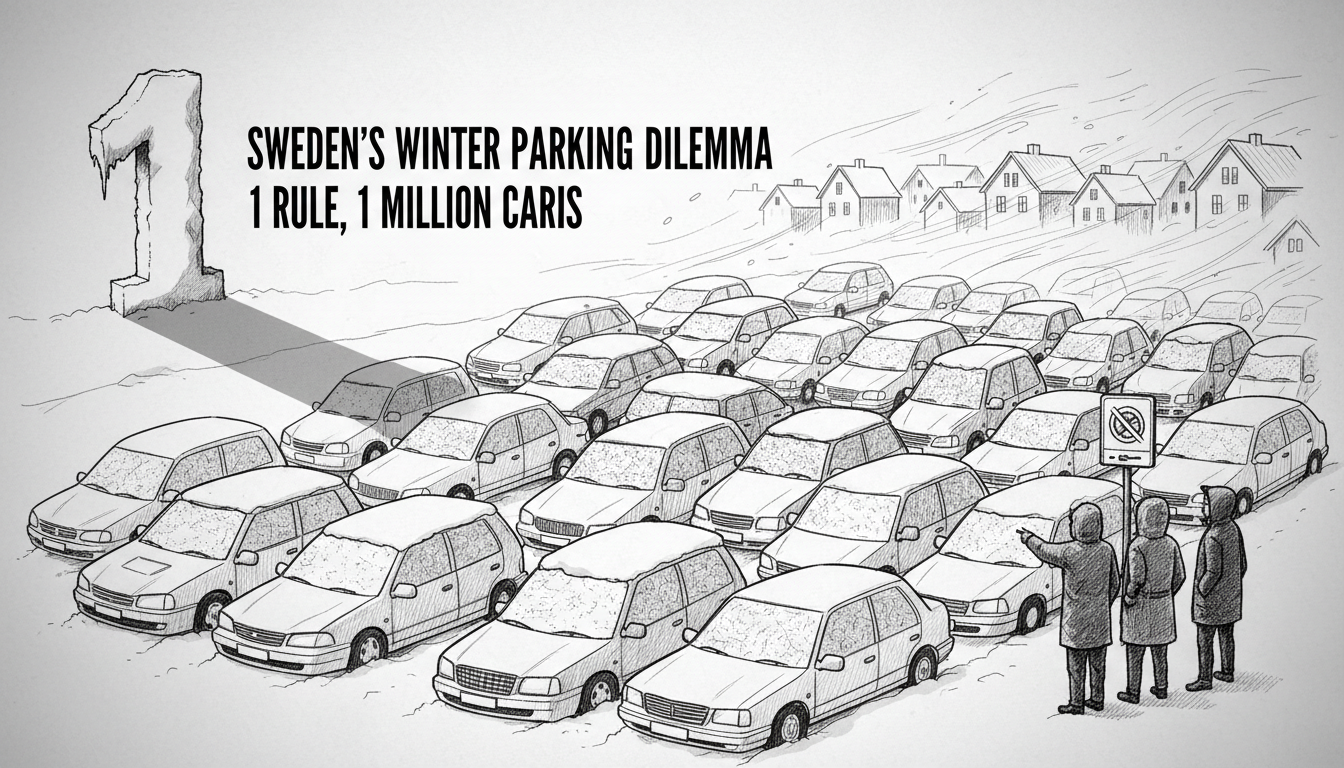
Sweden street cleaning rules don't melt away with the snow. If your car is parked on a designated cleaning day, you must move it. This simple municipal decree becomes a complex winter ritual for drivers across Gothenburg and other Swedish cities. The regulation pits civic duty against the very real challenge of digging out a vehicle buried under a fresh layer of snow and ice. It's a seasonal conflict that tests patience, community spirit, and the strength of one's back.
The Great Winter Shuffle
Every year, as the first major snowfall blankets the city, the familiar blue and white signs go up in residential neighborhoods. They announce the 'städgata' or cleaning street schedule. For residents with a 'boendeparkering' permit, it's a calendar alert that demands attention. The system is straightforward in theory. On your assigned day, you find another spot so municipal machines can clear the street of winter's grimy leftovers—sand, gravel, salt, and decaying leaves. But winter in West Sweden is rarely straightforward. A predicted light dusting can turn into a 20-centimeter overnight dump. You wake up to find your car isn't just parked; it's entombed.
"You look out the window, see the sign, and then see the mountain on your bonnet," says Lars Bengtsson, a resident of Majorna in Gothenburg. "Your heart sinks. You know you have an hour to perform a small miracle." The city's position is clear. Göteborgs Stad confirms that the obligation to move your vehicle remains, regardless of weather. The cleaning is essential for safety, drainage, and preventing long-term damage to the road surface. Failure to comply means a parking ticket, a financial penalty that adds insult to the very literal injury of a morning spent shoveling.
Between a Snowbank and a Hard Place
This creates a classic Swedish conflict between individual inconvenience and the collective good. Urban planning experts stress that efficient street maintenance relies on high compliance. "The system is designed for predictability," explains Karin Möller, a municipal services researcher at the University of Gothenburg. "If cars remain, the cleaning is incomplete. That leads to clogged drains in spring, poorer water quality, and more wear on the asphalt. One person's unmoved car affects the whole block's infrastructure."
Yet, for the individual, the task can feel Herculean. It involves clearing not just the car, but a path to the road. It requires finding alternative parking in a neighborhood where every other resident is also playing musical chairs with their vehicles. In areas like Linnéstaden or Haga, where on-street parking is fiercely competitive, this winter shuffle creates a unique, stressful sport. Social media forums and local Facebook groups light up with complaints, tips for effective ice removal, and the occasional plea for a sympathetic parking attendant.
A Test of Community and Communication
The annual struggle reveals much about Swedish society. It highlights a deep-seated trust in systems and rules, even when they are personally burdensome. Most people do, eventually, dig out and move. It also showcases a practical, problem-solving mindset. Walk through Gothenburg's Garden Society or Vasastan districts on a cleaning morning, and you'll see neighbors helping each other, lending scrapers, and sometimes pushing a stubborn car free from its icy berth.
However, critics argue the system needs modernizing. The primary notification method remains physical signs, which can be obscured by snow or missed entirely. While some districts offer digital reminders via apps, it's not universal. "The communication must be as relentless as the weather," says Möller. "People want to comply. They need clear, accessible, and timely information. A text alert the night before, coupled with a real-time update if a cleaning run is postponed due to extreme weather, would build much better will."
Some other Swedish municipalities, facing similar climates, have experimented with more flexibility. In parts of Stockholm, if a significant snow warning is in effect, cleaning schedules can be temporarily adjusted. The key is communicating that adjustment immediately and clearly. Gothenburg maintains that its schedule is paramount for operational efficiency, but the debate continues.
The Unwritten Rules of the Dig-Out
Beyond official policy, an unwritten code of conduct emerges each winter. It's considered poor form to shovel the snow from your car into a freshly cleared parking space. There's an understanding that if you see someone struggling, you offer help. And there is a collective groan of sympathy for anyone who finally frees their vehicle, only to find all other legal spots taken, forcing a long, slippery trek to a paid garage.
The ritual also underscores Sweden's relationship with the car. Despite excellent public transport in cities, car ownership remains high, especially in suburban and rural areas. The vehicle is often a necessity, not a luxury. This makes the winter parking rule a direct, recurring impact on daily life. It's a tangible point of contact—and sometimes friction—between citizen and city government.
Looking Beyond the Snowplow
Is there a better way? Experts like Möller suggest looking at integrated solutions. Could better-designed residential areas with more off-street parking or heated garages be part of the long-term answer? Perhaps. But for now, in existing neighborhoods, the solution lies in adaptation and empathy. For drivers, that means preparing: keeping a good shovel and ice scraper in the boot, checking signage regularly, and planning ahead.
For the municipality, it means recognizing the genuine difficulty it mandates. A small gesture, like ensuring sand and salt are abundantly available on side streets for traction, can make a big difference. The ultimate goal is shared: clean, safe, accessible streets. The path to that goal each winter is paved with shovels, determination, and a quiet acceptance that in Sweden, you are responsible for your car—come snow, sleet, or sunshine. The system works because, ultimately, most people believe in the society it maintains, even on the coldest, most inconvenient mornings. That social contract, it seems, is harder to freeze than a Volvo's handbrake.