
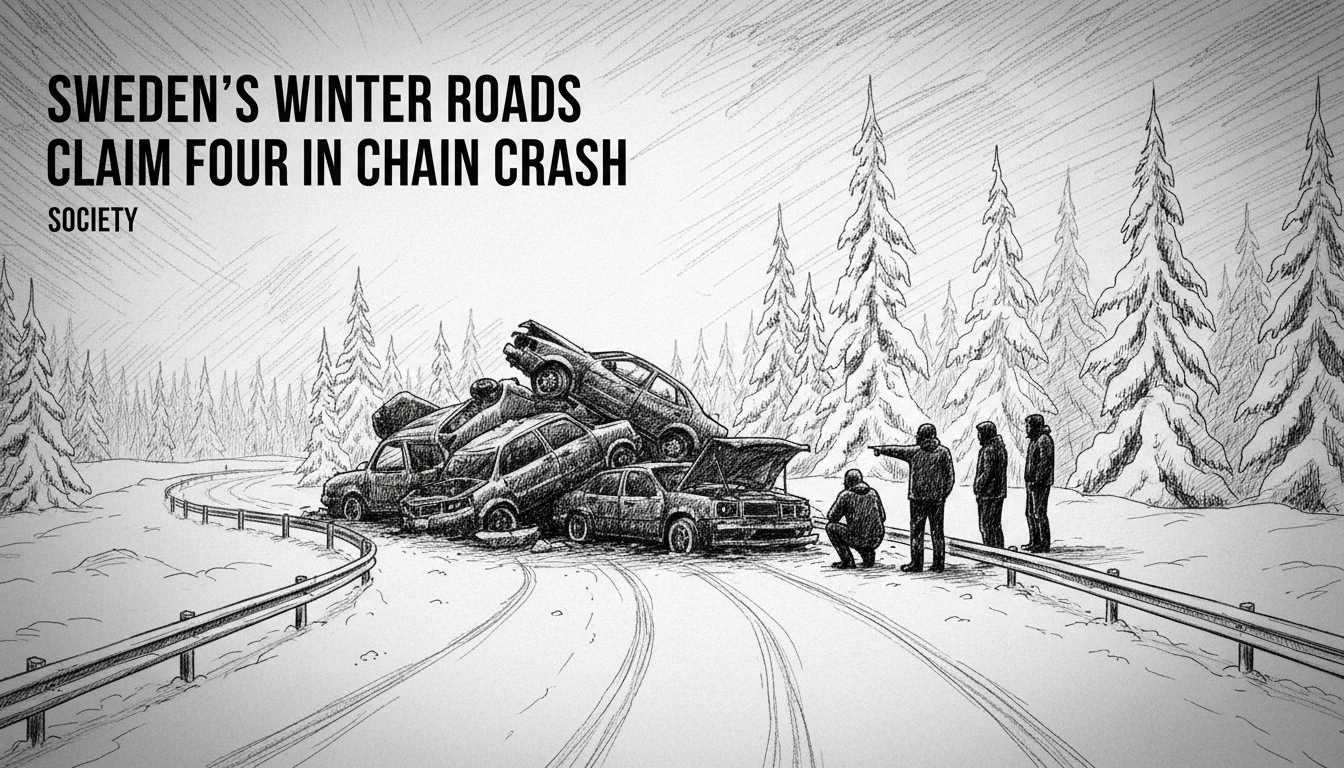
Sweden car accident statistics took a grim turn Thursday evening when a multi-vehicle collision sent four people to hospital. The emergency call came in at 6:15 PM from Svartbyleden, a main road in the northern town of Boden. A chain-reaction crash involving three vehicles trapped ten people in the wreckage. Rescue services and four ambulances rushed to the scene.
For over an hour, the road was closed. Shattered glass and twisted metal littered the asphalt. By 8 PM, traffic began to flow again, but debris remained. The injured were transported to Sunderby Hospital in Luleå, roughly 40 kilometers away. Their conditions were not immediately known. In the darkness of a Norrbotten evening, a routine drive home transformed into a scene of flashing blue lights and urgent medical care. This incident is a stark reminder of the ever-present dangers on Swedish roads, particularly as winter tightens its grip on the north.
A Northern Community Responds
Boden is a municipality of about 28,000 people. It's known for its historic military garrison and a strong sense of community. News of an accident like this travels fast in close-knit northern towns. Local emergency responders, who train extensively for such events, faced challenging conditions. The distance to major trauma centers is a constant reality in Norrbotten, Sweden's largest but least densely populated county. Getting patients to Sunderby Hospital, the region's primary facility, requires coordination and speed. The hospital itself is a central lifeline for the entire county, routinely handling serious injuries from across the vast northern terrain. The response involved multiple agencies working in concert, a testament to Sweden's integrated crisis management system.
The Winter Factor on Swedish Roads
While the exact cause of this crash is under investigation, the context is undeniable. It happened in late autumn, a period where Norrbotten can experience black ice, sudden snow squalls, and rapidly diminishing daylight. Swedish roads are among the world's safest, but the seasonal shift poses distinct threats. "Every year, we see the transition to winter conditions catch drivers out," says Lars Strömberg, a veteran driving instructor from Luleå, via a later interview. "It's not just about having winter tires on by the legal deadline. It's about adjusting your entire mindset. Your speed, your following distance, your anticipation – all of it must change with the weather." The Swedish Transport Administration (Trafikverket) runs annual campaigns urging this mental shift. Their message is clear: a road that was safe at 90 km/h in October might only be safe at 70 km/h in November.
Understanding Sweden's Road Safety Landscape
This accident in Boden occurs against a backdrop of national statistics. In 2022, Sweden recorded 324 fatal road accidents. While the long-term trend is downward, each incident reignites debate about safety measures. Norrbotten County, despite its low traffic density, faces unique challenges. Long, isolated stretches of road can mean longer waits for emergency services after an accident. Wildlife crossings are common. Weather can change from clear to blinding snow in minutes. Experts point to a combination of factors for maintaining safety: impeccable vehicle maintenance, proper tires, and driver vigilance. The concept of 'trafiksäkerhet' (traffic safety) is deeply embedded in Swedish culture, taught from a young age. Yet, the human element remains variable. Fatigue, distraction, or a slight misjudgment of road conditions can have serious consequences, especially when multiple vehicles are involved in a chain reaction.
The Human Toll Beyond the Statistics
Behind the numbers—ten involved, four hospitalized—are individuals and families. They could be commuters returning from work, friends heading to an evening activity, or families running errands. The psychological impact of such an event extends far beyond those physically injured. Witnesses, first responders, and even those stuck in the resulting traffic jam are affected. In Sweden, post-accident support systems are available, but the initial shock resonates through a small community. The road, Svartbyleden, is a familiar artery for locals. To see it transformed into a crash site is a jarring experience that underscores the fragility of daily routine.
A Look at Sweden's Proactive Safety Measures
Sweden is not passive about road safety. The Vision Zero policy, adopted in 1997, is a world-leading approach that aims to eliminate all traffic fatalities and serious injuries. This philosophy has shaped infrastructure across the country. It leads to physical road modifications, lower speed limits in urban areas, and advanced barrier systems. In the north, efforts include better lighting, improved road drainage to prevent ice, and wildlife fencing. However, on older roads like parts of Svartbyleden, implementing all modern safety standards takes time and significant investment. The authorities constantly analyze accident blackspots, but unpredictable human factors and extreme weather can create dangers anywhere, anytime.
What Happens Next in Boden
Local police will conduct a thorough investigation. They will examine vehicle conditions, interview those involved, and assess the road surface at the time of the crash. This process is methodical and can take weeks. The findings contribute to national data and may influence local traffic planning. For the injured, the path is toward recovery at Sunderby Hospital, which has specialized units for trauma care. The community will likely absorb the event, a sobering mark of the changing season. As temperatures drop and the first permanent snow covers Norrbotten, this crash serves as an unwelcome, annual alarm bell. It reminds every driver that the privilege of mobility comes with a profound responsibility. The Swedish commitment to 'trafiksäkerhet' is not just a government policy; it's a shared societal pact that requires constant renewal with every turn of the wheel, especially on the long, dark roads leading home.
The incident on Svartbyleden is a localized tragedy with a universal message. It highlights the tension between human endeavor and environmental reality. Sweden builds resilient societies and safe infrastructure, but the northern winter is a powerful, impartial force. As the country continues its pursuit of Vision Zero, each accident prompts reflection. Are winter tire regulations sufficient? Could road design be further improved? Is public awareness sharp enough? For the people of Boden, these are no longer abstract questions. They are part of the story of a Thursday evening that changed lives, a story written in skid marks on asphalt, answered by sirens cutting through the cold northern night.