
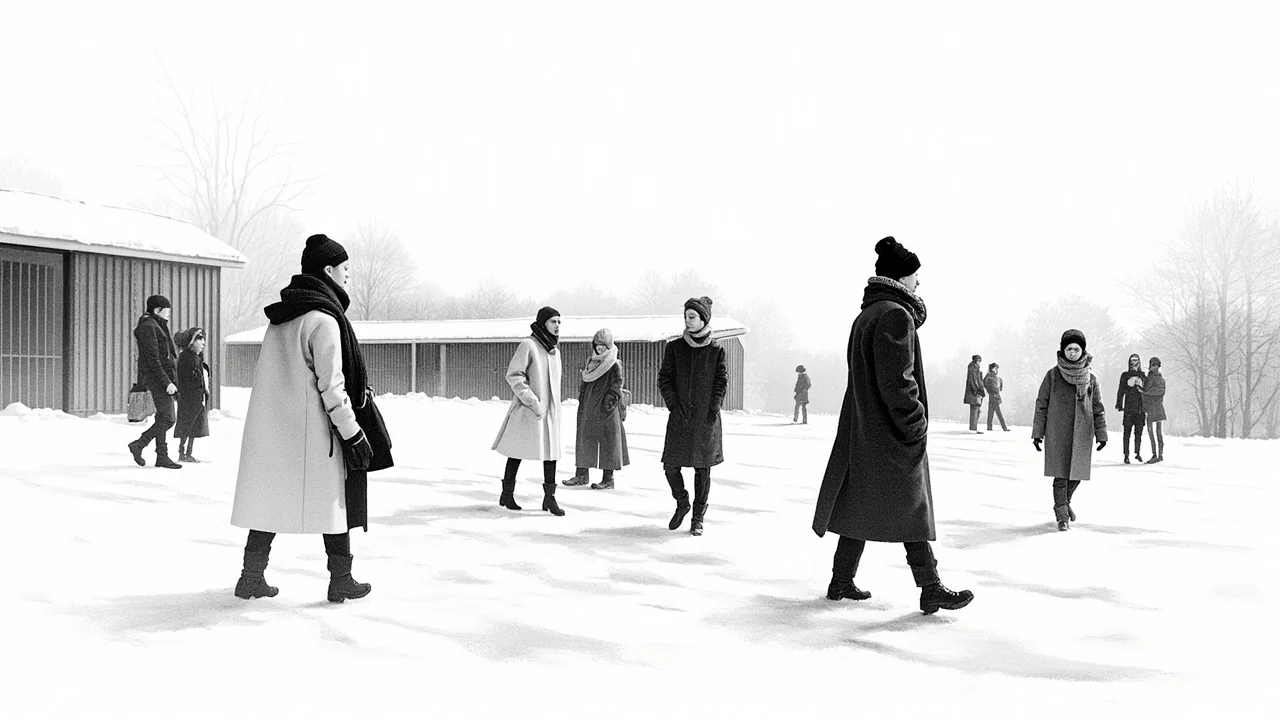
Sweden's second city Gothenburg is showing its unique style as snow blankets its streets. The recent snowfall has turned the city into a living runway of winter practicality and personal expression. From overboots to vintage furs, residents are interpreting winter survival through their wardrobe choices.
Per Nyhlin is heading out with his sons Jacob and Vincent to shovel the car and grab lunch. He is prepared for the slog. "It's all about layers, and keeping feet and hands warm," he says, pointing down at his feet where a pair of so-called 'overboots' are fitted. This functional approach is a common sight across the city's hilly neighborhoods like Haga and Linnéstaden.
Meanwhile, Poansit Meddee just arrived by train from Trollhättan and is heading to work. He's dressed in a short vintage fur jacket, jeans, and sneakers. His gloves are tucked in a bag. It’s a different philosophy entirely, prioritizing style and adapting as needed. "I don't like being cold. So I'm very warm now," states another resident, Leon Saar, representing a third camp focused solely on insulation.
Kristina Ljunggren is also commuting to work, navigating the slushy paths of Kungsportsplatsen. Her choices, like those of thousands of others, are a daily decision balancing forecast, destination, and personal comfort. This isn't high fashion from Paris or Milan. It's the authentic, grassroots style of a coastal city known for its no-nonsense attitude.
The Layered Logic of Swedish Winter
Winter dressing in Sweden follows an unspoken cultural code. The concept of 'lagom'—meaning just the right amount—applies here too. It’s about having just enough layers to be comfortable without overheating indoors. The foundation is often functional wool undergarments, a open secret to Nordic comfort.
On top of that, the middle layer provides insulation. The outer layer must repel wind and wet snow. Accessories are non-negotiable: a proper hat, gloves, and footwear that can handle icy patches and wet slush. Per Nyhlin's overboots are a perfect example. These insulated shell boots slip over regular shoes, offering a versatile solution for a climate that can swing between wet and bitterly cold.
Street Style as Cultural Commentary
What people wear on a snowy day speaks volumes. The sneakers spotted in the snow, like those on Poansit Meddee, might confuse outsiders. But they reveal a urban reality. Many Swedes rely on public transport and walk extensively between trams, buses, and offices. Bulky winter boots become a burden to carry indoors.
Sneakers or lighter shoes are often the commute choice, paired with truly weather-proof footwear for longer outdoor exposure. The short, stylish jacket versus the long, puffy parka is another key divide. It often comes down to lifestyle. Is your day spent mostly indoors with short transit bursts, or are you outside for longer periods?
The popularity of second-hand fur, as seen in the source material, points to sustainable fashion trends and a pragmatic reuse of incredibly warm materials. It’s a blend of vintage aesthetic and superior function.
Expert Analysis: More Than Just Clothing
We spoke to cultural historian Dr. Erik Lundgren about the social significance of winter dress. "What we see on the streets of Gothenburg is a visual language of preparedness and individualism," he explains. "The Swedish relationship with nature, even harsh winter nature, is fundamental. Dressing appropriately is a sign of respect for the environment and a demonstration of self-reliance."
He notes it's also subtly social. "There is an unspoken expectation to be prepared. Turning up to a meeting soaked and shivering because you wore the wrong coat shows poor planning. Your winter gear is part of your social capital." This differs from more fashion-centric cities. In Stockholm, you might see more monochromatic, designer-focused winter wear. Gothenburg's style is often described as more rugged, creative, and individual.
The Economic and Social Infrastructure
This daily winter ritual is underpinned by strong social infrastructure. Heated bus shelters, excellent public transport, and a societal understanding that life continues despite the weather enable these style choices. Offices and cafes have ample space for wet boots and hanging heavy coats. The culture is built around managing the climate, not being defeated by it.
The choices also reflect an urban environment. In the Swedish countryside, the style shifts dramatically toward uncompromising functionality—thicker insulation, longer coats, and heavy-duty boots. The city mix is a negotiation between the urban landscape and the Nordic elements.
A Seasonal Shift in City Life
The snowfall changes the city's rhythm and sound. The crunch of snow underfoot, the reduced traffic noise, the collective focus on navigating sidewalks—it creates a different atmosphere. The winter wardrobe is the uniform for this seasonal shift. It can be a social equalizer; everyone is bundled up, focused on the same basic need for warmth.
Yet, it remains a platform for identity. A colorful knitted 'lusekofta' (traditional patterned sweater), a distinctive hat, or a unique pair of boots allows personal flair to shine through the layers. Festivals like the upcoming Göteborg Film Festival must contend with this reality, where attendees shuffle between cinemas in their winter armor.
Looking Ahead: Climate and Culture
As winters become more unpredictable with climate change, featuring more freeze-thaw cycles and wet snow, the classic Swedish winter wardrobe is adapting. The demand is growing for gear that is water-proof yet breathable, versatile for fluctuating temperatures. The core principle remains: functionality first, but never at the complete expense of personal style.
The sight of Gothenburgers in the snow is a small, daily testament to a culture adapted to its environment. It’s a practical, stylish, and deeply ingrained response to the season. The question for the future is how this iconic winter style will evolve as the very climate it was designed for continues to change.