
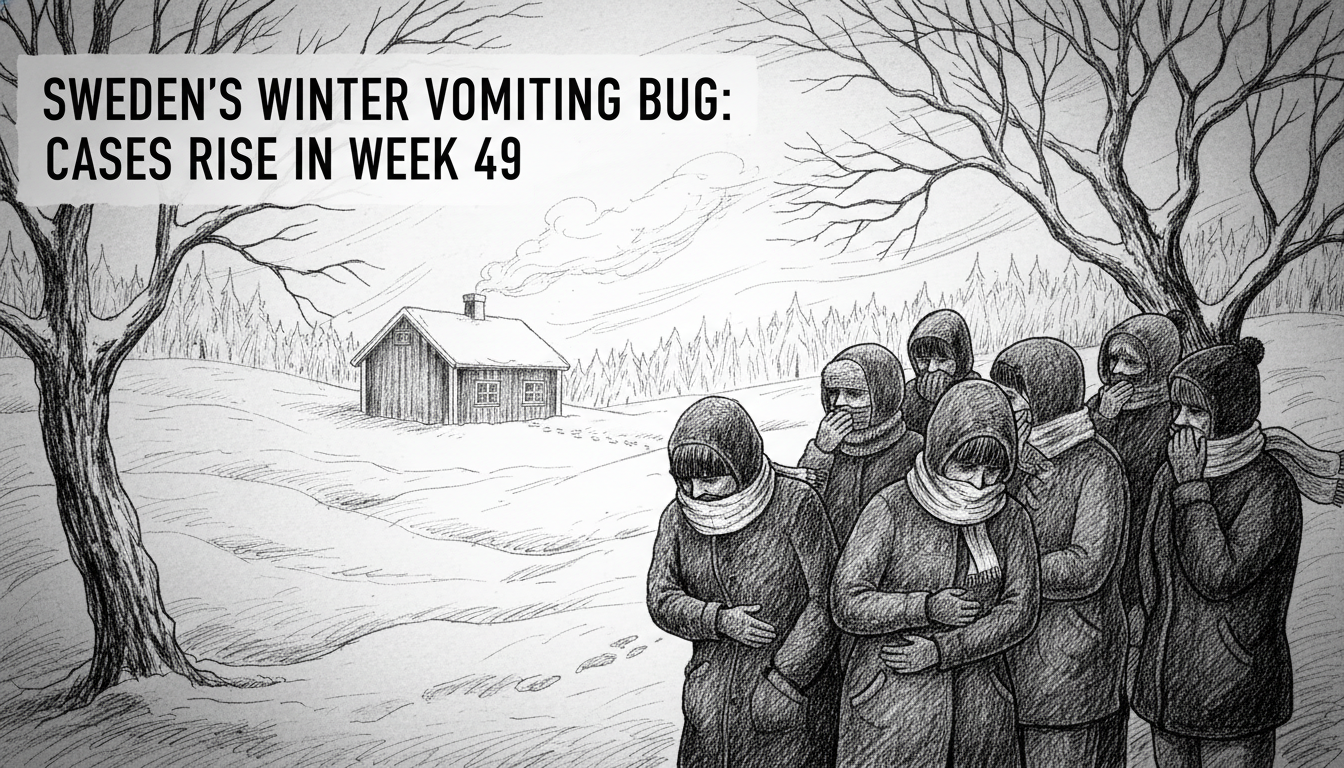
Sweden's winter vomiting disease season has officially begun, with a notable spike in cases reported in week 49. Public health officials confirm the highly contagious calicivirus is spreading more widely in society, mirroring the seasonal pattern from last year but with higher initial numbers. For many Swedes, the news elicits a groan of recognition and a muttered 'Åh, fy fan'—a phrase that perfectly captures the collective dread of the unpleasant illness.
"We haven't seen a major increase here in Östergötland yet, but it's probably only a matter of time," says Karin Festin, deputy infection control doctor at Region Östergötland. Her sentiment echoes across the country as search activity for 'vinterkräksjuka' on the national health advice site, 1177.se, surged last week. This digital thermometer indicates the virus is gaining ground, even before large institutional outbreaks are declared.
The Unwelcome Seasonal Guest
Vinterkräksjuka, known internationally as norovirus or sapovirus infection, is a staple of the Swedish winter. As darkness falls early and people retreat indoors to cozy cafés in Södermalm or communal spaces in suburban apartment blocks, the virus finds its perfect transmission environment. The timing is uncannily consistent. "This season seems to be starting at the same time, week 49, just like 2024–2025," Festin notes. However, she adds a crucial detail: more cases have been reported so far compared to this period last year.
The virus doesn't discriminate by age, but its impact can vary dramatically. For healthy adults, it's often 48 miserable hours of nausea, vomiting, and diarrhea. For the very young and the elderly, however, the rapid dehydration it causes can be dangerous, sometimes requiring hospital care. This duality shapes Sweden's public health response, focusing on protecting the most vulnerable in care homes and hospitals.
A Society on Guard
So far, officials report no major outbreaks in healthcare, elderly care, or preschools—the typical epicenters that signal a severe season. "But that doesn't rule out, of course, that people in the community could have been affected," Festin clarifies. This is the stealthy nature of the virus. It can ripple through families, workplaces, and gyms long before it appears on the official radar.
The Swedish approach is one of calm vigilance. There is no panic, but a societal muscle memory kicks in. People become more fastidious about handwashing, a practice deeply ingrained from a young age. The public health message is simple and clear: if you are sick, stay home. Do not visit elderly relatives. Do not go to work. This social responsibility, the concept of 'samhällsansvar', is the first line of defense.
The Science of Spread and Prevention
Calicivirus is notoriously resilient. It can survive on surfaces like doorknobs, subway handrails, and supermarket trolleys for days. A tiny amount of virus is enough to cause infection. This is why outbreaks can sweep through a place like a preschool or a cruise ship—another common Swedish holiday venue—with alarming speed.
Good hygiene is non-negotiable. Experts emphasize washing hands with soap and warm water, as alcohol-based hand gels are less effective against this particular virus. At home, meticulous cleaning with chlorine-based products is recommended if someone falls ill. In a culture that values cleanliness and order, these instructions are taken seriously.
Living with the Seasonal Threat
For families, the arrival of vinterkräksjuka means contingency planning. Who can work from home if a child gets sick? Which parent will take the first shift of care? In Stockholm, the buzz of holiday planning in December is now tempered with a pragmatic caution. The Christmas buffet, or 'julbord', a feast of shared dishes, is a potential hotspot if guests are not completely well.
The economic impact is also felt. Absenteeism rises in workplaces and schools. For the service industry, especially restaurants and hotels, the fear of an outbreak linked to their premises is a real business risk. Sweden's extensive sick leave system allows people to stay home without financial ruin, a key factor in controlling community spread.
Looking Ahead to the Winter Months
What does this stronger start to the season mean for the coming months? Public health authorities will be closely monitoring data from labs and clinics. The focus will remain on preventing outbreaks in institutional settings, where the consequences are most severe. For the average person, it's a reminder to maintain those simple, effective hygiene habits.
The winter vomiting bug is an unwelcome but familiar part of the Swedish year. It tests the public health system and societal cohesion. The quiet increase in cases in week 49 is not a crisis, but a signal. It's a call to action for individuals to be considerate, for parents to keep sick children home, and for everyone to wash their hands just a little more thoroughly. As one Stockholmer put it while shopping in Hötorget's market halls, "It's part of winter, like slush and darkness. You just have to get through it." The question now is whether this year's wave will be a gentle swell or a perfect storm.