
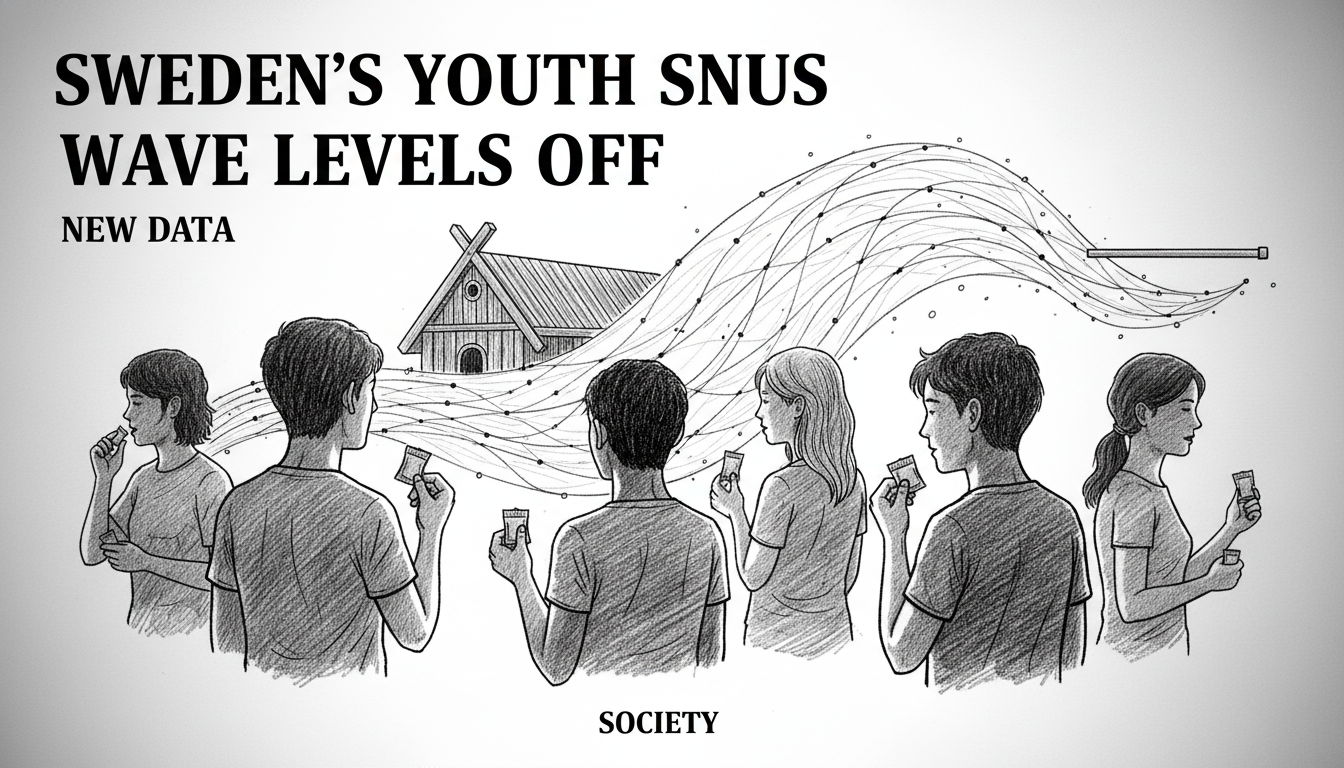
Sweden's sharp rise in youth snus use has hit a plateau for the first time in nearly a decade. New figures from 2025 show no statistically significant increase in usage among ninth-grade and second-year high school students. This marks a potential turning point after years of relentless growth fueled by the introduction of trendy, tobacco-free nicotine pouches.
"It's a little early to talk about a definitive trend break, but it's still something we want to continue monitoring closely," says Martina Zetterqvist, an investigator at the Swedish Council for Information on Alcohol and Other Drugs (CAN). Her cautious optimism reflects a nation watching closely. For years, public health experts have sounded alarms as brightly colored cans of 'white snus' became commonplace in schoolyards from Vasastan to Södermalm.
The White Snus Revolution
The story of youth snus in Sweden is really two stories. There's the traditional, tobacco-based snus—a cultural staple with deep roots. Then came 2016 and the game-changer: white snus. These small, discreet pouches contain nicotine but no tobacco leaf, often marketed with sleek designs and flavors like mint, berry, and citrus. They were a product looking for a new demographic, and they found one.
"It has increased primarily among girls who previously did not use snus to a large extent, when there was only brown tobacco snus to choose from," Zetterqvist explains. The data tells a clear tale. The introduction of a product perceived as cleaner, more discreet, and less associated with traditional tobacco opened the floodgates. Use among young women, in particular, soared, changing the social landscape of nicotine consumption in Swedish high schools.
A Plateau, Not a Decline
The latest numbers provide a moment to pause. In 2025, 14 percent of ninth-grade students and 27 percent of second-year high school students reported using snus. Critically, this represents no meaningful statistical change from the 2024 figures. For researchers who have watched the line on the graph climb steadily year after year, a flat line is news in itself.
"This is the first time we have not seen an increase in any of the groups, neither among boys nor girls in the ninth grade and high school," Zetterqvist notes. The plateau is nationwide, observed in cities like Stockholm, Gothenburg, and Malmö, as well as in smaller towns. It raises immediate questions. Is this a market reaching saturation? Are public health campaigns finally cutting through? Or is it simply a temporary lull?
Walking through Kungsträdgården on a Friday afternoon, you still see the evidence. Groups of teens, some as young as 15 or 16, with the tell-tale circular bulge under their upper lip. The cans are often the white variety, brands like ZYN, Velo, or Lyft, tucked into a pocket or a small handbag. The ritual remains, but the growth of that ritual may be slowing.
Cultural Crossroads and Health Concerns
Snus occupies a unique and somewhat contradictory space in Swedish culture. For adults, it's a widely accepted, even mundane, part of life—a common sight in offices and on construction sites alike. It's credited by many public health officials as a key reason Sweden has one of the lowest smoking rates in Europe, a concept known as 'harm reduction.' But the conversation shifts dramatically when it comes to children and adolescents.
"The developing brain is particularly vulnerable to nicotine," says Dr. Erik Forsberg, a pediatrician at Karolinska University Hospital. "Addiction establishes itself much faster, and it can impact concentration and cognitive development. The fact that these products are nicotine-only doesn't make them risk-free for young people." This is the central tension. A product seen as a solution for adult smokers is simultaneously creating a new generation of nicotine-dependent youth.
Parents like Lena, whose 17-year-old daughter attends a school in Östermalm, feel caught in the middle. "It's everywhere. She says it's just for fun, that it's not like smoking. But she's irritable if she doesn't have it. It's the new normal, and it's very hard to fight against," she says, echoing a common parental frustration.
What's Behind the Stall?
Experts suggest several factors could be contributing to the plateau. Increased media scrutiny and school-based prevention programs have likely raised awareness. Some municipalities have begun local bans on the sale of flavored nicotine pouches, targeting their appeal to youngsters. There's also a natural ceiling effect; after years of rapid growth, the pool of non-users shrinks.
Furthermore, the social narrative might be subtly changing. While still widespread, the 'cool factor' of white snus may be dimming slightly as it becomes utterly commonplace. "When something becomes everyday, it loses some of its rebellious or trendy allure," suggests sociologist Mia Karlsson, who studies youth trends. "The next generation always looks for something new to define itself."
The Regulatory Landscape
Sweden's regulation of snus and nicotine pouches is a patchwork. Snus containing tobacco is banned for sale in the EU under internal market rules, but Sweden secured an exemption when it joined the union. The newer, tobacco-free nicotine pouches, however, fall into a grayer area. They are not classified as food, medical products, or tobacco, leading to what critics call a regulatory vacuum.
The government has taken some steps. The sale of nicotine pouches to individuals under 18 is prohibited, a law that is notoriously difficult to enforce, especially with online sales. Proposals for stricter advertising bans, plain packaging, and flavor restrictions are perennially debated in the Riksdag. The recent plateau in use may ease some political pressure for immediate, sweeping action, but the long-term public health question remains.
Looking Ahead: A Cautious Sigh of Relief
For public health officials at CAN and elsewhere, the 2025 data is a welcome sign but not a reason to declare victory. The plateau comes at a time when usage rates are historically high. Twenty-seven percent of second-year high school students using snus is still a significant figure with substantial public health implications.
The focus now will be on whether this is a lasting change or a statistical blip. Will the numbers hold steady, begin to decline, or resume their climb next year? Continued monitoring is essential, as is research into the long-term health effects of chronic nicotine pouch use, which are not yet fully understood.
The story of snus in Sweden is a living one, deeply woven into the fabric of society. It's a tale of cultural tradition, innovative products, market forces, and adolescent experimentation. The latest chapter suggests the breakneck speed of change may be slowing. But for the thousands of Swedish teens with a pouch under their lip today, the habit, and its consequences, are already very real. The question for Sweden is not just whether the wave has crested, but what it leaves in its wake.