
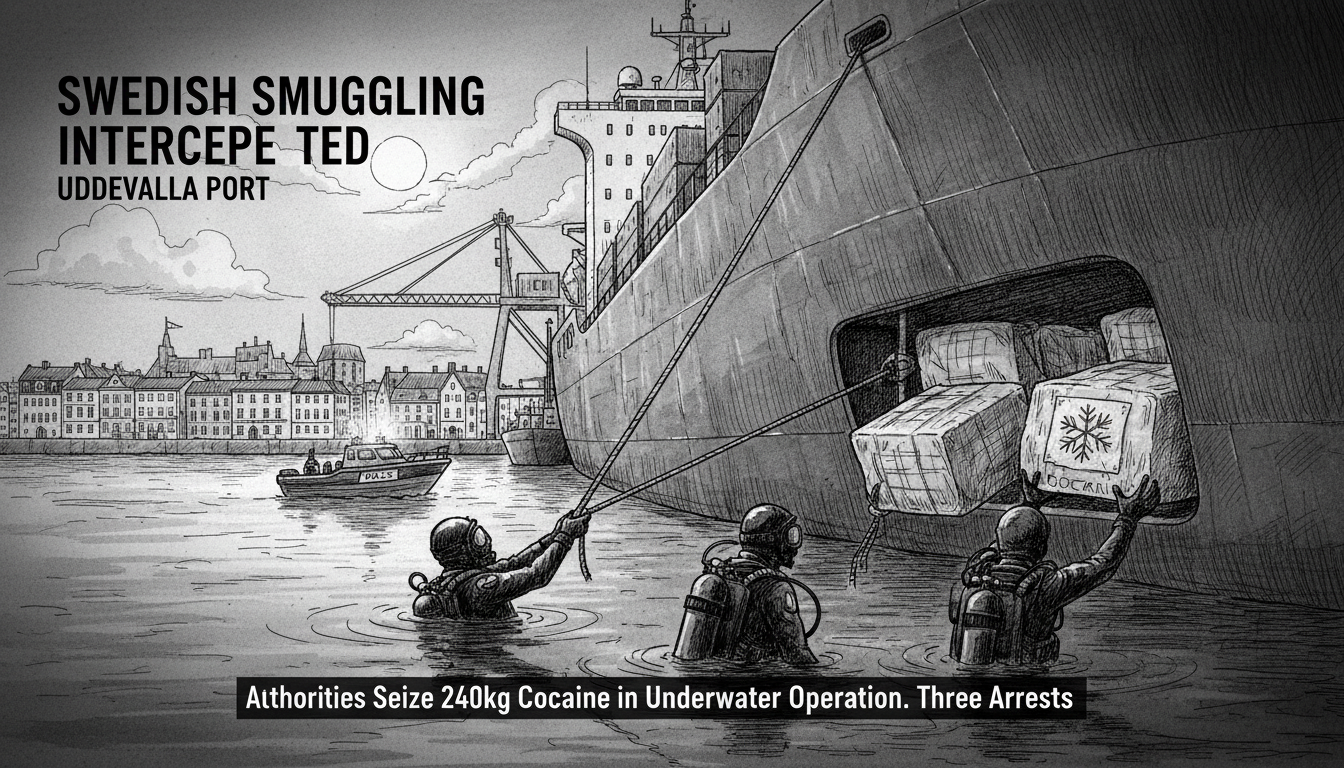
Swedish law enforcement has disrupted a sophisticated narcotics operation following the interception of 240 kilograms of cocaine in Uddevalla harbor. Three individuals now face prosecution for their alleged involvement in the underwater retrieval mission that targeted a commercial vessel's hull. Customs investigator Richard Johansson confirmed the global recognition of this smuggling methodology during official statements. The Swedish government continues confronting transnational drug trafficking networks through coordinated port security measures.
This incident represents one of Sweden's largest narcotics interdictions in recent maritime operations. The Riksdag has consistently prioritized enhanced border control funding through multiple parliamentary sessions. Customs officials monitored the cargo vessel's European transit route before initiating surveillance operations upon its Uddevalla arrival. Underwater scooter-equipped divers allegedly executed the nighttime retrieval from the ship's submerged surfaces.
Sweden's geographical position makes its ports vulnerable to international drug smuggling operations. The Stockholm politics landscape has maintained strict narcotics enforcement policies across successive administrations. Previous Riksdag decisions have strengthened customs authorities' surveillance capabilities and interagency coordination. This case demonstrates practical implementation of those government policy Sweden enhancements.
Maritime drug interdictions require extensive coordination between customs, police, and coast guard units. The Swedish Parliament recently reviewed proposals for increased underwater detection technology funding. Current government policy Sweden mandates rigorous inspection protocols for vessels arriving from high-risk jurisdictions. These measures reflect broader European Union security cooperation frameworks.
Legal proceedings will unfold within Sweden's judicial system where conviction typically brings substantial prison sentences. The Swedish government maintains a zero-tolerance approach toward organized narcotics trafficking. This Uddevalla operation showcases the practical challenges in detecting sophisticated smuggling techniques. Customs officials emphasize that underwater drug retrieval operations remain difficult to identify without advanced intelligence.
International criminal networks persistently adapt their smuggling methods to evade detection systems. The Swedish Parliament's standing committee on justice regularly assesses customs enforcement effectiveness. Future Riksdag decisions may consider additional resources for marine intervention capabilities. These operational successes nevertheless highlight the persistent challenge of intercepting narcotics before they reach domestic markets.