
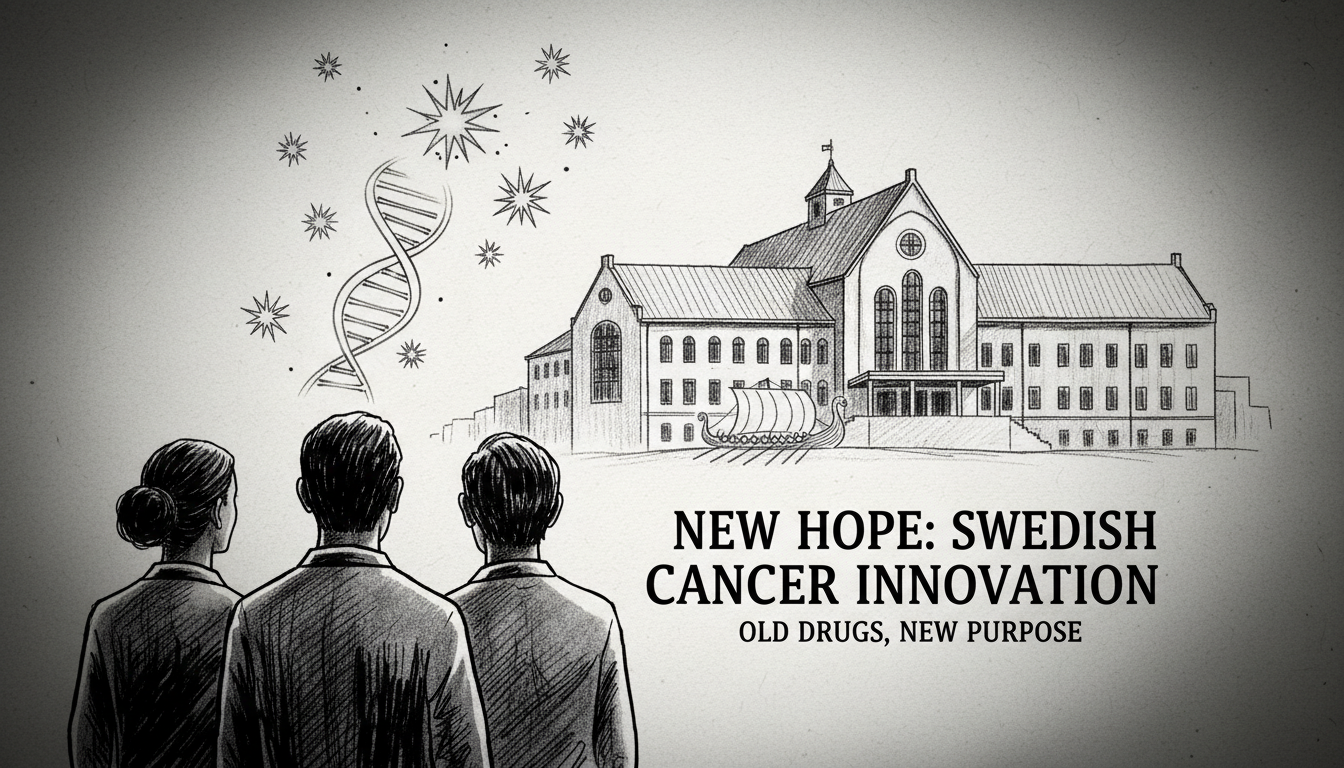
A cancer diagnosis can feel like a final verdict. For some patients in Sweden, standard treatments simply stop working. That moment often brings a profound sense of hopelessness. Now, a bold new study at a major Swedish hospital is challenging that narrative. It aims to give patients a new chance by testing approved cancer drugs in completely new ways.
The study is launching at Sahlgrenska University Hospital in Gothenburg. This is one of Scandinavia's leading medical research centers. The core idea is both simple and radical. Doctors will use existing, approved medications to treat cancer types they were not originally designed for. Cancer specialist Edvard Abel explained the goal. He said in a statement that the best outcome would be finding treatments that work on other cancer forms than those previously known.
This approach tackles a major bottleneck in modern oncology. Drug development is incredibly slow and specialized. Each new medication is highly targeted. It might only work for one specific genetic mutation in one type of cancer. Getting official approval to use that same drug for a different cancer can take pharmaceutical companies many years of new trials. Patients simply do not have that time to wait.
The Swedish study, therefore, represents a significant shift in thinking. It moves from a rigid, approval-based model to a more agile, patient-centered one. The team at Sahlgrenska has received ethical approval to proceed. They will not wait for the lengthy bureaucratic process. This reflects a pragmatic streak common in Swedish society and its healthcare system. The focus is on finding solutions that work here and now.
For international observers, this highlights Sweden's role in pragmatic medical research. The country's universal healthcare system provides a unique platform for such studies. It allows researchers to think about patient outcomes first. The financial and bureaucratic barriers common elsewhere are somewhat lower. This is not about finding a miracle cure. It is about using the tools already in the medicine cabinet more intelligently and compassionately.
The implications for Swedish society are deep. Cancer touches nearly every family. A more flexible treatment model could extend lives and provide hope where little existed. It also speaks to a broader Swedish trend of applied innovation. The goal is not just discovery, but practical, immediate application. The study's success could influence cancer care protocols across the Nordic region and beyond. It is a clear example of the Swedish principle of 'lagom'—not too much, not too little—applied to science. It is about using existing resources optimally to do the most good for the most people.
What happens next? The study will enroll patients for whom conventional options have been exhausted. Their responses will be closely monitored. If successful, this model could be adopted by other university hospitals in Stockholm, Malmö, and Uppsala. It represents a quiet but potentially powerful evolution in the fight against cancer. It is a story of hope, built not on hype, but on the careful, determined re-examination of what we already have.