
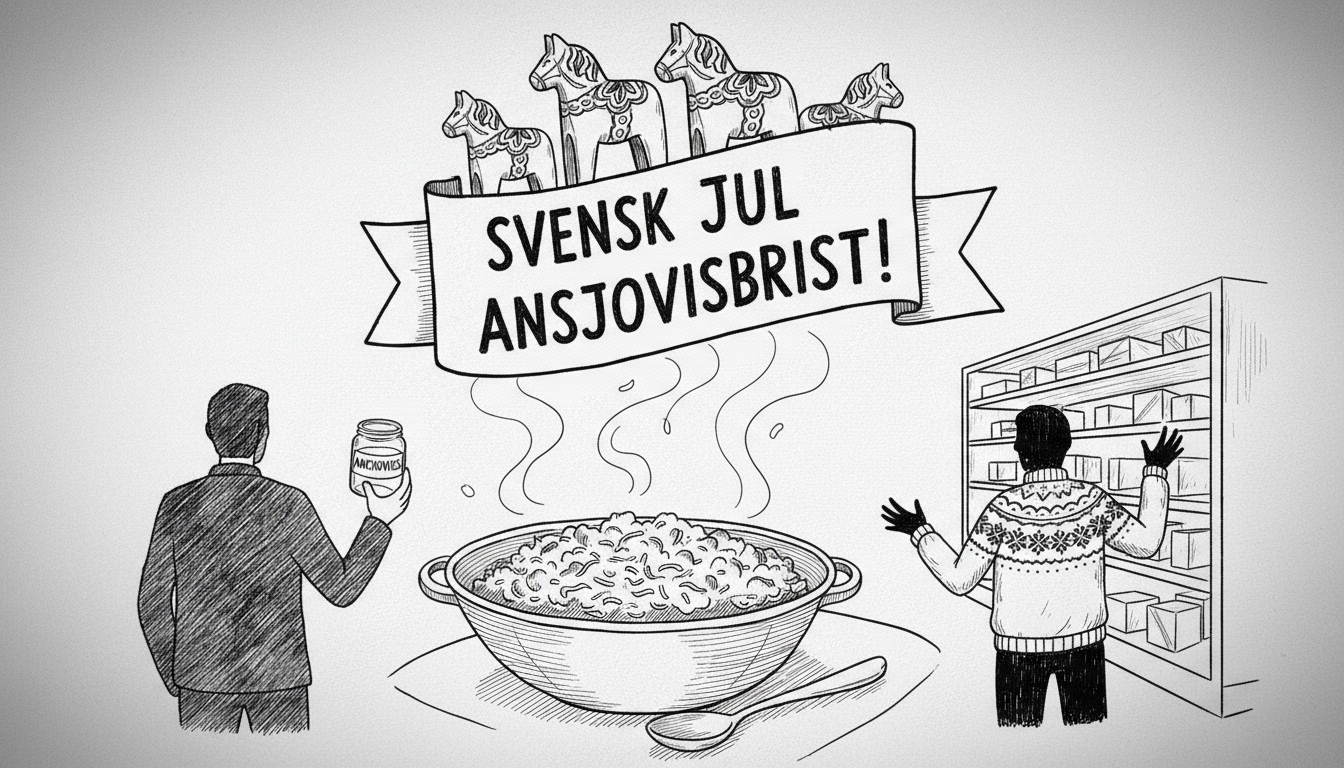
The familiar pre-Christmas alarm has sounded again across Sweden. Shelves are emptying, people are stockpiling tins, and a beloved holiday staple is at the center of a seasonal scramble. The annual anchovy shortage is back, threatening the traditional Swedish Christmas table. But how worried should you really be about missing out on this essential ingredient for your Jansson's Temptation?
Linn Hultén, a press officer for the Coop grocery chain, offers some reassurance. 'The hope is that everyone who wants to buy anchovies can do so,' she said in a statement. Yet, the anxiety is palpable. In Stockholm, conversations in Södermalm's food halls and Östermalm's specialty shops often turn to the anchovy hunt. The shortage has even sparked a secondary market, with tins being resold on popular online marketplaces.
This is not a new story. Sweden faces this delicate dance with its anchovy supply nearly every year. The small, spiced sprats are a non-negotiable component of the Swedish julbord, or Christmas smorgasbord. They are the key flavor in Jansson's Temptation, a creamy potato and anchovy casserole that defines the holiday for many families. Without it, the meal feels incomplete, a break from generations of tradition.
The issue highlights Sweden's complex relationship with food security and tradition. The country relies heavily on imports for this specific product, making it vulnerable to supply chain fluctuations, fishing quotas in the Baltic Sea, and global demand. For international residents in Sweden, this annual crisis is a fascinating window into local culture. It shows how deeply food is woven into national identity and seasonal celebration. It's more than a condiment; it's a cultural touchstone.
So, what does this mean for your Christmas planning? Grocery chains are working to manage distribution, but the advice from seasoned Stockholmers is consistent: don't wait. If you see a tin of classic 'Ansjovis' at your local ICA or Coop, buy it. Consider exploring alternative sources in neighborhoods known for diverse food offerings, like Hornstull or Kungsholmen. Some may turn to artisan producers at markets like Östermalms Saluhall, though prices will be higher.
The situation calls for a pragmatic approach. The shortage is a recurring reality of Swedish winters, driven by high demand and finite supply. It underscores a simple truth. Preserving cultural rituals in a globalized market can be a fragile endeavor. For now, the hunt for the silvery little fish continues, a small but significant drama playing out in kitchens and grocery aisles across the nation.