
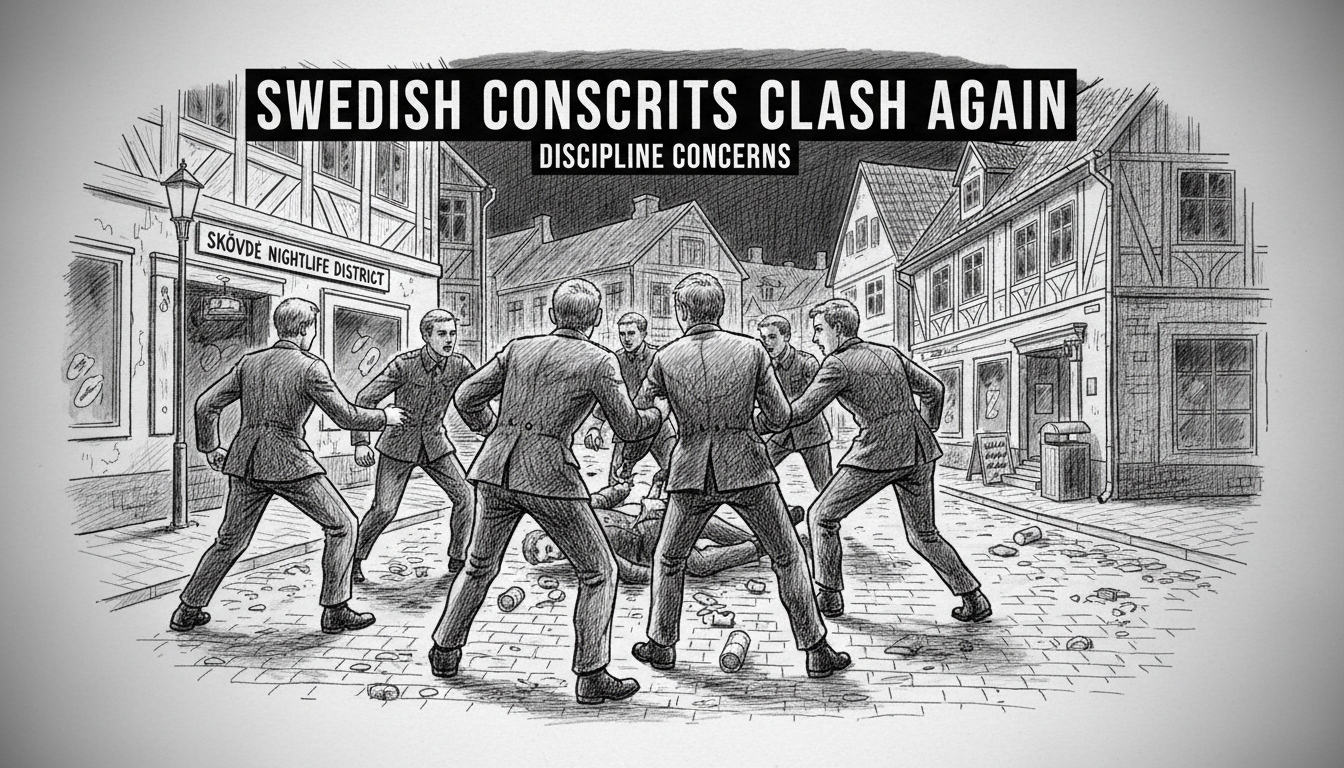
Military conscripts from two Swedish regiments clashed violently outside a Skövde nightclub. The incident marks the second confrontation involving these units in just one week. Local police confirmed multiple individuals fought in the city center. One person faces assault suspicions following the altercation.
Approximately thirty conscripts from regiments K3 and P4 engaged in similar violence seven days earlier. Military police intervened during that previous incident. A dozen individuals required physical restraint according to official reports. Both disturbances occurred near entertainment venues in central Skövde.
Sweden maintains mandatory military conscription for citizens. The system trains approximately 6,000 new conscripts annually. Recent years saw expanded conscription numbers amid regional security concerns. These incidents raise questions about discipline within Sweden's armed forces.
Military conscripts typically range from 18 to 28 years old. They undergo basic training before specialization assignments. The K3 regiment operates from Karlsborg while P4 serves from Skövde. Both units contribute to Sweden's national defense infrastructure.
Local residents express growing concern about recurring military disturbances. Business owners near the incidents report negative impacts on evening trade. Nightlife establishments consider additional security measures. The pattern suggests systemic behavioral issues within certain units.
Military officials face pressure to address discipline problems. Command structure reviews may identify leadership gaps. Training protocols could receive additional behavioral components. Sweden's armed forces maintain strong international reputations despite these incidents.
Defense ministry representatives declined immediate comment. Internal investigations typically follow such public disturbances. Disciplinary actions range from formal warnings to discharge proceedings. Serious offenses may involve civilian legal consequences.
Sweden's conscription model receives broad political support. Recent geopolitical developments increased defense spending allocations. Public confidence remains generally high in military institutions. These repeated incidents test that trust among local communities.
International observers monitor Scandinavian security developments closely. Sweden's NATO membership application progresses through ratification processes. Military professionalism standards face increased scrutiny during this transition. Behavioral incidents could influence perception among alliance partners.
Military police handle initial investigations of conscript misconduct. Civilian authorities may pursue parallel legal processes. Convictions for assault carry potential imprisonment sentences. The armed forces maintain separate disciplinary procedures for uniformed personnel.
Defense analysts note similar patterns in other conscription-based militaries. Young recruits adjusting to structured environments sometimes struggle with civilian transitions. Evening liberty periods present particular challenges for behavior management. Most conscripts complete service without disciplinary incidents.
Sweden's armed forces modernization continues despite these behavioral concerns. Equipment upgrades and expanded training facilities receive continued funding. Recruitment standards maintain rigorous physical and psychological requirements. The incidents represent exceptions rather than systemic failures.
Local commanders likely implement additional restrictions following repeated disturbances. Unit-wide consequences often follow individual misconduct in military settings. Leadership changes sometimes address persistent discipline problems. The armed forces prioritize maintaining public trust and operational readiness.