
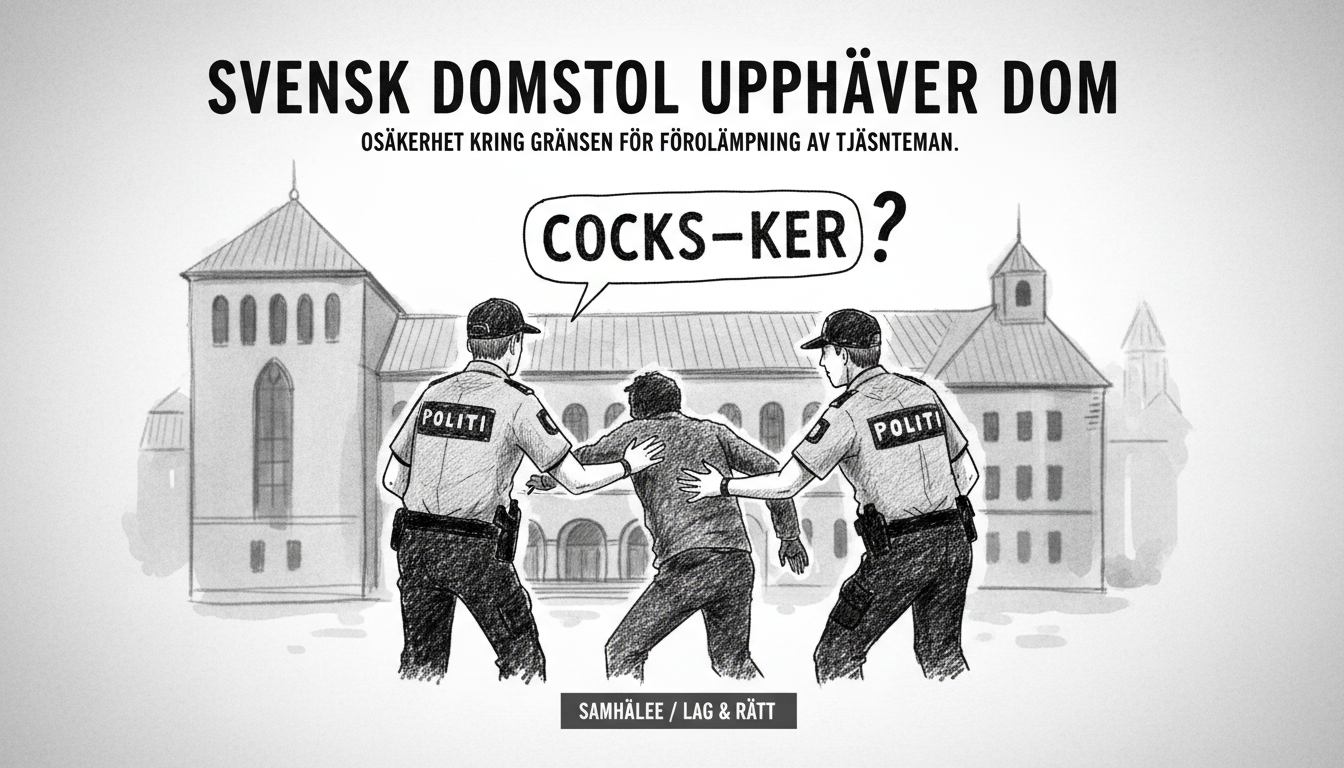
A Swedish appeals court has overturned a conviction for insulting a police officer. The case marks the first higher court ruling since Sweden introduced a new law protecting public officials from verbal abuse.
The woman had been convicted in a district court for calling an officer "cocksucker" and "someone who was screwed crooked as a child" during her arrest in July. She faced charges under Sweden's new law against insulting public officials.
Göta Court of Appeal cleared the woman of all charges. The court determined her words expressed personal anger and frustration rather than constituting criminal insult.
Both courts rejected the police officer's claim for damages. They noted police must expect a certain level of rudeness during their work.
Sweden's new offense of insulting a public official carries penalties of fines or up to six months in prison. The law requires the insult must be likely to damage the official's self-esteem or dignity.
Over 700 reports have been filed under the new law in its first four months. Police officers filed most complaints, but security guards, judges, prison staff and social workers also reported insults.
Local media documented various insults that prompted reports. These included terms like whore, glasses-wearing cunt, hobbit, cop bastard and nerd. One man was reported for chanting "police, police, potato pig" to officers at Arlanda Airport.
By September 30, courts had decided 12 of 27 cases that went to trial. Nine resulted in convictions while three ended in acquittals.
Similar cases have produced different outcomes. A pensioner who called an officer "fucking police cunt" was acquitted. A teenage boy who used the term "cocksucker" was convicted.
The appeals court ruling creates uncertainty about what constitutes criminal insult under the new law. The inconsistent application suggests police and courts need clearer guidance about acceptable language during tense encounters.
All six Swedish appeals courts confirmed this case represents their first ruling on insults against public officials. The law appears rarely used at higher judicial levels despite hundreds of initial reports.