
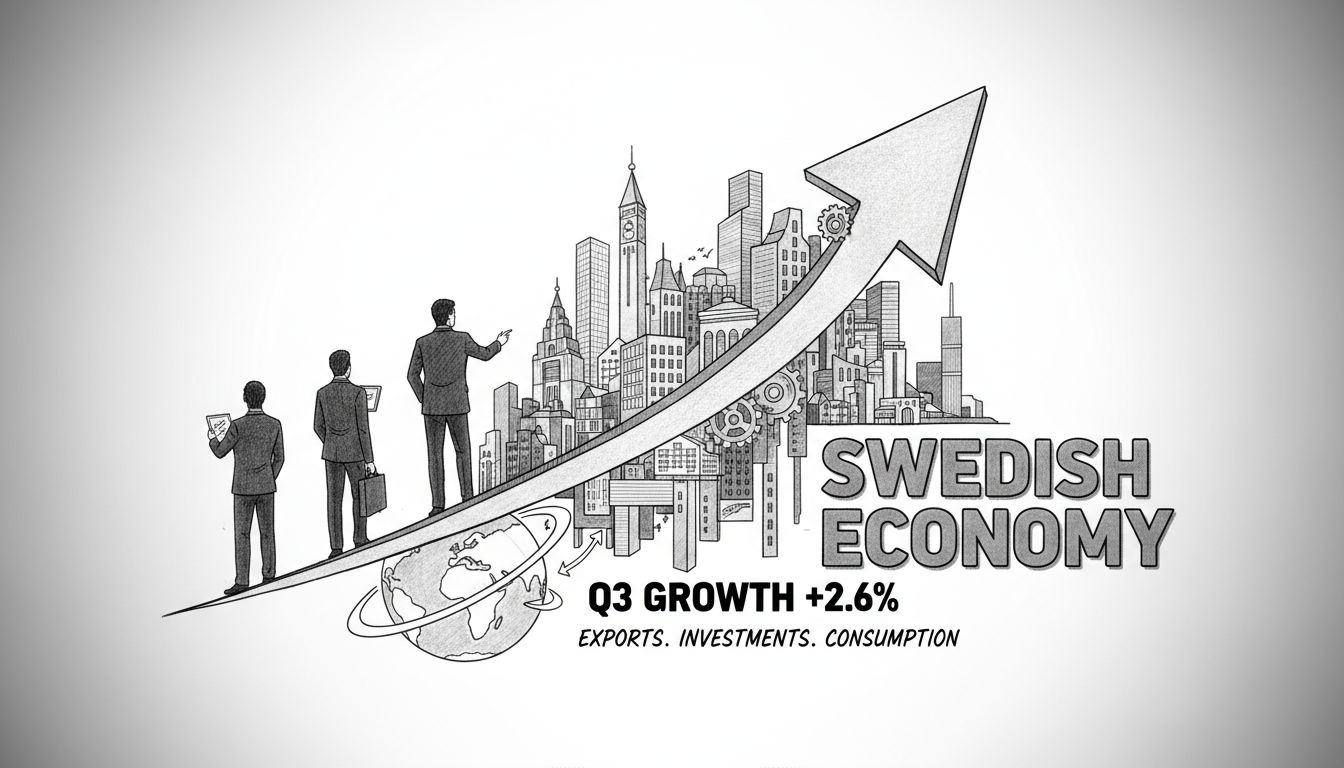
Sweden's economy expanded 2.6 percent in the third quarter compared to the same period last year. This exceeded preliminary estimates of 2.4 percent growth. The statistics agency confirmed the robust performance despite global economic headwinds.
Quarter-over-quarter growth measured 1.1 percent, matching earlier projections. The expansion showed broad strength across multiple sectors. Export growth provided substantial momentum alongside increased fixed investments. Household consumption also contributed positively to the economic uptick.
Jessica Engdahl, head of National Accounts, explained the quarterly performance. 'Economic growth strengthened during the third quarter,' she said in a statement. 'The upturn was broad with positive contributions from exports, fixed investments and household consumption.' She noted that high service imports and lower inventory buildup slightly restrained development.
Household consumption rose 0.8 percent during the quarter. Transportation expenditures drove most of this increase. Swedish consumers showed continued confidence despite inflation concerns.
The positive GDP data contrasts with recent retail figures. October retail sales volumes declined 0.3 percent year-over-year. Sales of durable goods dropped 0.7 percent while daily goods decreased 0.2 percent.
This economic resilience matters for Swedish startups seeking venture capital. Strong GDP growth typically signals healthy investment conditions. Stockholm's business districts often benefit from such economic momentum.
The Nordic innovation hub continues attracting international attention. Swedish venture capital firms remain active despite global funding challenges. Both Östermalm and Södermalm business areas contribute to this ecosystem.
Nordic fintech news frequently highlights Sweden's stable economic foundation. The latest growth figures suggest continued support for business innovation. International investors monitor these indicators when evaluating Nordic opportunities.
What does this mean for Sweden's economic trajectory? The third quarter performance indicates underlying strength. However, retail sector weakness warrants monitoring. The mixed signals reflect broader global economic uncertainty.
Sweden's export-driven growth model appears functioning effectively. The country maintains competitive advantages in several key industries. This supports ongoing business development across the Stockholm business district and beyond.