
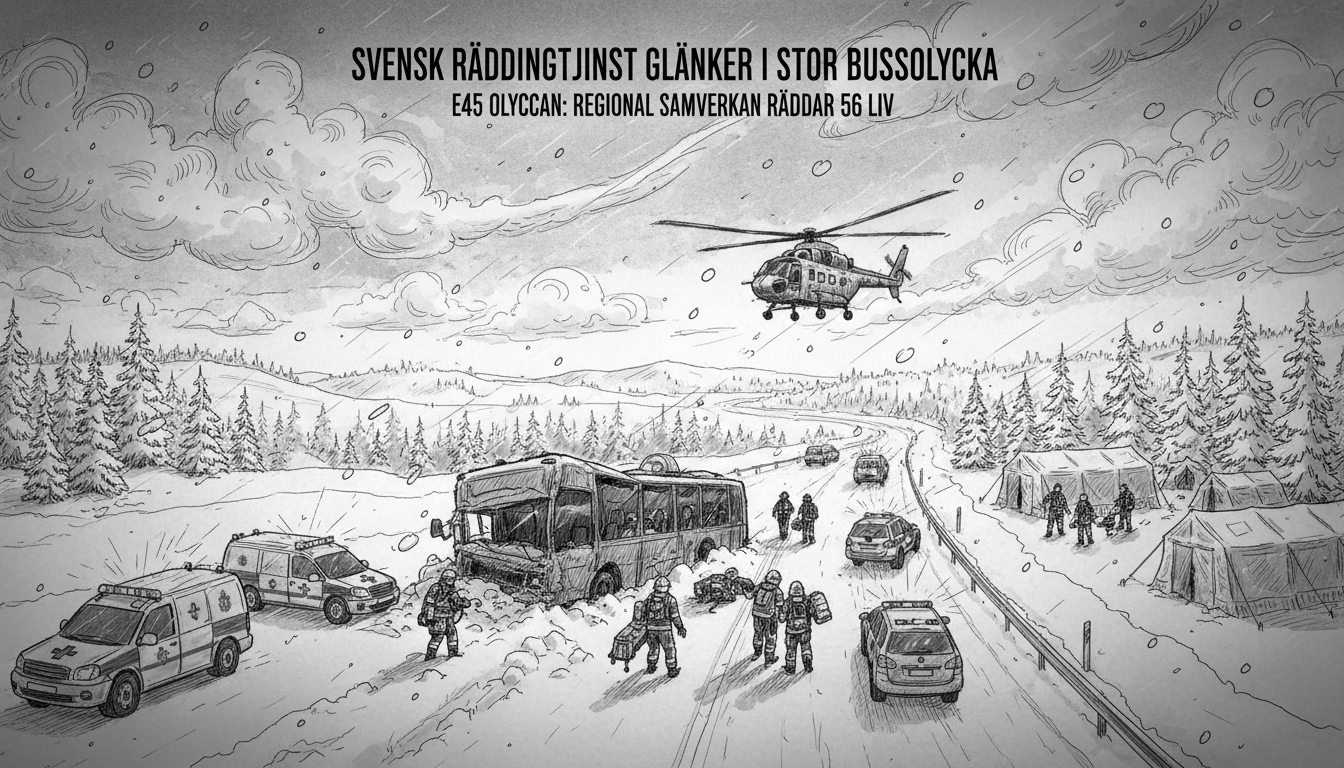
Sweden's emergency response systems faced a critical test when a bus carrying dozens of passengers veered off Highway E45 between Vilhelmina and Storuman. The accident resulted in 56 injured individuals, challenging the region's medical infrastructure and prompting a massive coordinated rescue operation. Ambulance chief Stian Kvalvik confirmed that all available resources were immediately deployed when the alarm sounded, demonstrating the Swedish government's commitment to emergency preparedness.
The response required strategic resource allocation across northern Sweden. Ambulances were relocated from coastal areas to the inland accident site, while additional units from Jämtland/Härjedalen moved closer to the border to maintain regional coverage. Off-duty medical personnel voluntarily reported for duty to bolster staffing levels during the critical response period. This mobilization reflects the Riksdag decisions that have prioritized emergency medical services funding despite rural healthcare challenges.
Maria Lindström Persson, a paramedic who was among the first responders, described the complex triage process required at the scene. Medical teams categorized patients using the standard green, yellow, and red system to prioritize treatment based on urgency. Weather conditions and inadequate passenger clothing complicated rescue efforts, with temperatures dropping dangerously low in the remote northern location. The response team's primary focus became moving passengers to warm vehicles and temporary shelters.
The final ambulance departed the accident scene approximately two hours and forty-five minutes after the initial emergency call. Remarkably, no fatalities occurred despite the severity of the incident. Twenty passengers remained hospitalized with moderate to serious injuries the following day. Regional authorities in Västerbotten have announced a comprehensive review of the emergency response to identify potential improvements.
This incident highlights both the strengths and vulnerabilities of Sweden's rural emergency services. The successful coordination between multiple regions demonstrates effective Stockholm politics in action, where centralized planning supports local responses. Yet the accident also reveals the ongoing challenges of providing rapid medical care in Sweden's vast northern territories, where distance and weather regularly complicate emergency operations. The Swedish Parliament continues debating how to balance resource allocation between urban centers and sparsely populated regions.
The emergency response showcases Sweden's distinctive approach to crisis management, where regional cooperation and flexible resource deployment overcome geographical limitations. This philosophy extends throughout Swedish governance, where the Riksdag building in Stockholm coordinates with local authorities across the country's diverse landscapes. The bus accident response provides valuable insights for policymakers reviewing government policy Sweden regarding emergency medical services and rural infrastructure development.