
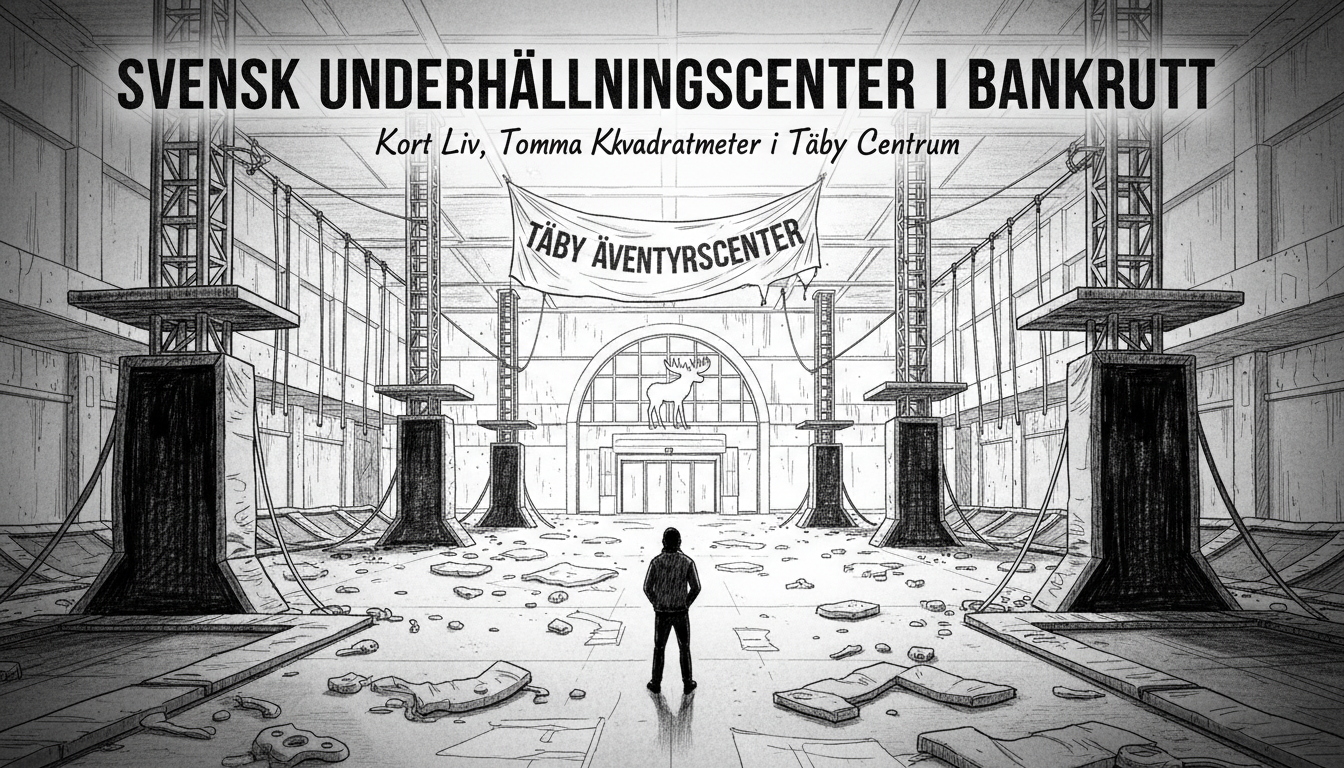
The sprawling entertainment center in Täby Centrum shopping mall now sits empty. Just months ago, these spaces echoed with arcade games, go-kart racing, and families enjoying activities.
This massive complex replaced previous tenants including Tesla and Hugo Boss stores. Developers combined over 10 retail units to create the adventure destination featuring Flip Out trampoline parks and Smash entertainment concepts.
The company FEC Täby AB filed for bankruptcy on July 3rd this year. It had only been operating since fall 2024, making its business lifespan remarkably short.
Linda Jensen, the center manager at Westfield Täby Centrum, expressed disappointment about the closure. She described the project as very ambitious with a long planning process in her official statement.
Several mall visitors miss the activities the center offered. Pernilla Vallbo, 36, represents many regular customers who enjoyed the family entertainment options.
Täby is an affluent suburban municipality north of Stockholm known for its shopping centers and family-friendly amenities. The bankruptcy raises questions about the viability of large-scale entertainment venues in Swedish retail spaces.
The timing appears particularly challenging given current economic pressures on discretionary spending. Entertainment venues often struggle with high operating costs and seasonal fluctuations in customer traffic.
This closure leaves a significant retail gap in one of Sweden's prominent shopping destinations. The empty spaces total several thousand square meters in a prime location.
Similar entertainment concepts have faced challenges across the Nordic region in recent years. The high investment costs for attractions like trampoline parks and adventure courses require consistent customer volume to remain profitable.
Local business analysts note that the post-pandemic recovery for entertainment venues has been uneven. While some sectors rebounded strongly, family entertainment centers have faced particular headwinds from changing consumer habits.
The bankruptcy proceedings will determine what happens to the specialized equipment and installations. Potential new tenants might repurpose the spaces for different types of retail or entertainment concepts.
Shopping malls across Sweden have been adapting to changing retail patterns. Many are incorporating more experience-based offerings to draw customers who increasingly shop online.
The brief operation period suggests the business model may have been fundamentally flawed. Either the initial investment was too high, customer demand insufficient, or operational costs unsustainable.
Local families now lose a convenient entertainment option within the shopping center. The closure affects both employment and leisure opportunities in the Täby community.
Mall management faces the challenge of finding new tenants for these customized spaces. The specialized nature of the installations might require significant renovation costs for future occupants.
What led to the bankruptcy of FEC Täby?
The company filed for bankruptcy just months after opening, suggesting either insufficient customer demand, unsustainable operating costs, or flawed business planning in a competitive entertainment market.
What was previously in this location?
Before the entertainment center, the spaces housed retail stores including Tesla and Hugo Boss, which were combined to create the large entertainment complex.
What does this mean for Täby Centrum?
The bankruptcy leaves thousands of square meters empty in a prime shopping mall location, creating both a challenge and opportunity for mall management to find suitable replacement tenants.