
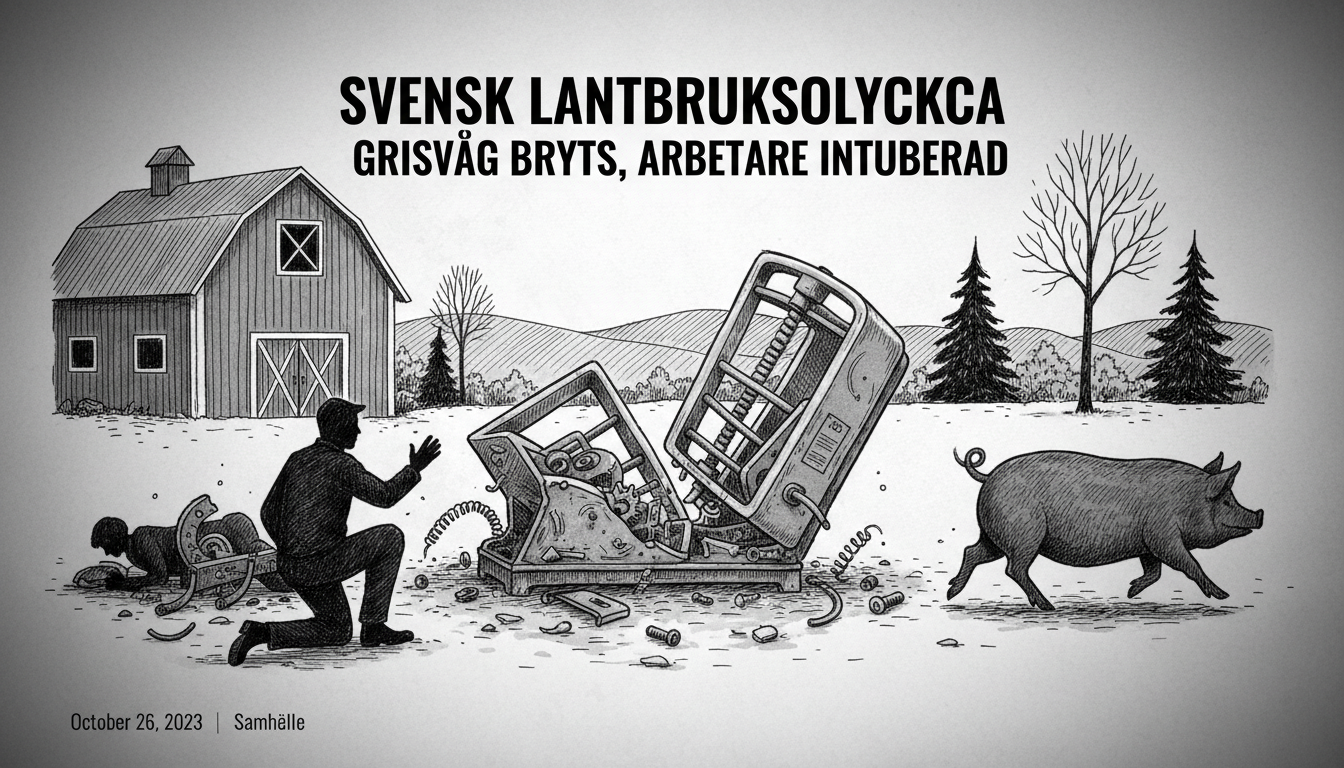
Sweden workplace accident investigators are probing an incident on a farm outside Hudiksvall after a woman was crushed by a broken scale. The 30-year-old worker was weighing a pig on Wednesday morning when the equipment failed, pinning her. Emergency services transported her to hospital with unspecified injuries; she was conscious and able to speak at the scene. Police have filed a formal workplace accident report, standard procedure that triggers a multi-agency review.
This single incident opens a window into the persistent safety challenges within Sweden's agricultural sector. Despite the nation's globally admired work environment standards, farms remain high-risk workplaces. The Swedish Work Environment Authority (Arbetsmiljöverket) will now scrutinize equipment maintenance records and safety protocols on the Delsbo property. Their findings could influence inspections and regulations across the country's farming industry.
A Sector Under Scrutiny
Agriculture consistently ranks among the most dangerous professions in Sweden and the wider European Union. Eurostat data confirms that agriculture, forestry, and fishing account for a disproportionate share of workplace fatalities. While Sweden's overall non-fatal accident rate sits below the EU average, the physical nature of farm work—handling large animals, operating heavy machinery, and maintaining aging equipment—creates constant hazard. This accident involved a weighing scale, a piece of equipment used daily on many livestock farms, highlighting how routine tasks can turn dangerous without proper safeguards.
"Every accident is one too many, and each one demands a thorough investigation to prevent recurrence," a spokesperson for the Swedish Work Environment Authority said in a statement to Nordics Today. The authority enforces the Swedish Work Environment Act, which mandates that employers systematically manage risks. For farms, this includes specific rules on animal handling, machinery guarding, and maintenance schedules. The investigation will determine if these legal requirements were met on the Hudiksvall farm.
The Investigation Process Unfolds
The police report initiates a formal process. Officers will document the scene and interview witnesses, focusing on the immediate circumstances. Concurrently, the Swedish Work Environment Authority will launch its own technical and administrative investigation. Their inspectors will examine the broken scale, assess its maintenance history, and review the farm's documented risk assessments and safety procedures. They possess the power to issue injunctions, mandate improvements, and, in cases of severe negligence, recommend prosecutors file charges.
This dual-track investigation is a cornerstone of Sweden's proactive safety culture. The goal is not merely to assign blame but to identify systemic failures. Was the scale improperly maintained? Was the worker adequately trained for the task? Were there known defects? Answers to these questions will shape the final report. The authority may then use its findings to update sector-wide guidance, sending bulletins to thousands of farms about equipment safety.
The Human and Economic Cost
Beyond the immediate trauma for the injured worker, workplace accidents carry significant economic and social weight. They lead to lost productivity, increased insurance premiums, and potential long-term health consequences for the individual. For a small or medium-sized family farm, a serious accident can threaten its financial viability. The psychological impact on other workers and family members present is also considerable, often overlooked in official statistics.
The injured woman's current medical condition has not been disclosed, respecting patient confidentiality. Her ability to return to work in agriculture, a physically demanding field, remains uncertain. This personal story underscores that behind every statistic is an individual whose life has been abruptly altered. It reinforces the fundamental principle of Swedish work environment policy: that all technical and organizational measures must serve the primary goal of protecting people.
Historical Context and Regional Factors
The accident occurred in Gävleborg County, a region with a strong agricultural tradition mixed with forestry and industry. Hudiksvall, the nearest city, has deep roots as a trading center. The local economy relies on these primary sectors, where hands-on work with animals and machinery is common. Historically, improvements in agricultural safety have followed tragic accidents, leading to new rules on tractor roll-over protection, grain silo entry, and livestock handling facilities.
This incident echoes past accidents where equipment failure led to entrapment or crushing. It serves as a stark reminder that even in a highly regulated country, continuous vigilance is required. Equipment ages, routines can breed complacency, and the unpredictable nature of animals adds a variable that challenges even the best plans. The investigation must consider whether existing regulations for equipment inspection in animal husbandry are specific enough or if they require strengthening.
Expert Analysis on Prevention
Workplace safety experts stress that prevention hinges on a chain of responsibility. "The employer has the ultimate legal responsibility to provide a safe workplace, which includes ensuring equipment is fit for purpose and maintained," explains Karl Sterner, a retired Work Environment Authority inspector consulted for analysis. "But safety is also a shared culture. Workers need training to recognize hazards and must feel empowered to stop work if something seems unsafe."
For pig farming specifically, risks include animal aggression, slippery floors, manual handling, and machinery like the scale in this case. Sterner emphasizes that regular, documented maintenance checks are non-negotiable. "A weighing scale is a pressure device. It should be on a maintenance schedule. Was it? Could wear and tear have been detected earlier? These are the central questions," he notes. Furthermore, safe work procedures for weighing large animals might require two people, barriers, or specific restraint methods to keep workers out of the crush zone.
Looking Ahead: Implications for Policy
The findings from Delsbo will land on desks at the Swedish Work Environment Authority's headquarters. While a single incident rarely triggers immediate law changes, it contributes to the body of evidence shaping regulatory focus. If a pattern emerges from similar reports, the authority may develop new mandatory standards or targeted inspection campaigns. Swedish Parliament (Riksdag) decisions on broader budget allocations for workplace inspection resources also indirectly influence how many farms receive proactive visits each year.
This accident is a test of the system's responsiveness. It measures how effectively lessons are learned and disseminated. Will the investigation report be published in full, contributing to transparent shared learning? Will the authority follow up with the farm to ensure corrective actions are implemented? The answers will demonstrate whether Sweden's celebrated model of cooperative safety governance—involving government, employers, and unions—functions effectively at the grassroots level.
Ultimately, the broken scale in Delsbo is more than a piece of failed equipment. It is a symbol of the ongoing battle to make inherently risky work as safe as possible. As Sweden continues to promote its vision of a modern, efficient, and humane agricultural sector, the safety and dignity of every worker must remain the non-negotiable foundation. The coming weeks will reveal what this accident teaches us, and whether those lessons will make Swedish farms safer for everyone.