
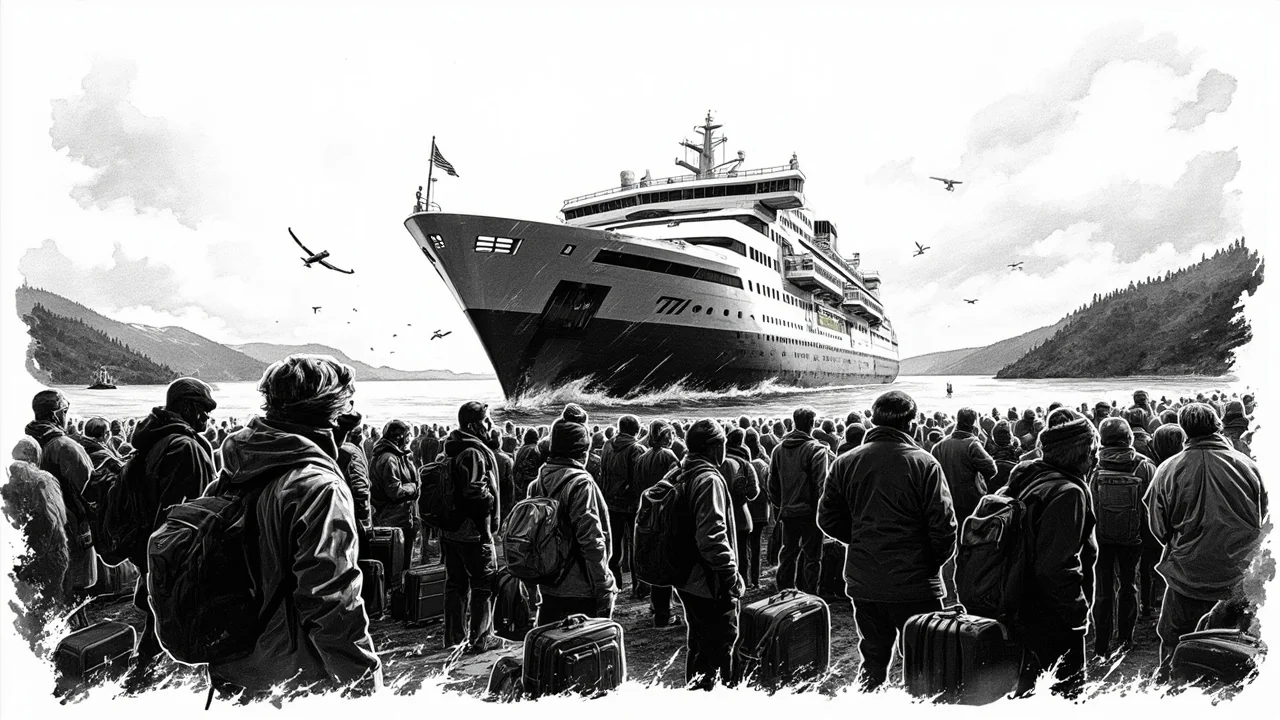
Swedish ferry operator Destination Gotland canceled two key sailings this weekend. The routes between Visby and Nynäshamn were halted due to severe weather. The 8:10 PM Saturday departure from Nynäshamn and the 7:30 AM Sunday departure from Visby were affected. This left an estimated 2,000 passengers and 500 vehicles stranded. The disruption highlights the fragile logistics of island economies.
A Weekend of Disruption
The cancellations created immediate logistical chaos. Travelers were forced to scramble for last-minute accommodations. Many were families returning from autumn breaks on Gotland. The company's website became the primary source of information. Customer service lines were inundated with calls. Rebooking options were limited due to high demand for the following days.
This is not an isolated incident for Destination Gotland. The company operates a near-monopoly on car and passenger transport to Sweden's largest island. Its fleet of four large ferries runs a tight schedule. A single canceled sailing creates a domino effect. The backlog can take days to clear, impacting both tourism and commercial supply chains.
The Economic Ripple Effect
The financial impact extends far beyond refunded tickets. Gotland's economy relies heavily on a steady flow of visitors and goods. Local restaurants and hotels reported last-minute cancellations from stranded travelers. Perishable goods destined for mainland markets faced spoilage risks. The island's crucial tourism sector felt the sting during a key weekend.
"Every canceled sailing is a direct hit to our bottom line," said Lars Bengtsson, owner of a Visby hotel. He noted ten room cancellations directly linked to the ferry issue. "We understand safety comes first, but the lack of redundancy in this transport link is a systemic risk for all Gotland businesses."
Analysts estimate a single major ferry cancellation can cost the regional economy over 5 million SEK. This includes lost tourism revenue, spoiled agricultural exports, and extra logistics costs for local companies. The island's position makes air travel a costly and capacity-limited alternative for most freight.
Weather, Monopoly, and Infrastructure Vulnerability
The immediate cause was a severe weather system over the Baltic Sea. High winds and waves made the crossing unsafe for the large Ro-Pax vessels. However, the incident raises deeper questions about infrastructure resilience. Destination Gotland holds a dominant position following the collapse of competitor Gotlandslinjen in 2020.
This lack of competition reduces incentive for excess capacity. It also centralizes risk. A technical fault or labor issue with one operator can paralyze the entire island's connection. The Swedish Maritime Administration has flagged concerns over this critical dependency. Proposals for a state-backed standby vessel have been discussed but not funded.
"The market has consolidated, creating a single point of failure," stated maritime logistics expert, Dr. Elin Mårtensson. "While Destination Gotland operates efficiently, the system lacks robustness. Investing in backup solutions is expensive, but the cost of repeated disruptions is higher."
Passenger Rights and Communication Challenges
Affected passengers are entitled to care under EU passenger rights regulations. This includes meals, accommodation, and eventual re-routing. In practice, providing for thousands at short notice is a monumental task. Social media was flooded with complaints about communication gaps and confusion over entitlements.
Destination Gotland issued statements directing passengers to its website. The company emphasized passenger safety as the paramount concern. "The decision to cancel is never taken lightly," a company spokesperson said. "We follow strict safety protocols and the forecasts left us no choice. Our team is working around the clock to rebook everyone."
Consumer advocacy groups argue communication protocols need improvement. They suggest clearer real-time updates via SMS and partnerships with local hotels for emergency lodging. The current system places too much burden on distressed travelers to find solutions, they say.
A Look at the Fleet and Future Solutions
Destination Gotland's fleet consists of the Visby, Gotland, Drotten, and Thjelvar. Each can carry approximately 1,500 passengers and 500 cars. The new Gotland, delivered in 2021, was built with improved stability. Even modern vessels have operational limits in extreme Baltic weather.
Long-term solutions are complex. A fixed bridge or tunnel is considered economically unfeasible due to the distance and depth. Increasing fleet size is a massive capital investment for a seasonal market. Some propose a state-subsidized, weather-resilient cargo vessel for essential supplies. This would decouple critical goods from passenger transport.
Technological solutions are also being explored. Better weather modeling and AI-powered scheduling could optimize sailings around forecasts. Onboard stabilizer systems are costly but can extend operational windows. The company is evaluating all options to improve reliability.
The Bigger Picture for Island Communities
Gotland's dilemma mirrors challenges faced by island communities worldwide. From the Scottish Isles to the Greek archipelago, reliable transport is the lifeblood of the economy. Climate change may increase the frequency of severe weather events. This puts further pressure on these vital maritime links.
The weekend's cancellations are a stark reminder of geographic vulnerability. For mainland Swedes, Gotland is a holiday destination. For its 60,000 residents, it is home, reliant on a thread of steel connecting it to the national infrastructure. Balancing safety, economics, and reliability is a constant challenge.
Will this incident spur investment in more resilient infrastructure? Or will it be forgotten until the next storm grounds the ferries? The answer depends on political will and economic priority. For now, the people and businesses of Gotland hold their breath when the autumn winds begin to howl across the Baltic.