
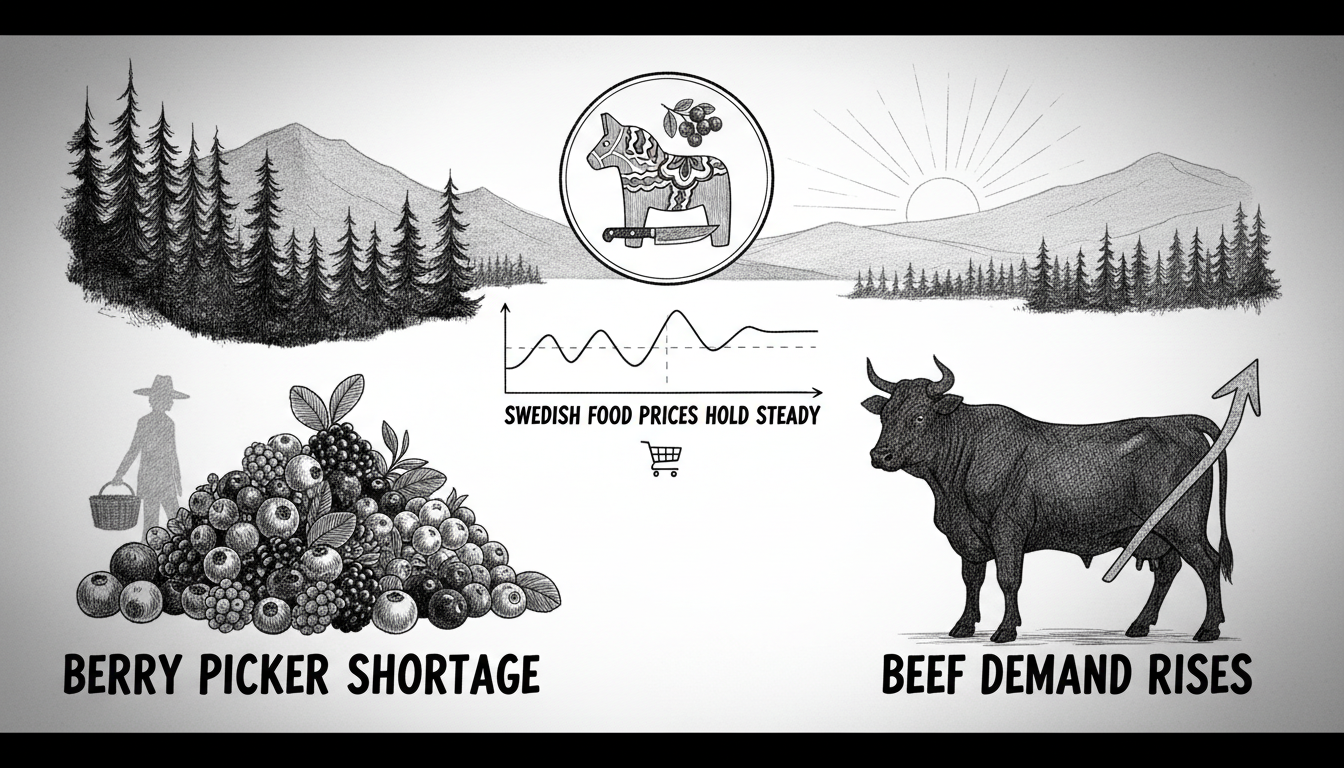
A familiar scene plays out in Stockholm's grocery stores. Shoppers in Södermalm and Östermalm push their carts, eyeing price tags with a mix of hope and suspicion. For the second consecutive month, official data shows overall food prices in Sweden have remained largely flat. This stability offers a brief respite after years of sharp increases, yet the picture is far from uniform. While some staples have become cheaper, the cost of berries and beef continues its upward climb, telling a deeper story about Swedish society and its connection to nature.
The latest monthly food price survey reveals a complex market. Citrus fruits have become more affordable, partly due to seasonal factors. A price war between major supermarket chains has also pushed down costs for everyday items like milk, pasta, and ketchup. You can find a liter of milk for under nine kronor and macaroni for a similar price. The head of the price monitoring group called these prices 'extremely low' and 'completely crazy,' suggesting the competition is intense.
But look closer, and the cracks in this stable facade appear. The price of berries, jams, and marmelade rose last month. Officials directly link this increase to a shortage of berry pickers in Swedish forests this past autumn. This highlights a recurring tension in Swedish lifestyle: the reliance on seasonal, often migrant, labor to harvest natural bounty. When that labor is scarce, the cost of a simple jar of lingonberry jam goes up, reflecting broader immigration and labor market trends.
Meanwhile, beef prices rose one percent in November alone. Over the past twelve months, the cost of beef has surged over twelve percent. Analysts predict further increases because demand currently outstrips supply. This trend affects traditional Swedish cuisine, from Sunday meatballs to festive holiday tables, potentially altering consumption habits.
So what does this mean for people living here? The data suggests a psychological gap. Many consumers still feel prices are rising sharply, influenced by the memory of a 29 percent overall increase since 2022. The reality is a stalled overall index masking significant shifts beneath the surface. For expats and international residents, this is a key insight into Swedish society trends. Price stability is celebrated, but it masks specific pressures on beloved local products.
This situation connects to core Swedish cultural values: self-sufficiency, seasonal living, and 'lagom'—just the right amount. The berry shortage challenges the ideal of foraging in 'allemansrätten,' the right of public access. The rising meat costs question the place of traditional proteins. As we move through the dark winter toward brighter seasons, these price tags are more than numbers. They are indicators of Sweden's relationship with its land, its labor, and its table. The true cost is not just in kronor, but in changing patterns of a culture deeply tied to its natural larder.