
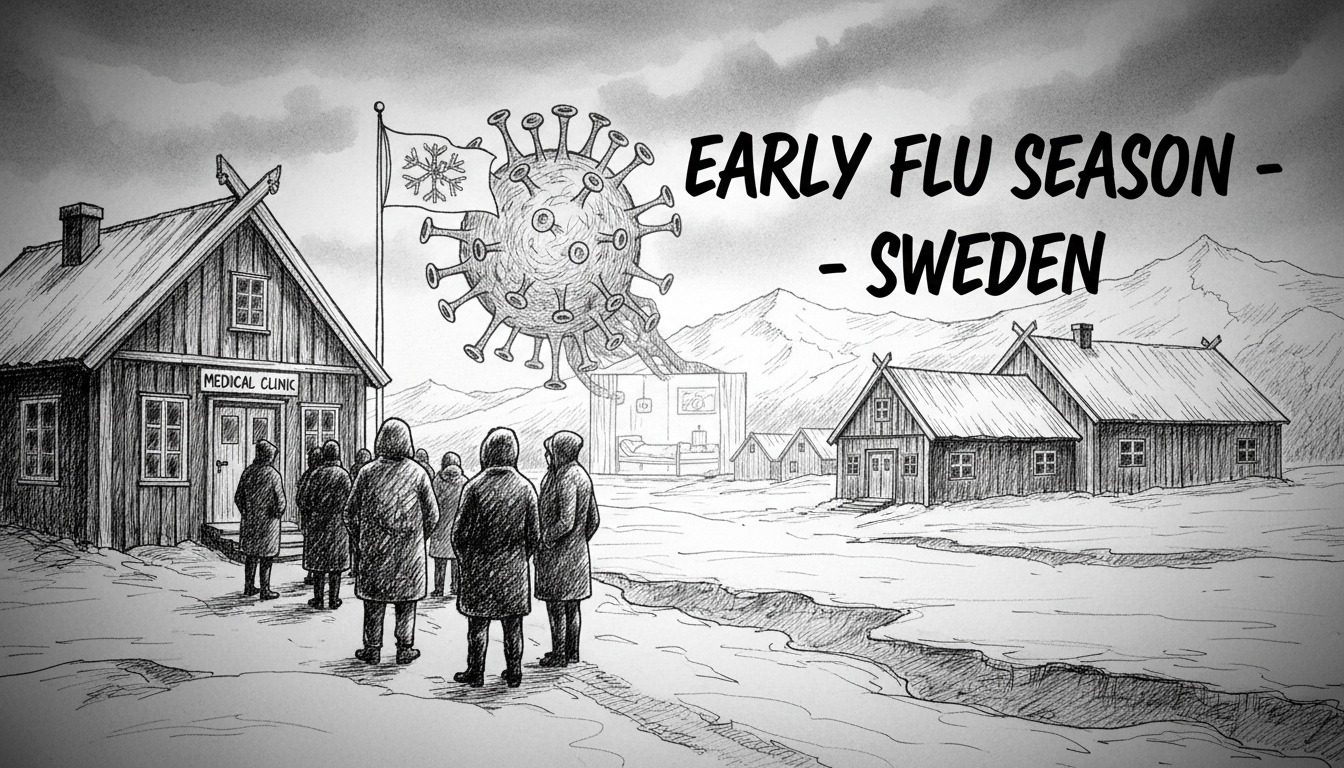
The Swedish government faces a challenging winter health landscape as influenza season establishes an early foothold across the nation. Public health authorities confirm significant influenza circulation with the H3N2 variant driving current transmission patterns. Epidemiologist Erik Sturegård noted this represents an early but not unprecedented seasonal onset in official briefings.
Government policy Sweden initiatives now focus on vaccination campaigns as the dominant H3N2 strain shows concerning characteristics. Laboratory analysis reveals widespread circulation of a k-variant subtype that may partially evade immune defenses. This development could increase transmission rates rather than disease severity according to epidemiological assessments.
Riksdag decisions have consistently supported robust public health infrastructure through the Swedish Parliament's health committee. The current situation tests this preparedness as dual respiratory threats emerge. Stockholm politics often prioritizes winter healthcare capacity given Sweden's climate and population density patterns.
Social Minister Jakob Forssmed emphasized vaccination importance for vulnerable groups during a government district press conference. He specifically addressed both influenza and COVID-19 protection needs while standing outside the Rosenbad complex. The minister's statement reflects ongoing Swedish government coordination between national and regional health authorities.
Historical context shows Sweden typically experiences influenza peaks between December and February. The current early activity mirrors patterns observed during previous H3N2-dominated seasons. This variant often causes more severe illness seasons particularly affecting elderly populations according to epidemiological records.
Healthcare providers across government districts now implement standard winter response protocols. These measures include increased testing capacity and hospital preparedness adjustments. The Swedish Parliament has maintained consistent funding for seasonal respiratory disease monitoring despite budget constraints elsewhere.
International observers note Sweden's approach combines voluntary measures with strong public communication. This balances individual responsibility with state support systems characteristic of Nordic welfare models. The coming weeks will test this equilibrium as transmission likely accelerates during holiday gatherings.
Analysis suggests the early season start provides both challenges and opportunities for public health response. Healthcare systems gain additional preparation time but face extended pressure duration. Stockholm politics will likely monitor hospitalization rates closely given limited healthcare workforce capacity.
The situation demonstrates how climate and behavior interact with viral evolution in northern latitudes. Indoor congregation during cold weather creates ideal transmission conditions regardless of specific variants. Swedish government approaches acknowledge these environmental factors while focusing on mitigation through vaccination and public awareness.