
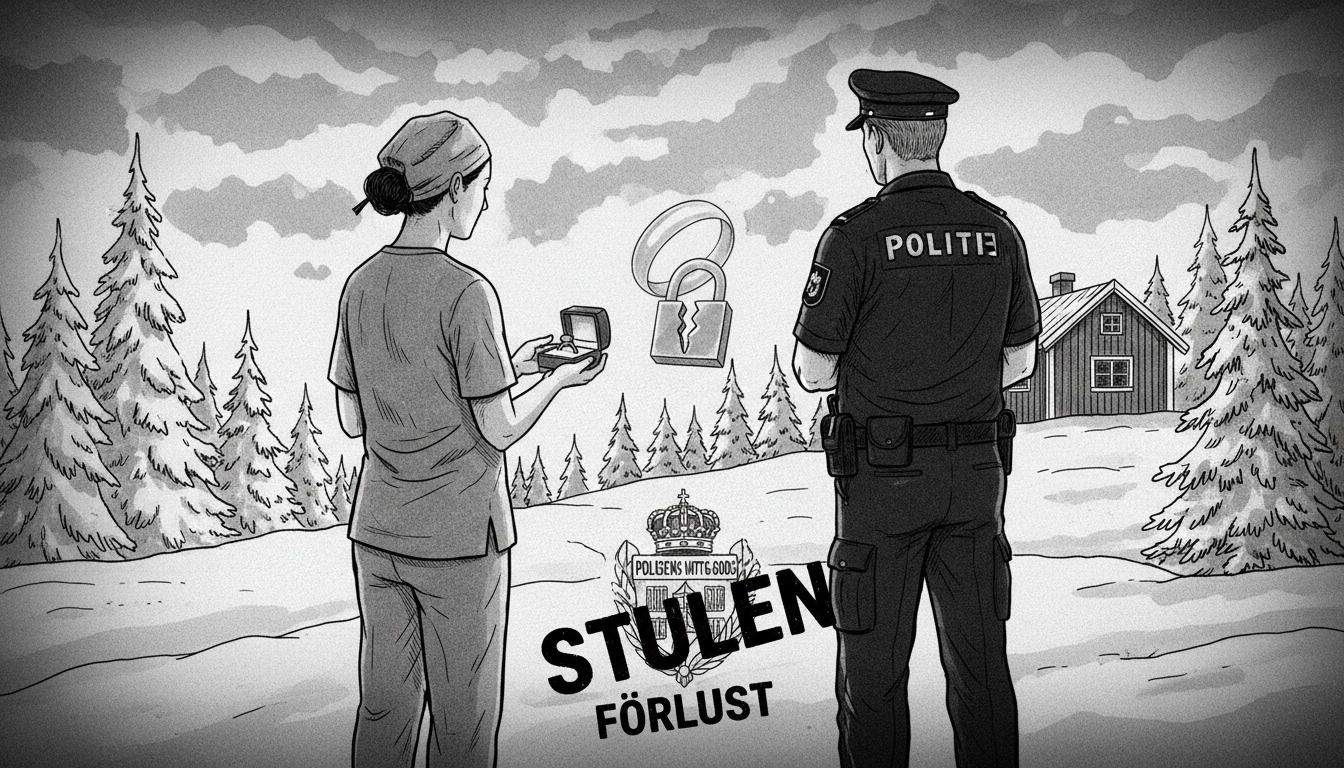
Healthcare assistant Johan Spjut experienced every married person's nightmare during a busy shift at Lund University Hospital. He lost his precious wedding ring while caring for patients. The ring held both deep sentimental value and substantial financial worth, valued at approximately 19,000 Swedish kronor.
Johan described the emotional impact of the loss. "It feels really terrible," he shared. "The ring is valuable in so many different ways beyond just its monetary worth." For many Swedes, wedding rings represent lifelong commitments and family traditions that money cannot replace.
The story took an unexpected turn when the hospital's laundry service actually found the ring. They followed proper procedure by delivering it to local police authorities for safekeeping in the lost property department. This should have been the happy ending to Johan's stressful situation.
When Johan contacted the police lost property office to reclaim his ring, he received shocking news. The ring had mysteriously disappeared from police custody. A police employee claimed the ring had already been collected by its rightful owner, but prosecutors found this story didn't hold up under investigation.
Prosecutor Hans Ihrman expressed serious concerns about the breach of public trust. "This represents a major confidence damage for the general public," he stated regarding the police employee's alleged actions. The case has now taken a dramatic turn with the police employee facing formal charges for stealing the ring, though the individual denies any wrongdoing.
This incident raises important questions about public trust in Swedish institutions. Sweden consistently ranks high in global trust surveys, with citizens traditionally showing strong confidence in their police force and public services. Cases like this challenge that longstanding social contract.
The Swedish legal system takes breaches of trust by public officials particularly seriously. If convicted, the accused police employee could face both professional consequences and legal penalties. Sweden's approach to policing emphasizes community trust and transparency, making this alleged violation especially concerning.
For international readers understanding Swedish society, this story highlights several cultural aspects. The high value placed on institutional trust, the expectation of professional integrity among public servants, and the cultural significance of wedding symbols all come into play. In a country known for its low corruption levels, such incidents attract considerable public attention and media scrutiny.
What happens next in this unusual case? The legal proceedings will continue through Sweden's court system, while the healthcare worker waits for resolution. The outcome could have implications for how lost property procedures are handled across Swedish police districts. More importantly, it tests the resilience of public trust that forms the foundation of Swedish societal structure.