
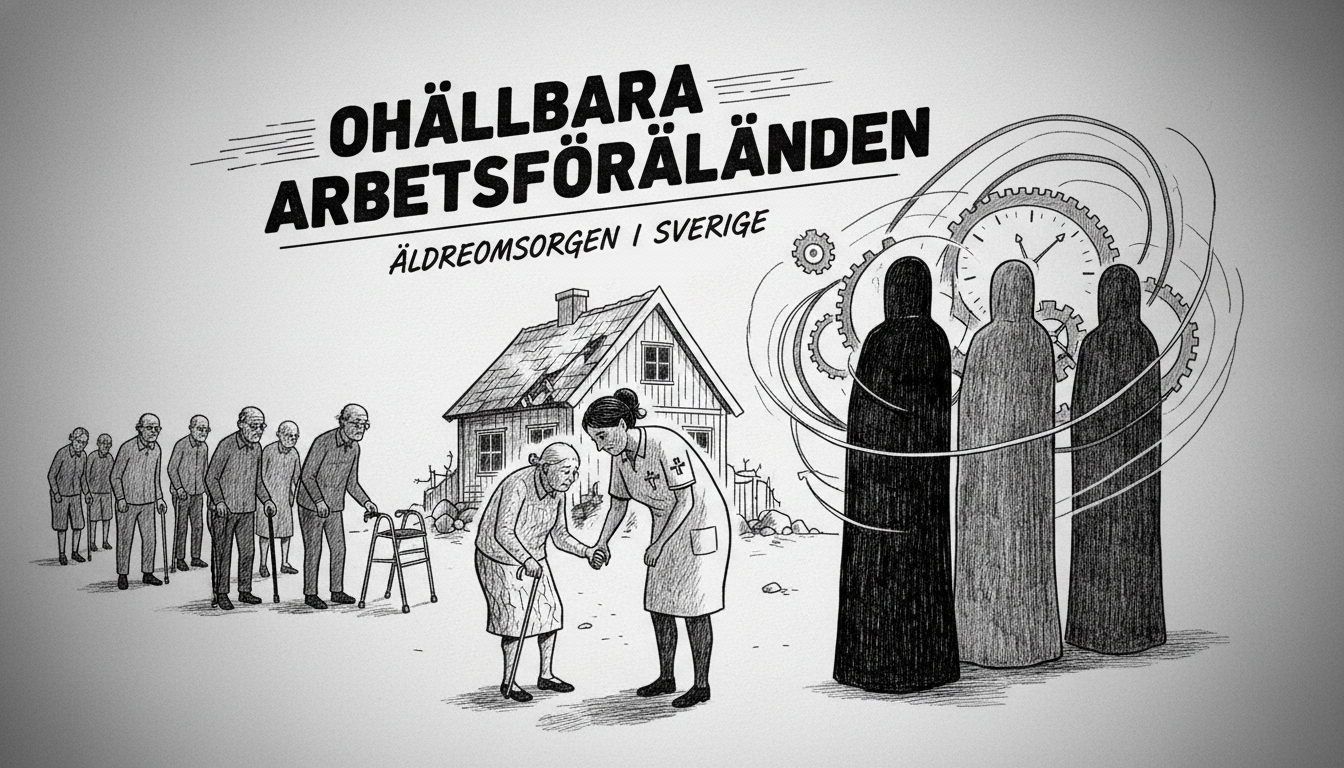
Three major Swedish government agencies warn that home care services face critical challenges. The Swedish National Board of Health and Welfare states that quality home care requires time, continuity and flexibility. Instead, many services operate under opposite conditions.
Minute-by-minute scheduling dominates despite known risks. Caregivers often lack ability to personalize services. Staff turnover remains consistently high.
Municipalities need some control, but in many places there's too much control and too little flexibility, said Anna Brooks, an investigator at the National Board of Health and Welfare.
Rigid time pressures force staff to deliver meals within two minutes. This creates conflicts over emergency alarms and leaves elderly clients feeling neglected.
Home care staff report work-related illnesses and accidents at twice the average rate across all industries. Malin Cato, project manager at the Swedish Work Environment Authority, finds this particularly problematic because levels have remained high for years.
Employers need to take this very seriously and actually start addressing existing problems, Cato said.
The authority is currently conducting extensive supervision of 700 workplaces in both municipal and private home care. They hope this will prompt political attention and action.
Cato describes the current situation as very worrying and unsustainable. The proportion of elderly needing home care continues to grow.
If we don't have staff who want to work in elderly care, who will care for those needing assistance? she asked.
The Health and Social Care Inspectorate confirms that staff working conditions often contribute to patient harm. In worst cases, this can lead to death.
We often see that the conditions are unreasonable for reaching all users, said Lars Rahm, unit manager at the Inspectorate.
Some municipalities demonstrate better approaches. Mörbylånga municipality's trust-based model has reduced stress, lowered overtime costs and decreased emergency alarms from elderly residents.
The entire system is trust-based. Our managers trust that we know what's best for users and that we can take responsibility, said nursing assistant Emelie Fransson.
The situation reflects broader challenges in Sweden's welfare system as demographic pressures increase while working conditions deter potential caregivers.