
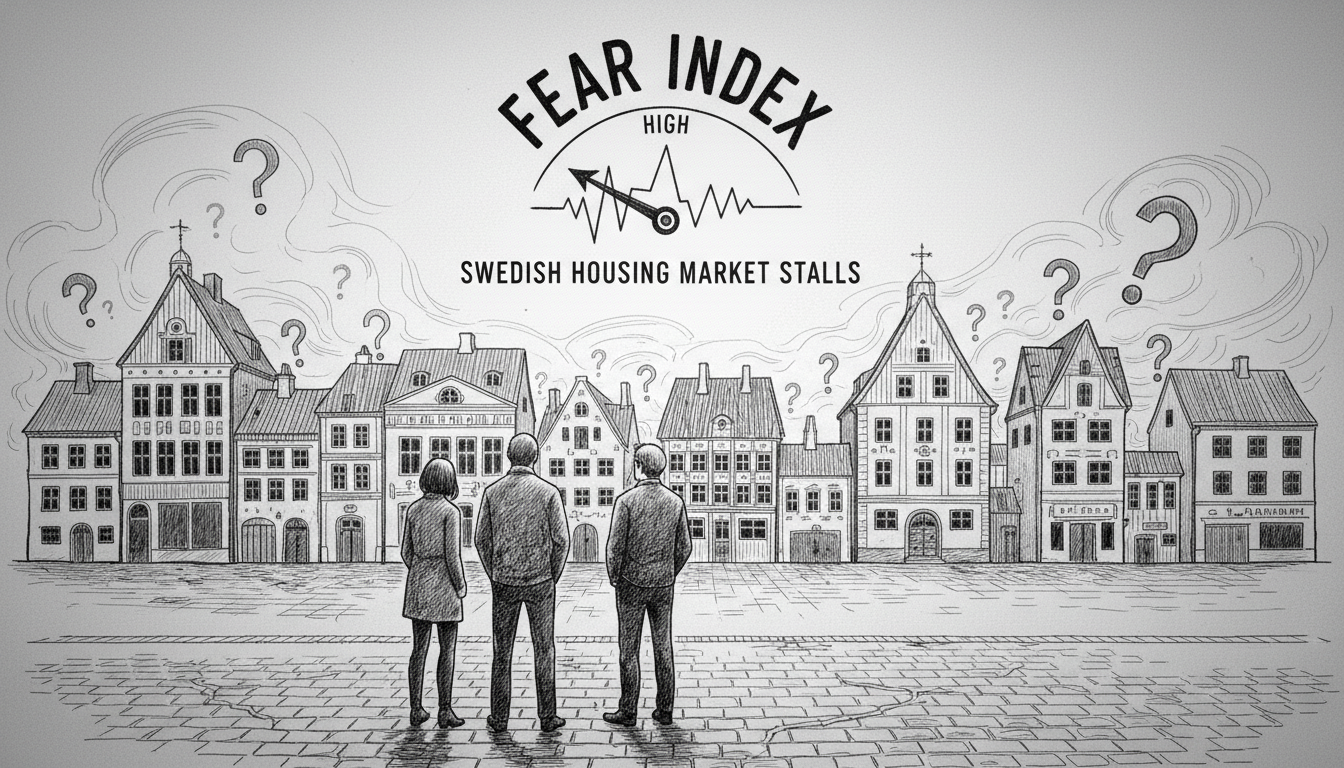
Sweden's housing market showed minimal price movement in November. The real estate industry's so-called 'fear index' indicates persistent anxiety among both buyers and sellers. A leading brokerage chief suggests the situation could brighten quickly. The market sentiment was notably calmer during the month typically dominated by retail sales frenzy. This data points to a cautious standoff in one of Europe's most watched property sectors.
Analysts note the 'fear index' reflects a deep-seated uncertainty about future interest rates and economic stability. Swedish households carry some of the highest debt-to-income ratios in Europe. This makes them particularly sensitive to central bank policy shifts. The current stagnation follows a period of significant price corrections from previous peaks. Many potential sellers are now hesitant to list properties at perceived discounts.
Market dynamics in Stockholm's key districts like Östermalm and Södermalm often set the national trend. Transactions in these premium areas have slowed considerably. This has a ripple effect across the broader Swedish real estate landscape. International investors monitor these metrics closely. Sweden serves as a bellwether for Nordic housing markets. The current data suggests a wait-and-see approach has taken hold.
Brokerage executives argue the underlying demand remains solid. They cite a chronic housing shortage in major urban centers. Demographic pressures and immigration continue to support long-term fundamentals. The immediate hurdle is a mismatch in price expectations. Sellers remember higher valuations from just a few years ago. Buyers are now factoring in higher financing costs and economic headwinds.
This standoff impacts related sectors like construction, banking, and retail. Slower turnover means fewer new mortgages and reduced demand for renovation services. For the Swedish economy, a vibrant housing market is a key consumption driver. The current pause puts a damper on that engine. Experts are now watching for signals from the Riksbank, Sweden's central bank. Its future rate decisions will be the primary catalyst for change.
The situation presents a complex puzzle. Solid employment figures conflict with high household debt. Strong rental demand contrasts with weak buyer sentiment. This divergence is why the 'fear index' remains elevated. It captures the market's psychological state, not just transactional data. A resolution requires either a shift in macroeconomic policy or a gradual acceptance of new price levels by market participants. For now, the Swedish housing market holds its breath.