
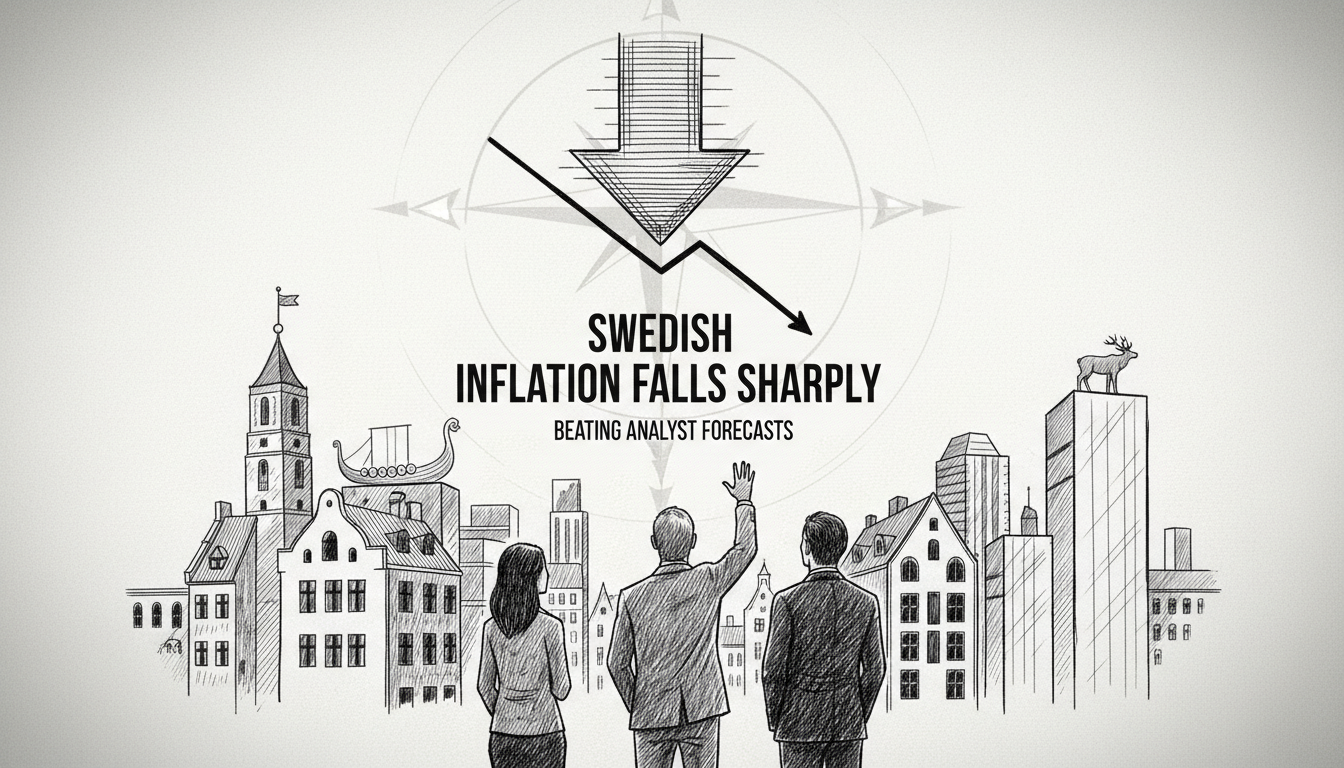
Sweden's inflation rate fell more than expected in November. The CPIF inflation measure dropped to 2.3 percent from 3.1 percent in October. Analysts had predicted a decline to only 2.5 percent. This brings the rate closer to the central bank's 2 percent target.
Alexandra Stråberg, chief economist at Länsförsäkringar, called the drop substantial. 'We now have low inflation in sight,' she said. She noted the central bank made the right move with its preemptive rate cut earlier this year.
The CPIF measure excludes mortgage interest rate effects. It is the primary gauge for the Riksbank's monetary policy. Even when adjusted for energy prices, inflation fell to 2.4 percent. Analysts had expected 2.6 percent. 'The lower price pressure is broader,' Stråberg observed.
Susanne Spector, chief economist at Danske Bank, welcomed the surprise. 'Given the many upside surprises this year, it's extra welcome that inflation came in lower than expected today,' she stated. The high October reading had created some concern about the disinflation path.
This data confirms the Riksbank can maintain its current course, according to Spector. The economy appears stronger while inflation declines. This combination allows the central bank to stay the course.
Despite the positive surprise, economists do not expect imminent further rate cuts. Stråberg believes the threshold for action remains quite high. The Riksbank has signaled rates will stay at current levels for the foreseeable future.
This development has significant implications for the Swedish business climate, particularly in Stockholm's innovation hubs. Lower inflation eases cost pressures on startups in Södermalm and scale-ups in Östermalm. It reduces operational uncertainty for founders seeking venture capital.
For the Nordic fintech sector, stable inflation supports clearer financial planning. It impacts everything from salary budgets to product pricing. Venture capital firms monitor these macro trends closely when evaluating portfolio companies and new investments.
The unexpected drop suggests previous monetary policy tightening is effectively filtering through the economy. It indicates that Sweden's economic slowdown is managing to curb price growth without causing a severe downturn. This is a delicate balance many central banks strive to achieve.
The broader question is whether this marks a sustained trend or a monthly anomaly. Core inflation pressures in services and wages will be key to watch. The Riksbank will likely remain cautious, prioritizing its credibility in anchoring inflation expectations over reacting to a single data point.
For international investors eyeing the Nordic innovation hub, this report adds a layer of macroeconomic stability. A predictable inflation environment is crucial for long-term investment decisions in technology and green transition projects. It reduces the currency and interest rate risks associated with cross-border capital flows.