
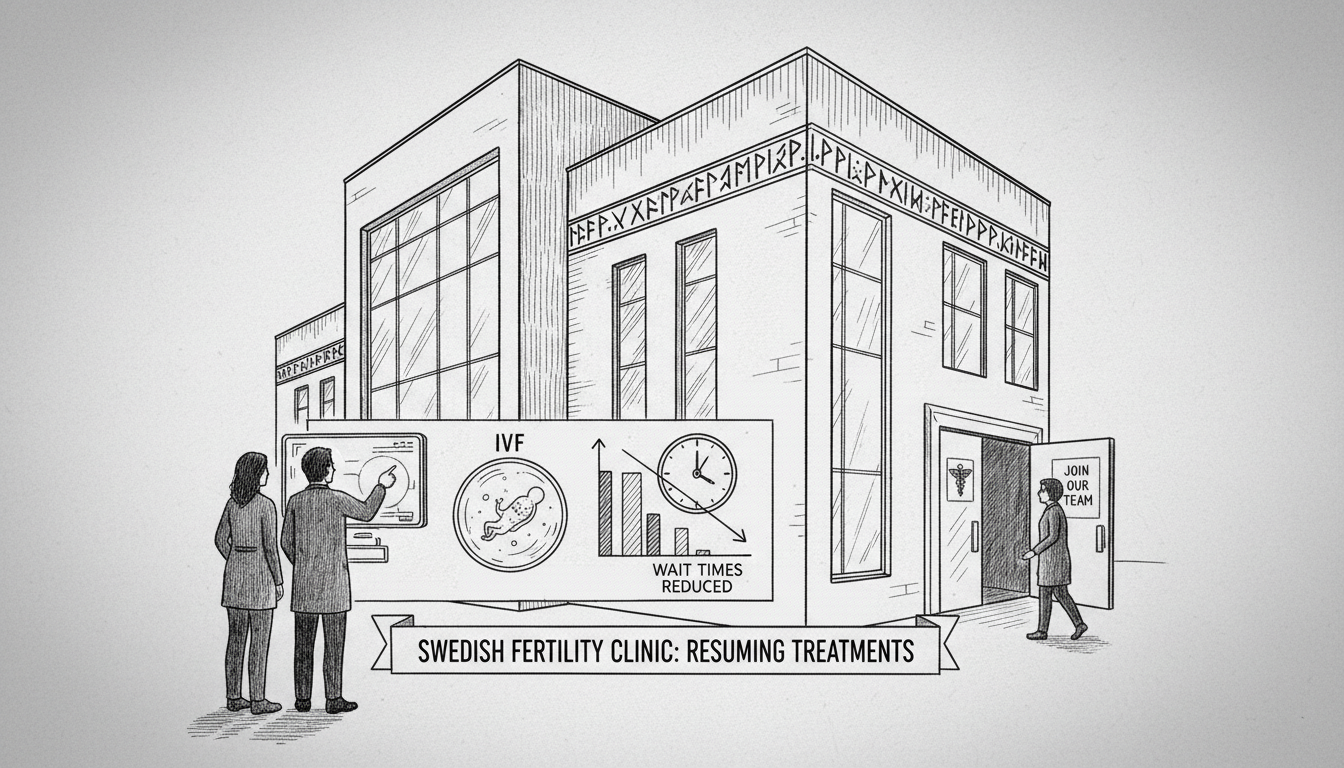
IVF treatments at a major Swedish hospital have restarted after a summer water leak caused a six-week pause. The clinic has managed to reduce waiting times despite the interruption. They are now recruiting additional doctors to handle patient demand.
Water damage forced the fertility clinic to suspend all procedures in July. Maintenance crews worked throughout the summer to repair the affected areas. The clinic serves patients from across western Sweden.
Current waiting times for different fertility treatments now range from two to six months. The shortest wait is for initial consultations at eight weeks. More complex procedures like egg donation require longer preparation periods.
Hospital administrators say they've implemented efficiency measures to compensate for lost time. They've extended clinic hours and added weekend appointments. The recruitment of additional medical staff should further improve capacity.
Sweden's public healthcare system typically covers IVF treatments for women under 40. Patients pay small fees for medications and procedures. Private alternatives exist but cost substantially more.
The water incident highlights infrastructure challenges in older Swedish hospitals. Many medical facilities in Sweden date from the mid-20th century. Maintenance budgets sometimes struggle to keep pace with repair needs.
Fertility treatment demand has increased steadily across Scandinavia in recent years. More couples seek assistance later in life. Environmental factors may also contribute to rising infertility rates.
Sweden maintains some of Europe's most generous parental support policies. The country offers 480 days of paid parental leave per child. Both mothers and fathers receive substantial time off work.
The Nordic approach to reproductive medicine emphasizes equal access. Treatment prioritization follows medical need rather than ability to pay. This contrasts with many private healthcare systems.
Medical tourism for fertility treatments has grown within the EU. Some Swedish patients travel abroad for procedures not available domestically. Others come to Sweden for treatments restricted in their home countries.
How do aging healthcare facilities affect patient care? Older buildings often require more maintenance and unexpected repairs. This can disrupt medical services and increase operational costs for hospitals.
The clinic's quick recovery demonstrates effective crisis management. They maintained communication with patients throughout the closure. Many appointments were rescheduled rather than canceled entirely.
Sweden's approach to reproductive healthcare reflects broader social values. The system aims to support family formation regardless of economic circumstances. This aligns with the country's comprehensive welfare model.
Frequently Asked Questions
How long are IVF waiting times in Sweden?
Waiting times vary by region but typically range from 3-12 months for public healthcare. Private clinics offer faster access at higher costs.
What causes water damage in hospitals?
Aging pipes, extreme weather, and construction issues can all cause leaks. Older buildings are particularly vulnerable to infrastructure problems.
Does Sweden cover IVF costs?
Yes, the public healthcare system covers most IVF costs for women under 40. Patients pay small co-payments for medications and procedures.