
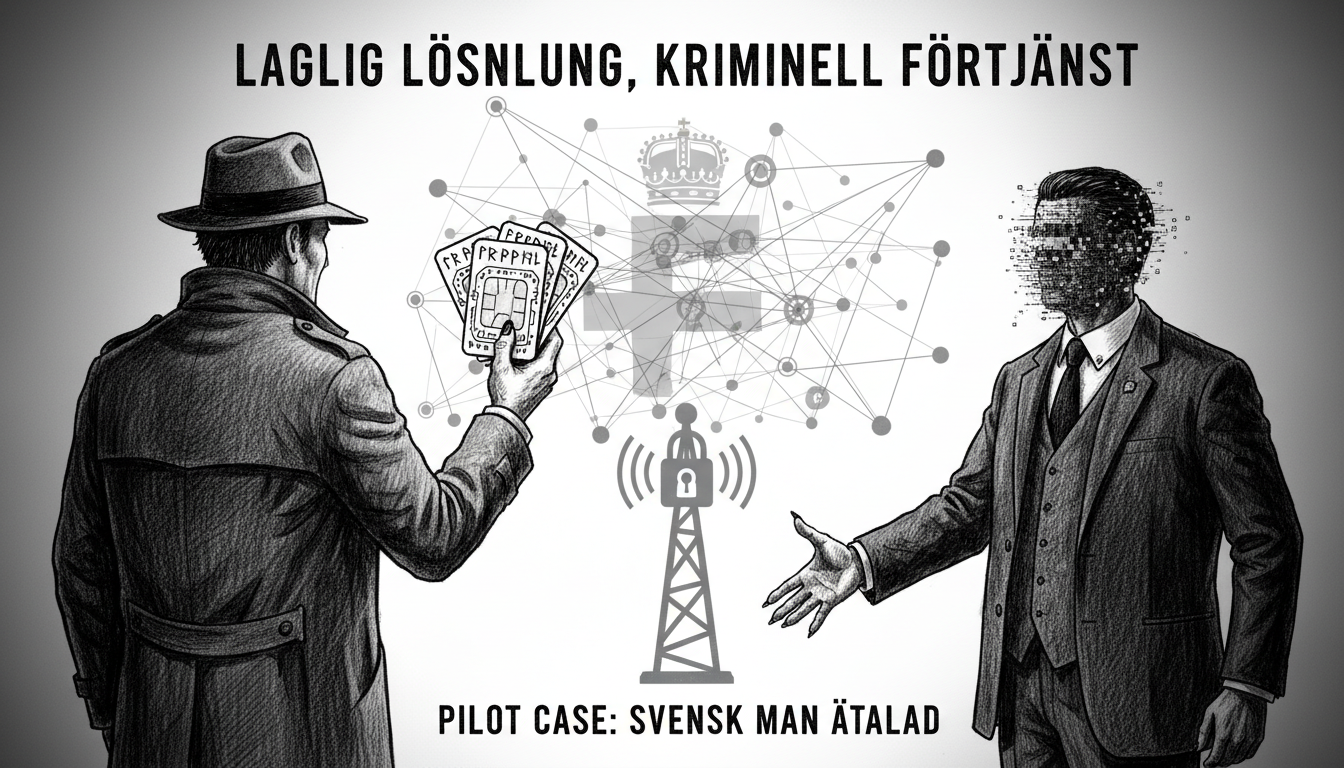
A 31-year-old man from the Stockholm area faces charges in Solna District Court. He is accused of serious accounting fraud and aggravated money laundering. His business was simple but troubling. He systematically registered prepaid SIM cards in his own name and sold them online for a few hundred kronor each. In just one year, he registered and sold over 1,300 cards. The buyers on his Swish payment list included several convicted or suspected individuals linked to organized crime. These anonymous phones have been used in serious criminal activities, authorities say.
This case highlights a growing tension in Swedish society. It pits the desire for personal privacy against the need for public safety. The law requiring registration for prepaid SIM cards was introduced a few years ago. The goal was to make it harder to use phones anonymously for crimes. Yet, a clear loophole remains. It is not illegal to register a card and then hand it over to someone else. This man became what police call a 'goalkeeper' or front person. His identity was tied to the phone numbers, so he appeared as a suspect in 28 different criminal investigations in recent years. This caused significant frustration for law enforcement.
Prosecutor Daniel Larson explained the challenge in a statement. 'We have established that it's just a goalkeeper who has been listed on the prepaid card. That has led to a certain frustration,' he said. 'Currently, it is not punishable to register yourself in this way.' Because they could not charge the operation as aiding criminal activity, prosecutors had to find another legal path. They are now pursuing charges for the financial crimes linked to the scheme. Larson calls this a pilot case to attack this specific problem.
The scale of this operation is unusual. Using front people for SIM cards is common, but it typically involves lower-level actors within criminal networks. This case involved someone building an entire business around it. 'There is a huge need to review the legislation,' Larson stated. 'It is punishable to act as a front person for a limited company, but today it is not punishable to act as a front person for a prepaid SIM card.' He also calls for better oversight from telecom operators. 'This person was able to register 1,300 prepaid SIM cards. That is an obvious abuse. No private individual needs to have 1,300 mobile phones or SIM cards.'
For international readers, this story connects to broader Swedish society trends. Sweden has long balanced a high-trust social model with strong individual freedoms. The rise of gang violence, often linked to issues of segregation and integration in suburbs like Rinkeby or Tensta, challenges that balance. New laws and police methods are constantly tested. This legal gray area with SIM cards shows how criminals adapt faster than legislation. The outcome of this trial in Solna could set a precedent. It may push lawmakers to close the loophole that allows the anonymous phone trade to flourish. The case is more than a financial crime. It is a test of how Sweden protects its citizens while upholding the rule of law in a digital age.