
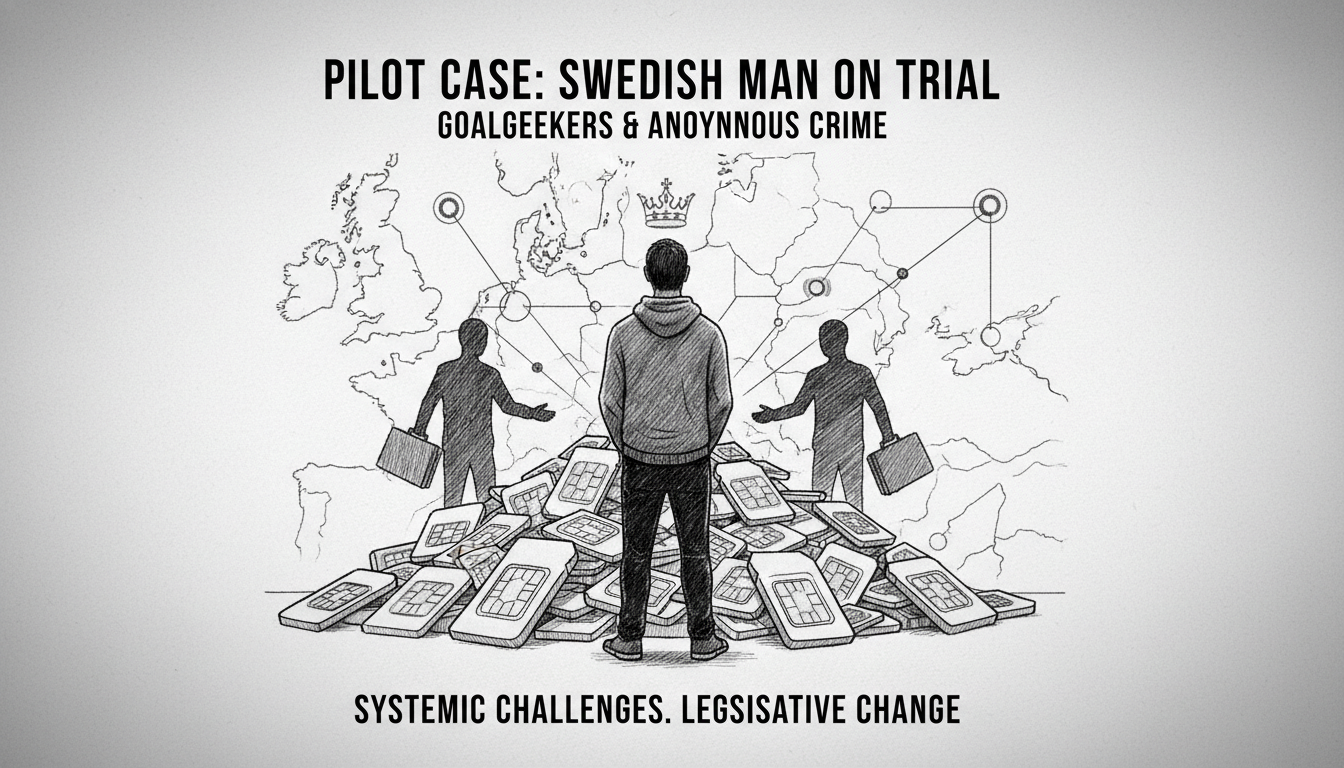
A 31-year-old man from the Stockholm area faces charges for serious economic crimes. He registered over 1,300 prepaid SIM cards and sold them online. Prosecutors call this a pilot case targeting a new form of criminal facilitation.
The man is charged with serious accounting offenses and aggravated money laundering. He sold the cards for a few hundred Swedish kronor each. The Solna District Court will hear the case.
Prosecutor Daniel Larson from the Swedish Economic Crime Authority explained the challenge. The suspect's identity was tied to the phone numbers. This made him appear as a suspect in 28 different criminal investigations in recent years.
Larson described the man as a 'goalkeeper' for the cards. A goalkeeper is someone who registers a service in their own name for someone else's use. It is not currently illegal to be a goalkeeper for a SIM card.
This legal gap is central to the case. Authorities could not charge the man with aiding criminal activity directly. They pursued charges for the financial crimes linked to the scheme instead.
The prosecutor highlighted a major flaw in the system. It is illegal to be a goalkeeper for a limited company. The same rule does not apply to prepaid mobile subscriptions. This discrepancy allows criminal networks to operate with relative ease.
Sweden introduced mandatory registration for prepaid SIM cards several years ago. The goal was to make anonymous phone use harder for criminals. This case shows how determined actors bypass those rules.
Payment records from Swish, a popular Swedish payment app, revealed the buyers. The list included several convicted or suspected individuals linked to organized crime. The SIM cards were often used in serious offenses.
The scale of the operation is unusual. Using goalkeepers is common in criminal circles. It typically involves low-level actors within a network. Building an entire business around selling registered SIMs is a new development.
Prosecutor Larson called for a legislative review. He stated there is a great need to update the law. He also criticized telecom operators for their lack of oversight.
This person managed to register 1,300 prepaid cards. That is an obvious abuse. No private individual needs 1,300 mobile phones or SIM cards, Larson said.
The case underscores a persistent problem in Sweden's fight against organized crime. Networks constantly find new ways to obscure communications and finances. Legal frameworks struggle to keep pace with these evolving methods.
The outcome of this pilot case could set an important precedent. A conviction might pave the way for more charges against similar operations. It also increases pressure on lawmakers to close the legal loophole.
For international observers, this is a window into Nordic law enforcement challenges. Sweden's high-tech society creates unique vulnerabilities. The same digital tools that enable innovation can also be weaponized by criminals.
The story is not just about one man selling SIM cards. It is about the systemic battle between crime and regulation. It shows how a simple service can become a critical link in a criminal chain when oversight fails.