
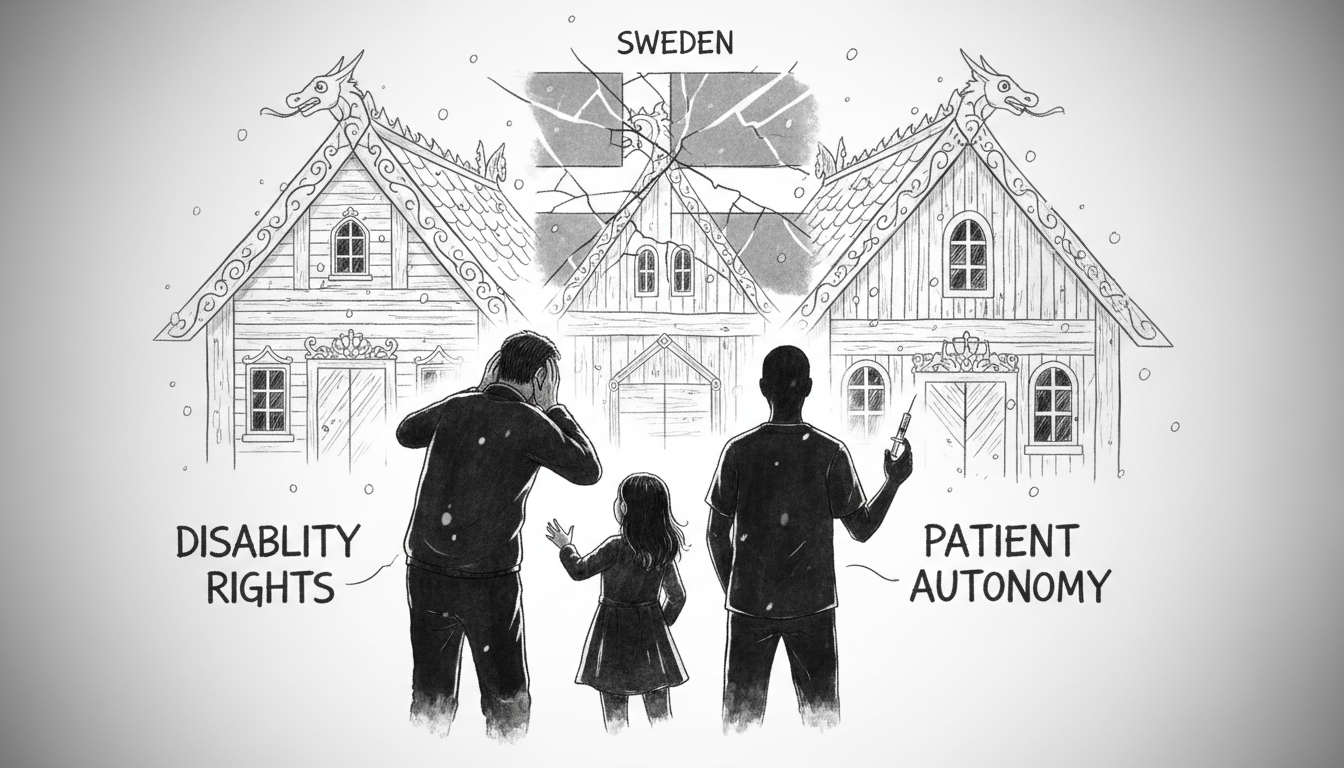
Andris, a resident of Kungsängen just outside Stockholm, booked a simple flu shot. He clicked the clear option for the influenza vaccine online. He felt calm and secure about his choice. Then he visited his local health center in Barkarby. The experience left him feeling disappointed and sad. Staff administered two injections instead of one. They gave him both a flu vaccine and a Covid-19 booster without his consent.
His daughter, Matilda Bergman Bergkrantz, explained the situation via video call. She spoke with the healthcare staff on her father's behalf. Andris is deaf, and communication broke down. 'On the screen, he had only checked the flu vaccine, clearly,' Matilda said. 'I don't understand how the staff decided to add the Covid vaccine.' The staff reportedly told her they did it because he belongs to a risk group. They cited his communication difficulties as a reason to follow general recommendations.
Matilda questioned their methods. She asked if they tried writing things down to give him a choice. The staff seemed unsure and said communication was hard without an interpreter. 'I understand that,' Matilda stated, 'but there are different ways to communicate. If you are unsure, you just cancel and book a new appointment.' She feels the core problem is that the decision was made over her father's head. This incident highlights a critical gap in Swedish healthcare accessibility.
Matilda has filed complaints with two official bodies. She reported the event to the Discrimination Ombudsman (DO) and the Stockholm Patient Board. She is also considering a report to the Health and Social Care Inspectorate (IVO). The clinic's head, Sana Wajid of Familjeläkarna in Barkarby, declined to comment on the specific case. She cited patient confidentiality in a written statement. The clinic promised to seek direct contact with the patient. According to Matilda, that contact has not yet happened.
This story touches on deep trends in Swedish society. Sweden has a strong tradition of patient autonomy and clear consent laws. The principle of 'samtycke' or consent is fundamental. When that process fails, it erodes trust in the entire system. For the international community in Sweden, especially those with disabilities, this case is a cautionary tale. It raises questions about how the system supports non-verbal or hearing-impaired patients during routine care. The response from official channels will be a key test of Sweden's commitment to inclusive healthcare. It is not just about one vaccine. It is about respecting every individual's right to choose, regardless of how they communicate.
Swedish culture highly values personal integrity and clear agreements. This incident contradicts that social contract. As Sweden continues to integrate diverse populations, ensuring accessible communication in all public services is not optional. It is essential. The outcome of Matilda's complaints could influence training and protocols at health centers across the Stockholm region and beyond. For now, Andris's experience serves as a sobering reminder. Even in a system known for its efficiency, the human element of understanding and choice must never be overlooked.