
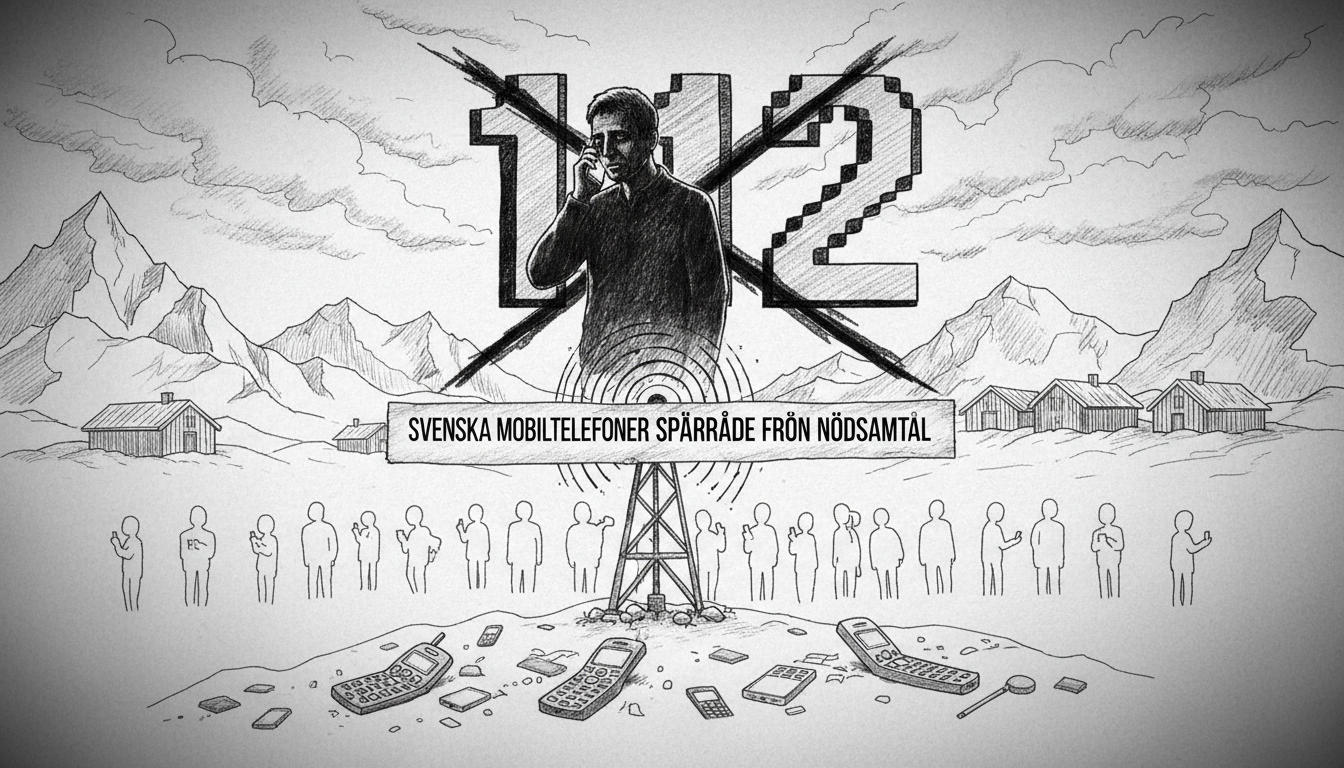
Imagine walking through Stockholm's snowy streets in Södermalm when an emergency strikes. You reach for your phone to dial 112, Sweden's emergency number, but nothing happens. This scenario becomes reality for tens of thousands of Swedes as mobile networks phase out older technology.
Telecom operators Tele2, Tre and Telenor began shutting down their 2G and 3G networks this week. The move aims to free up capacity for modern 4G and 5G networks. Older mobile phones and connected devices that don't support 4G or 5G need replacement immediately.
The technology shift has been planned for years. But authorities recently discovered an unexpected problem. Some phones with 4G capability still cannot reach emergency services through their operator's network after the shutdown.
Petter Öhrn, press officer at the Swedish Post and Telecom Authority, confirmed the scale. I cannot say exactly how many are affected, but we're talking tens of thousands, he told media.
Here's the technical dilemma. Operators assumed these problematic phones would automatically switch to Telia's 2G network for emergency calls. That network continues operating until 2027. But regulators determined this backup solution wasn't reliable enough.
The authority made a tough decision on November 21. It ordered operators to completely block these phones from making any calls starting February 2, 2026. For phones requiring special measures to connect to Telia's network, blocking begins even earlier - from December 1.
This affects phones with 4G and VoLTE technology that specifically lack emergency call support over 4G networks. It's a technical gap many users never anticipated.
Authorities understand the burden this places on affected customers. They must either change phones or switch operators entirely. But regulators argue the alternative is worse.
We understand this may be burdensome for users who now need to change phones or operators, said Dan Sjöblom, the authority's director general. But the alternative is worse. We cannot risk people believing they have working phone service when they actually cannot reach 112.
This situation highlights Sweden's rapid technological transition. While many celebrate faster networks in neighborhoods like Vasastan and Östermalm, vulnerable groups face exclusion. Elderly residents and those with limited digital literacy often cling to older, simpler devices.
Sweden's approach to digital infrastructure reflects broader Scandinavian values. Efficiency and technological progress sometimes override individual convenience. The country prioritizes reliable emergency systems over maintaining outdated technology.
Operators now face the challenging task of identifying and contacting all affected customers. They must explain the complex technical requirements while ensuring nobody loses emergency access unnecessarily.
The incident raises questions about technological transitions in welfare states. How do we balance progress with inclusion? When should authorities intervene in commercial network decisions? Sweden's mobile blocking situation provides a case study other nations will watch closely.
For international readers in Sweden, check your phone's specifications. Ensure it supports emergency calls over 4G networks. This technical detail could prove crucial during Stockholm's dark winter months or while traveling in remote northern areas.