
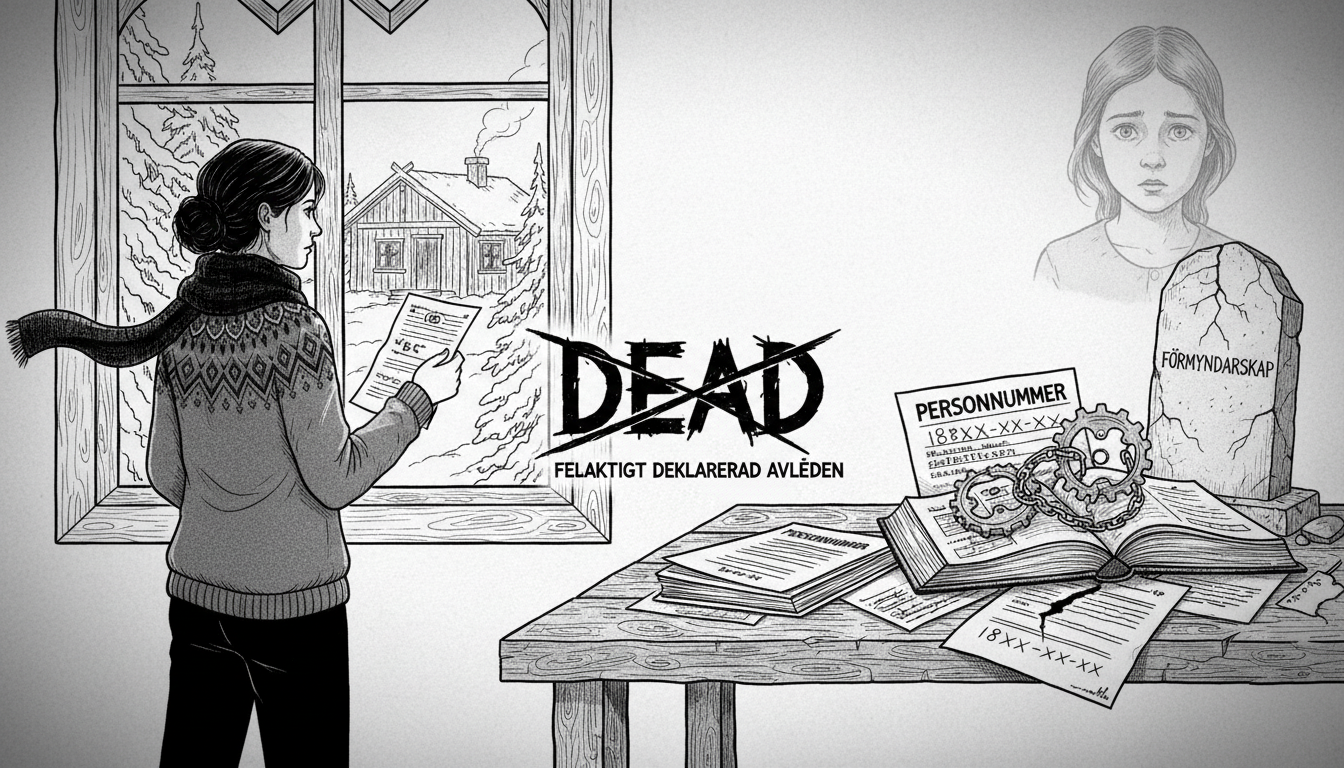
A Swedish mother received the shock of her life when she opened a letter from the Swedish Social Insurance Agency. The notification stated her parental benefits would stop because her daughter Mollie had died. At that exact moment, Mollie was playing happily beside her.
Linnea Ripa described her reaction to the mistaken death notice. "I became very shocked and surprised," she said.
The error occurred because another woman shared the same personal identity number as Mollie. This other person was born exactly one hundred years earlier and had actually passed away. The Swedish Tax Agency accidentally declared the living child deceased instead.
Tobias Wijk, a development strategist at the Swedish Tax Agency, explained the rare situation. "It's actually coincidence that two people get exactly the same personal identity number with different century digits," he stated.
Authorities corrected the death declaration within two days. But when Ripa tried to update her parental benefits, she discovered another problem. The system no longer listed her as Mollie's legal guardian.
"I don't understand how she could be without a guardian for a month without anyone flagging it," Ripa expressed.
Wijk acknowledged the processing error during the correction of Mollie's living status. "This is a manual correction that went wrong in this case," he confirmed. "We need to examine this closely so these consequences don't happen again."
The Swedish personal identity number system typically prevents such errors through century digits. Yet this case shows how manual processing can still create serious administrative mistakes.
For international readers, Sweden's personal identity number works similarly to social security numbers in other countries. It follows individuals throughout life for tax, healthcare, and government services.