
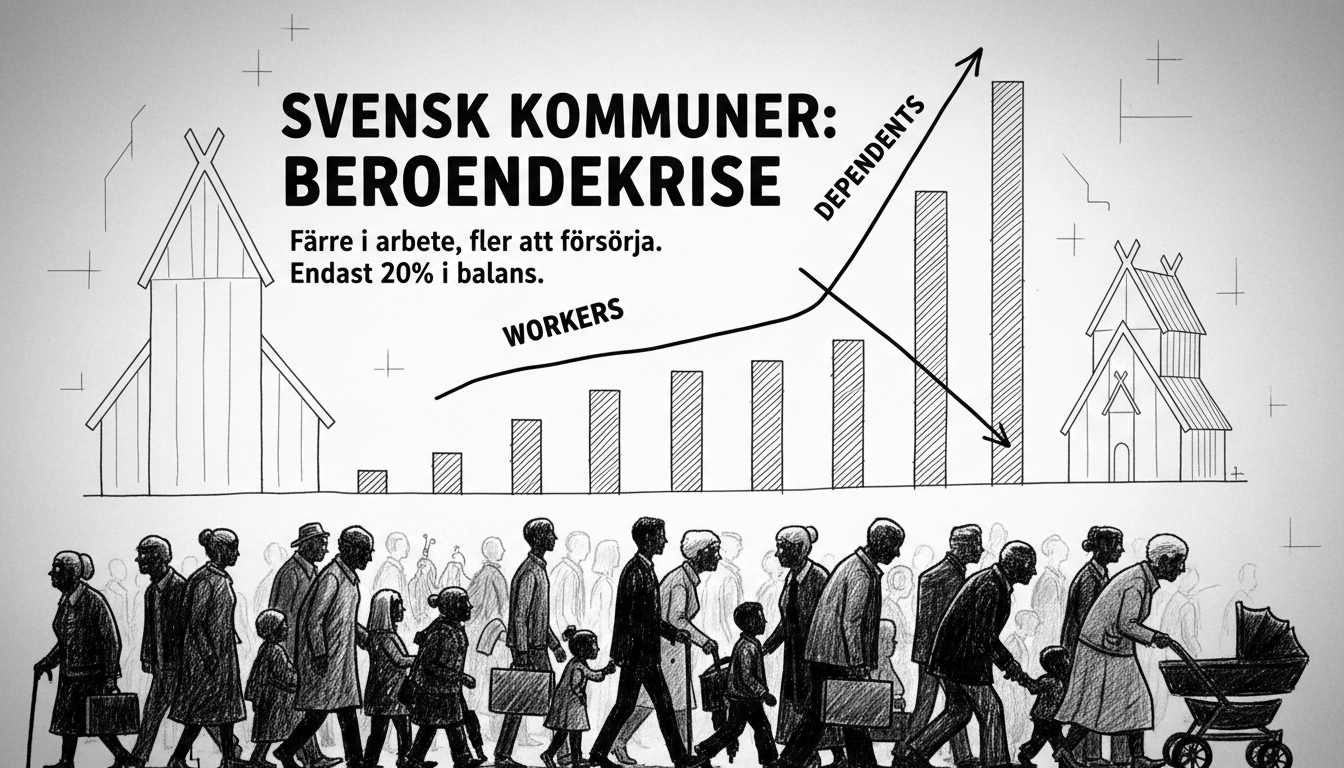
Only one-fifth of Swedish municipalities have more employed residents than dependents. New calculations reveal a troubling demographic imbalance across the country. A shrinking workforce must support growing social services through taxes and fees.
Katarina Wagman from Economic Facts confirmed the alarming trend. She stated this situation could challenge municipal finances long-term. The analysis used Statistics Sweden's continuous population surveys.
Four Swedish municipalities face particular strain for every employed worker. These communities have more young and elderly residents than working-age adults. Härnösand represents one concerning example with 1.23 dependents per employed person.
Jonas Bergström, municipal council chairman in Härnösand, acknowledged the demographic challenges. He said municipalities constantly work to address these structural issues. The problems are not new but require sustained attention.
Economic Facts identified four potential solutions to the dependency crisis. Reducing unemployment stands as the most immediate opportunity. Increasing birth rates and labor immigration offer medium-term possibilities. Productivity improvements could provide longer-term relief.
Sweden's aging population drives this structural challenge. Low birth rates combine with unemployment and reduced labor immigration. The trend appears established rather than temporary according to analysts.
The dependency ratio measures young and elderly residents per 100 employed workers. This calculation reveals the tax base supporting community services. Schools, healthcare and elderly care all depend on this balance.
Sweden's unemployment rate reached 6.8 percent in the latest reporting period. That represents 356,991 unemployed individuals nationwide. The figures highlight the employment gap worsening municipal finances.
Municipalities face difficult choices without workforce expansion. Service reductions or tax increases become inevitable alternatives. Neither option appeals to residents or local politicians.
Stockholm's business districts contrast sharply with struggling rural municipalities. The capital attracts both domestic and international talent. This concentration exacerbates regional disparities across Sweden.
The Nordic welfare model depends heavily on employment participation. High taxes fund comprehensive social services. This system strains when fewer workers support more dependents.
Swedish venture capital typically focuses on urban innovation hubs. Rural municipalities receive less attention from investors. This investment pattern reinforces regional economic divisions.
International readers should understand Sweden's decentralized governance model. Municipalities enjoy significant autonomy over local services. They rely heavily on local income taxes for funding.
The situation demands coordinated national and local responses. No single solution will address all aspects of this complex challenge. Sweden must balance immediate needs with long-term structural reforms.