
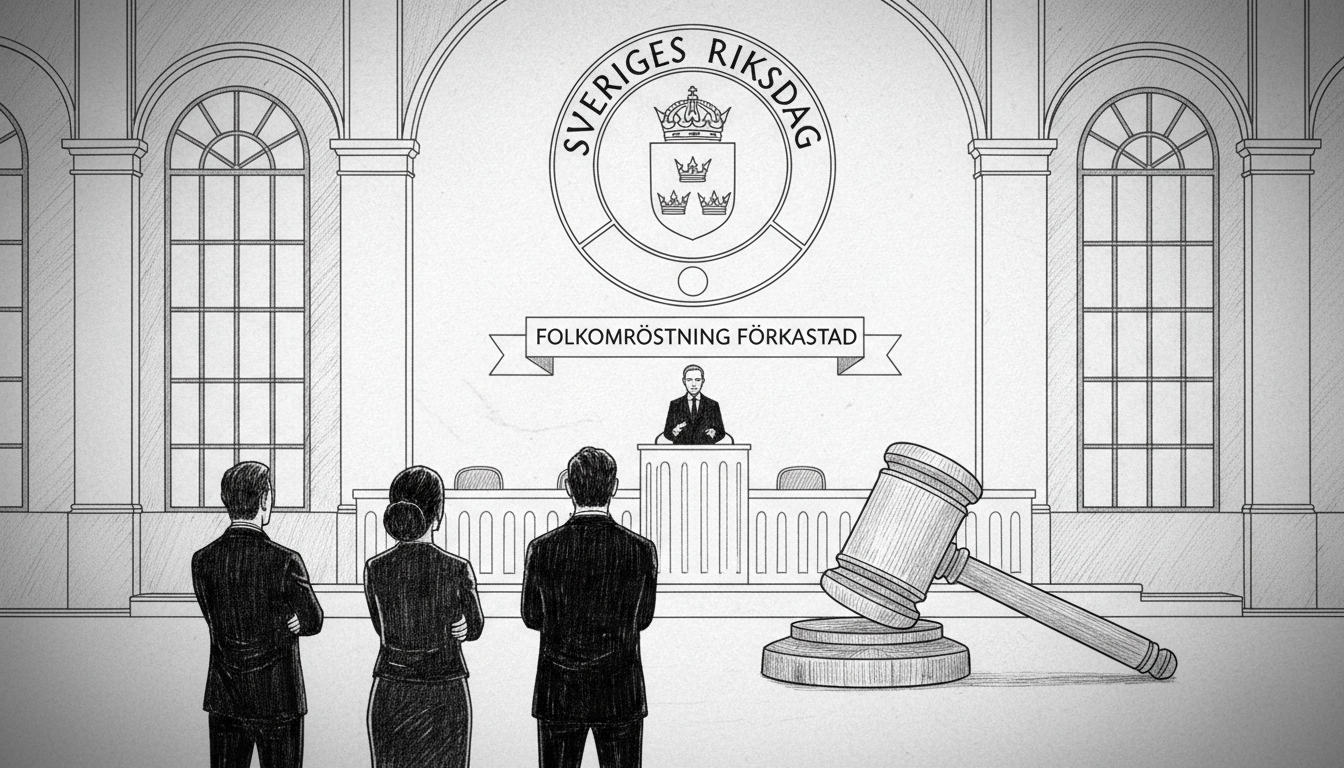
The Swedish Parliament has rejected a proposal for a national referendum on constitutional changes. The Sweden Democrats party requested the vote one week ago. They wanted Swedish citizens to decide on making constitutional amendments more difficult.
The Sweden Democrats strongly oppose the proposed constitutional changes. Their leader Jimmie Åkesson called this one of the most important decisions in recent times. He compared it to Sweden joining the EU or NATO in significance.
Åkesson argued that making the constitution harder to change does not protect democracy. He said it fails to protect the people's will and actually harms democratic processes.
The Social Democrats responded critically to the Sweden Democrats' position. Their parliamentary group leader Lena Hallengren expressed deep regret. She said the government's largest opposition party was blocking efforts to strengthen democratic structures.
This debate centers on Sweden's constitutional framework, which consists of four fundamental laws. The Swedish constitution requires a complex amendment process already. Any changes must be approved by two separate parliaments with a general election between votes.
The current proposal would make this process even more stringent. Supporters argue it would provide greater stability. Critics claim it would make the constitution too rigid and unresponsive to changing societal needs.
Sweden has a history of cautious constitutional development. The country maintains one of Europe's oldest continuous constitutional traditions. The current Instrument of Government dates from 1974, replacing the 1809 version.
National referendums are relatively rare in Swedish politics. The country has held only seven nationwide referendums since 1922. The most recent was in 2003 on adopting the euro currency, which voters rejected.
Unlike some countries, Swedish referendums are typically advisory rather than binding. Parliament retains final decision-making authority regardless of referendum outcomes.
The Sweden Democrats have positioned themselves as defenders of direct democracy. They argue that major constitutional changes should require direct public approval. Other parties maintain that representative democracy should handle such complex legal matters.
This parliamentary rejection reflects broader political tensions in Sweden's coalition government. The center-right government faces challenges balancing different party priorities. Constitutional questions often expose fundamental disagreements about governance philosophy.
Sweden's political landscape has become increasingly fragmented in recent years. More parties now hold parliamentary seats than during most of the 20th century. This makes constitutional changes particularly challenging to negotiate.
The debate also touches on Sweden's relationship with international organizations. Åkesson's comparison to EU and NATO membership highlights how constitutional questions connect to broader geopolitical positioning.
Sweden's constitution already contains strong protections for fundamental rights and democratic principles. The question remains whether making amendment procedures stricter would enhance or undermine these protections.
Political analysts note that constitutional debates often serve as proxies for wider political conflicts. This discussion reflects ongoing tensions between traditional parliamentary processes and calls for more direct public involvement in major decisions.
The rejection means the constitutional amendment proposal will proceed through normal parliamentary channels. It will require approval from two successive parliaments following the 2026 general election to become law.
This outcome maintains Sweden's current constitutional amendment process. It continues the tradition of handling fundamental law changes through representative democracy rather than direct public votes.
The decision represents a victory for established parliamentary procedures over populist calls for direct democracy. It also demonstrates the continuing strength of traditional political norms in Swedish governance.
As Sweden continues navigating complex political realignments, constitutional questions will likely remain contentious. The balance between stability and flexibility in governance structures remains a central challenge for modern democracies.