
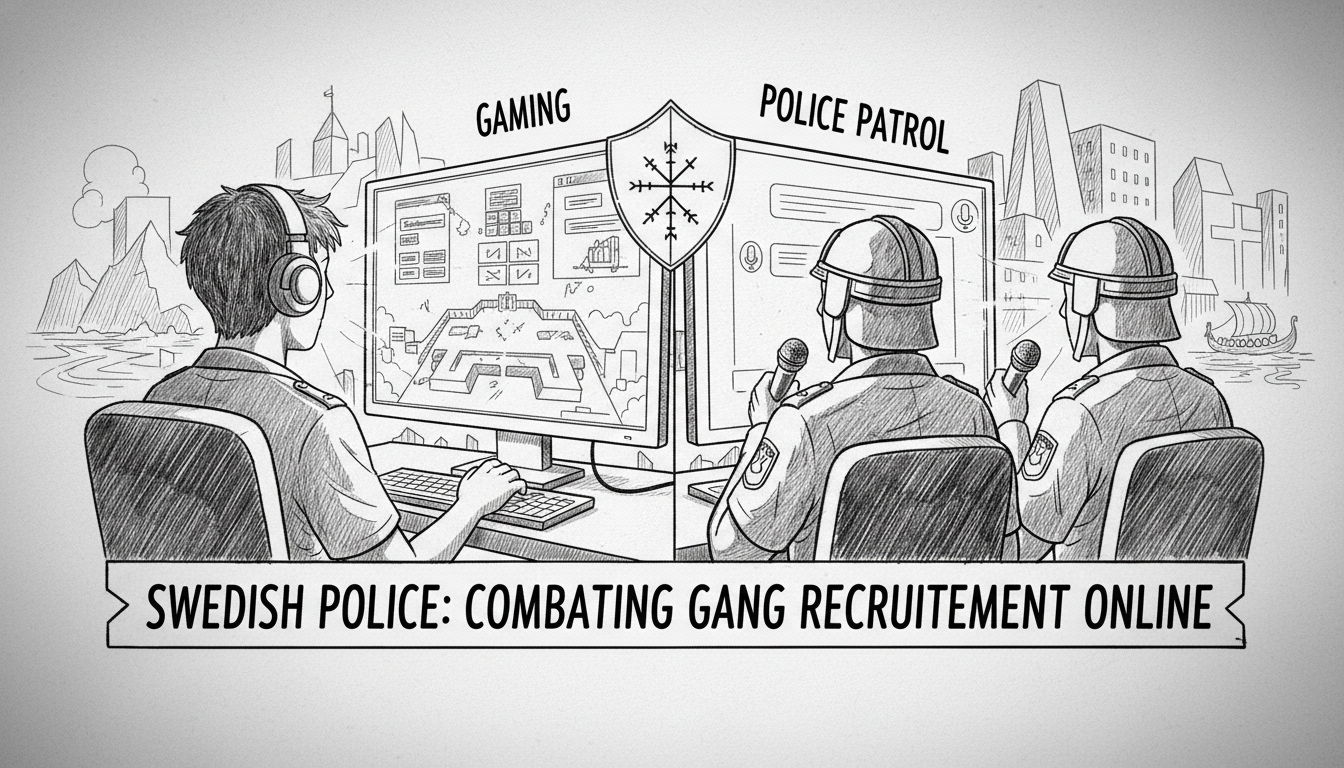
At the massive Dreamhack festival in Stockholm's Älvsjö district, an unusual sight unfolds among the gaming stations. Four uniformed police officers sit side by side, controllers in hand, playing Counter-Strike with young gamers. This isn't just for fun—it's part of Sweden's new strategy to combat criminal gang recruitment in online spaces.
Police officer Magnus Björn-Bentzen explains their approach. "We want to get close and lower the threshold for young people to contact us," he said in a statement. The gaming convention marks the launch of a nationwide initiative where 15 officers will begin online patrols. Their mission focuses on preventing grooming, hate crimes, and the recruitment of children into criminal gangs.
The strategy represents a significant shift in Swedish policing methods. Officers will livestream several hours weekly on platforms like Twitch and Discord, meeting teenagers in their digital environments. "It should be a safe space for them," Björn-Bentzen noted. "Parents might feel more secure knowing their child is playing in police-monitored channels."
This initiative reflects Sweden's broader challenges with gang violence and youth recruitment. In recent years, criminal networks have increasingly targeted vulnerable young people through online games and social platforms. The police presence in these digital spaces aims to build trust and provide alternative contact points beyond traditional police stations.
The timing coincides with growing concerns about youth safety in Stockholm's suburbs. Areas like Rinkeby, Husby, and Tensta have seen increased gang activity, making digital outreach particularly relevant. By engaging young people where they spend their time, police hope to disrupt recruitment patterns before they take root.
Some might question the effectiveness of gaming patrols, especially since much criminal communication happens in private messages. Björn-Bentzen acknowledges this reality. "When we patrol in police cars, we contact everyone but can't reach people inside buildings," he explained. "We're there so people will come to us with information about what happens in private chats."
The police are working on verification methods to ensure gamers know they're interacting with real officers. "There should be no doubt that you're dealing with the police," Björn-Bentzen emphasized.
This innovative approach shows how Swedish authorities are adapting to new social realities. As gaming culture becomes increasingly mainstream, particularly in tech-forward Sweden, law enforcement must evolve its methods. The initiative also demonstrates Sweden's progressive stance on crime prevention, focusing on building relationships rather than purely reactive policing.
For international observers, this offers insight into Swedish societal trends and the country's hands-on approach to social integration. The gaming patrols represent just one facet of Sweden's comprehensive strategy to address complex social challenges through community engagement and digital innovation.
What happens next will be closely watched. If successful, these digital patrols could expand, potentially becoming a model for other countries facing similar challenges with youth crime and online recruitment. The coming months will reveal whether this bridge between gaming culture and law enforcement can effectively protect vulnerable young Swedes.