
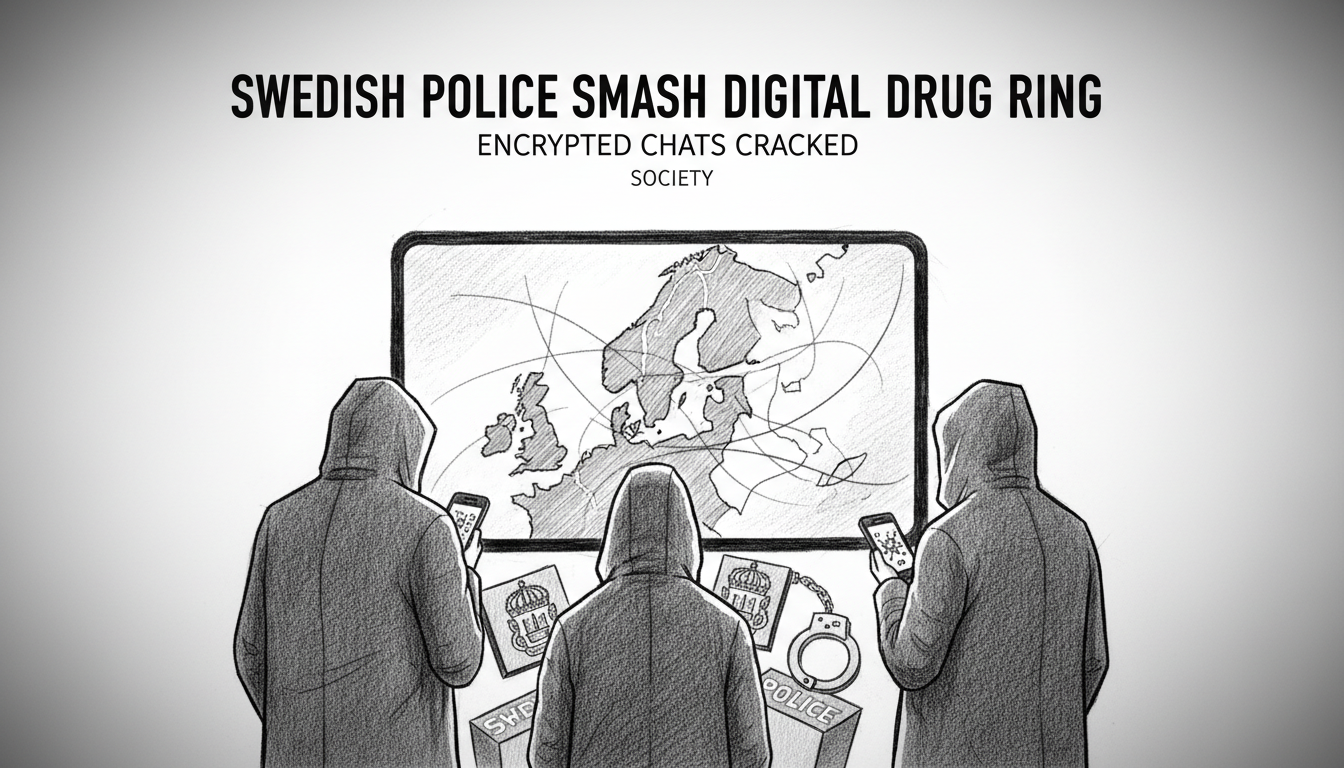
Swedish authorities have dismantled a significant narcotics operation in northern Sweden through an elaborate undercover investigation. Police spent months infiltrating encrypted chat groups used by the criminal network, leading to the prosecution of three individuals in their twenties. These suspects are believed to hold high-ranking positions within the organization known as the Dalen network.
Prosecutor Stina Stener explained the operation's scope in a statement. "Our assessment indicates they controlled operations throughout Norrland and other Swedish regions," she said. "They occupied leadership roles within this criminal structure."
The investigation involved sophisticated surveillance techniques. Police secretly recorded conversations from one suspect's apartment, capturing discussions with an alias called "Santa." Authorities identify this figure as the network's alleged top leader, Mikael "Greken" Ahlström Tenezos. The recordings revealed how suspects worked under Greken's direction and discussed delivering substantial sums to network leaders.
One chilling exchange from the surveillance operation captured a suspect's fear. "Santa wants to take my life and our parents' lives," the individual said. "He demands millions from us if we fail to deliver money to him."
Undercover officers created criminal personas to infiltrate the network's encrypted chat groups. They established direct contact with those commissioning criminal activities. "Police dedicated extensive time to identifying the real people behind the aliases controlling this organization," Stener noted.
Two defendants face charges of particularly serious drug offenses. Only two individuals in Västerbotten county have previously been convicted for this severe crime category earlier this year. The third suspect faces multiple charges including serious drug crimes.
All accused individuals deny the allegations and dispute being the persons behind the aliases police attribute to them. Defense lawyer Adam Borg outlined his strategy. "In my case presentation, I will highlight numerous circumstances showing why the prosecutor's claims are incorrect," he stated.
This case reflects Sweden's ongoing challenges with organized crime and drug trafficking. The sophisticated use of encrypted communications by criminal groups has prompted equally advanced police responses. Such investigations demonstrate how Swedish authorities are adapting to digital criminal methodologies while confronting narcotics distribution networks that span multiple regions.
The outcome could influence future police strategies against organized crime throughout Scandinavia. Legal observers note these cases test Sweden's judicial approach to complex digital evidence and undercover operations. The verdicts may set precedents for handling similar investigations across the Nordic region.
International readers might find parallels with encrypted communication cases in their own countries. Sweden's balanced approach between privacy concerns and law enforcement needs offers comparative insights. The case also highlights how Nordic countries confront transnational criminal networks operating across borders.