
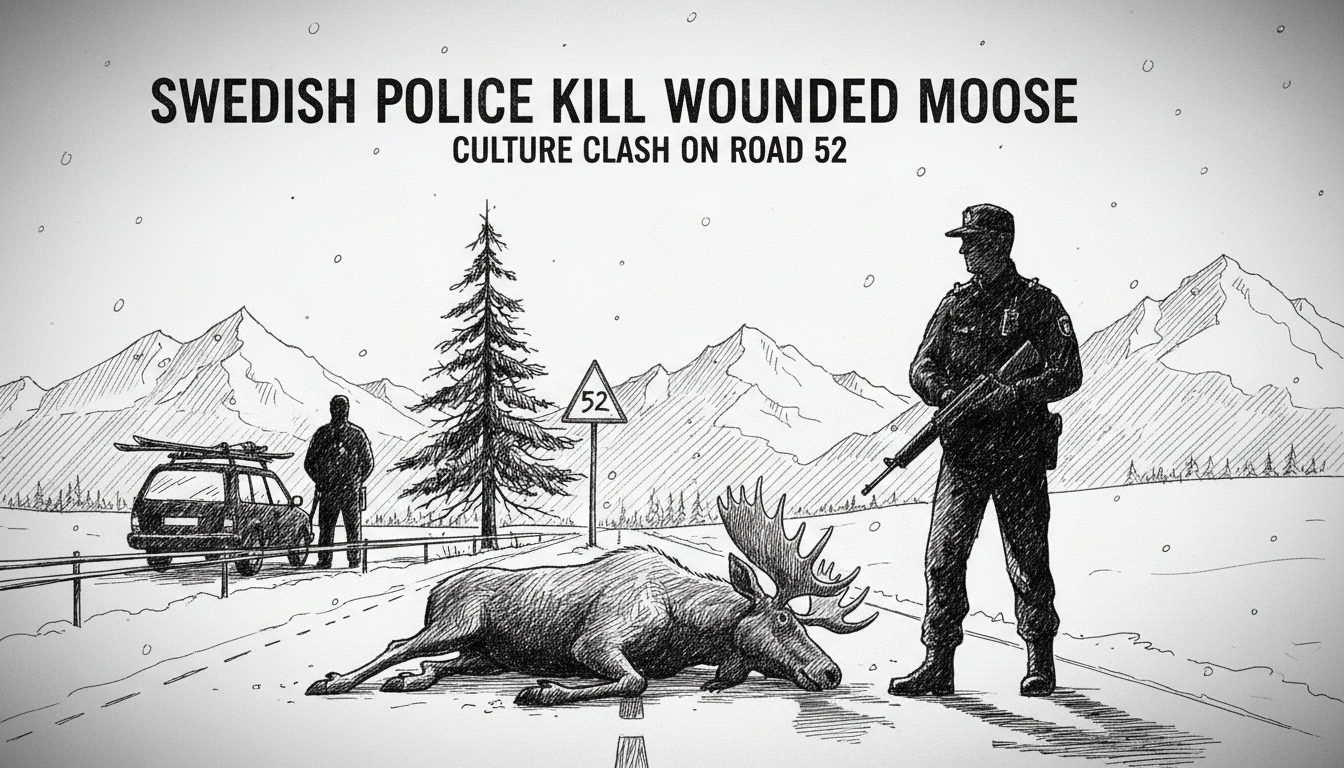
Swedish police officers used a service weapon to euthanize a severely injured moose on a main road near Nyköping last night. The decision has ignited a quiet discussion about Sweden's unique and often fraught relationship with its wilderness. At 9:30 PM, a car collided with the large animal on Route 52. A nearby patrol responded. Confronted with the moose's suffering and a growing traffic queue, one officer made a call. They ended the animal's life with a pistol. "A hunter was called," said police spokesperson Linus Maxe from the East region. "But an assessment was made that the moose had suffered so much that they didn't want to wait. They apparently managed to do it themselves in a good way."
A Routine Tragedy on Rural Roads
This scene, while dramatic, is not uncommon in a nation where vast forests meet an extensive road network. Collisions with wildlife are a regular feature of Swedish life, especially in autumn during the moose mating season. According to the Swedish National Road and Transport Research Institute, thousands of incidents involving large animals like moose, deer, and wild boar are reported annually. The stretch of Route 52 where this happened is a typical risk zone—a road connecting communities, cutting through wooded areas that are prime moose habitat. For the officers on scene, protocol and immediate animal welfare collided. Swedish law permits police to euthanize severely injured animals to end suffering, though the preference is always for a hunter with a more powerful rifle. "This approach is 'not preferable'," Maxe noted, "but we have the right to do it this way." He commended the officers for resolving a difficult situation effectively, highlighting the unexpected skills required of police in the Swedish countryside.
The Moose in the Swedish Soul
To understand the resonance of this event, one must grasp the moose's cultural standing. It is more than just an animal; it's a national symbol, a source of culinary tradition, and a pillar of a multi-billion-krona hunting industry. The annual moose hunt is a major social event in many communities, from Småland to Norrland. Yet, it also represents a potent danger. A collision with an adult moose, which can weigh over 500 kilograms, is catastrophic. The animal's long legs often cause it to collapse through the windshield upon impact. This inherent duality—revered resource and deadly hazard—frames every encounter. In Stockholm's pubs or Malmö's cafes, stories of near-misses with älg are common. The Swedish Transport Administration actively works to reduce collisions, investing in fencing, reflectors, and warning signs. But in a country with such abundant wildlife, zero risk is impossible. The incident on Route 52 is a raw example of the moment this calculated risk becomes a grim reality.
Between Protocol and Compassion
What does the training for such a moment look like? Swedish police receive instruction on handling animals in distress, including the use of firearms for euthanasia. The goal is a quick, humane end when no other option exists. Wildlife management experts stress the importance of this rapid response. "Every minute of prolonged suffering counts," explains Lars Forsberg, a retired wildlife biologist I spoke with. "The ethical imperative is to end severe trauma as swiftly as possible, whether the agent is a police officer with a pistol or a hunter with a rifle. The tool is secondary to the intent and skill." This perspective places the Nyköping officers' actions in a clearer light. Faced with a suffering creature and potentially volatile traffic conditions, they applied both their training and their judgment. The car's occupants escaped with minor injuries, a fortunate outcome in such crashes. The officers then dealt with the aftermath, a task far outside typical urban policing.
A Shared Burden in a Nature-Close Nation
The story also underscores a unique form of Swedish collaboration. The police, hunters' associations, and veterinary services often operate in a coordinated, if informal, network to manage wildlife crises. Hunters are frequently on-call for precisely these situations. The fact that the police proceeded before the hunter arrived suggests a judgment call about the severity of the animal's injuries. This interplay between state authority and civil society is a hallmark of Sweden's approach to nature management. It reflects a societal consensus that living close to nature entails shared responsibility. From the design of safer roads to the training of first responders, it's a system built on lessons learned from thousands of past collisions. Yet, each event is deeply local. For the responding officers, it was a challenging night-duty call. For the driver, it was a terrifying brush with danger. For the moose, it was a fatal end on a tarmac strip through its territory.
Looking Beyond the Single Event
While this single act of euthanasia was lawful and arguably merciful, it invites broader questions. How do we better share space with wild animals in an increasingly fragmented landscape? Are mitigation efforts keeping pace with both traffic volume and wildlife populations? Experts point to emerging technologies, like AI-powered animal detection systems, but also to simple, proven measures like more wildlife bridges and tunnels. The conversation in Sweden is slowly shifting from mere collision prevention to ecological connectivity. This incident on a dark road is a small, sad link in that much larger chain. It reminds us that Swedish society is continuously negotiating its contract with the natural world. That contract demands respect, caution, and sometimes, a heavy responsibility in the beam of headlights. The next call will surely come. The question is whether we are doing enough to ensure fewer end with the sound of a service pistol in the night.
The moose is an icon, but its reality is one of flesh, bone, and vulnerability. Last night on Route 52, that reality intersected with human infrastructure and human duty. The officers made a hard choice in the moment. As a society, we are faced with harder, longer-term choices about how to prevent such moments from happening at all. Can Sweden's famous engineering prowess and deep environmental ethos create safer passages for both its people and its majestic, wandering moose? The answer will shape not just statistics, but the very character of the Swedish landscape.