
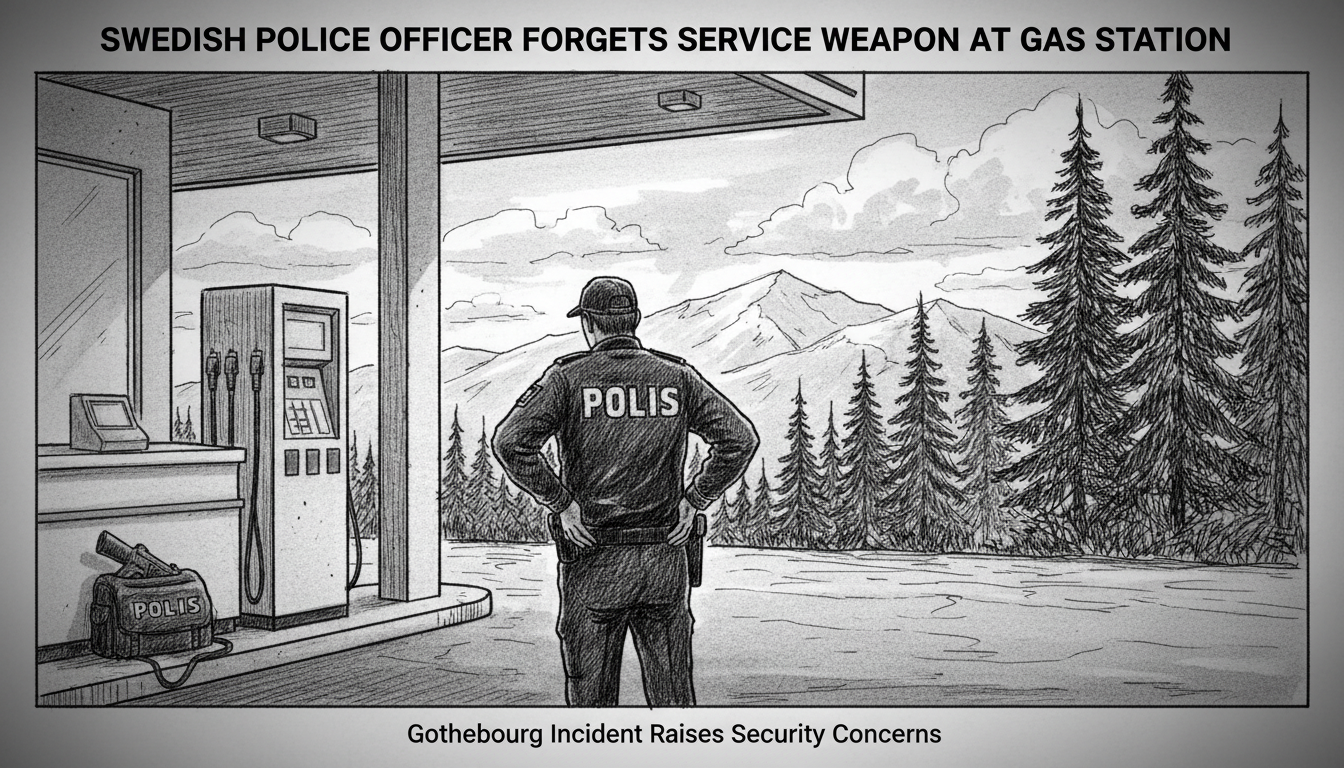
A Swedish police officer left her duty bag unattended at a gas station. The bag contained her service weapon, several magazines, and pepper spray. Authorities now recommend a salary deduction as punishment. This incident occurred in the Gothenburg area, sparking a public conversation about police accountability and public safety in Sweden.
For international readers, this story touches a nerve in Swedish society. Sweden maintains strict firearm regulations for civilians. Police officers carry weapons as part of their duty, but their handling is governed by rigorous protocols. Forgetting a loaded service weapon in a public place like a gas station is a severe breach. It raises immediate questions about the officer's training and the internal checks within the force. The recommended punishment, a salary deduction, is a formal disciplinary measure. It reflects the system's attempt to balance accountability with retaining experienced personnel.
This is not an isolated event in Swedish policing. Similar lapses have occurred in the past, often leading to internal investigations and public scrutiny. Each incident chips away at the high level of trust Swedes traditionally place in their police. In neighborhoods like Majorna in Gothenburg or Södermalm in Stockholm, residents expect officers to be exemplary. The conversation often turns to the immense pressure on police. They manage complex issues, from gang violence in certain suburbs to everyday public order. Stress and human error are real factors, but the public expects zero tolerance for weapon security failures.
What does this mean for the average person in Sweden? For locals, it's a reminder that systemic safeguards can fail. For expats and international observers, it highlights a tension within Swedish society. The country is known for its stability and order, yet its institutions face modern strains. The police force is navigating increased demands. The straightforward recommendation of a pay cut shows the process is working, but the error itself is troubling. It is a clear reminder that no system is perfect, and constant vigilance is required from those entrusted with public safety.
The officer's fate now rests with the internal disciplinary board. Their decision will be closely watched. It will signal how the Swedish police balance discipline with support for their staff. This story, while specific, connects to broader Swedish society trends. It involves trust, regulation, and the human factor within a respected institution. The hope is that this incident leads to reinforced training and procedures, preventing any future recurrence at a gas station or anywhere else.