
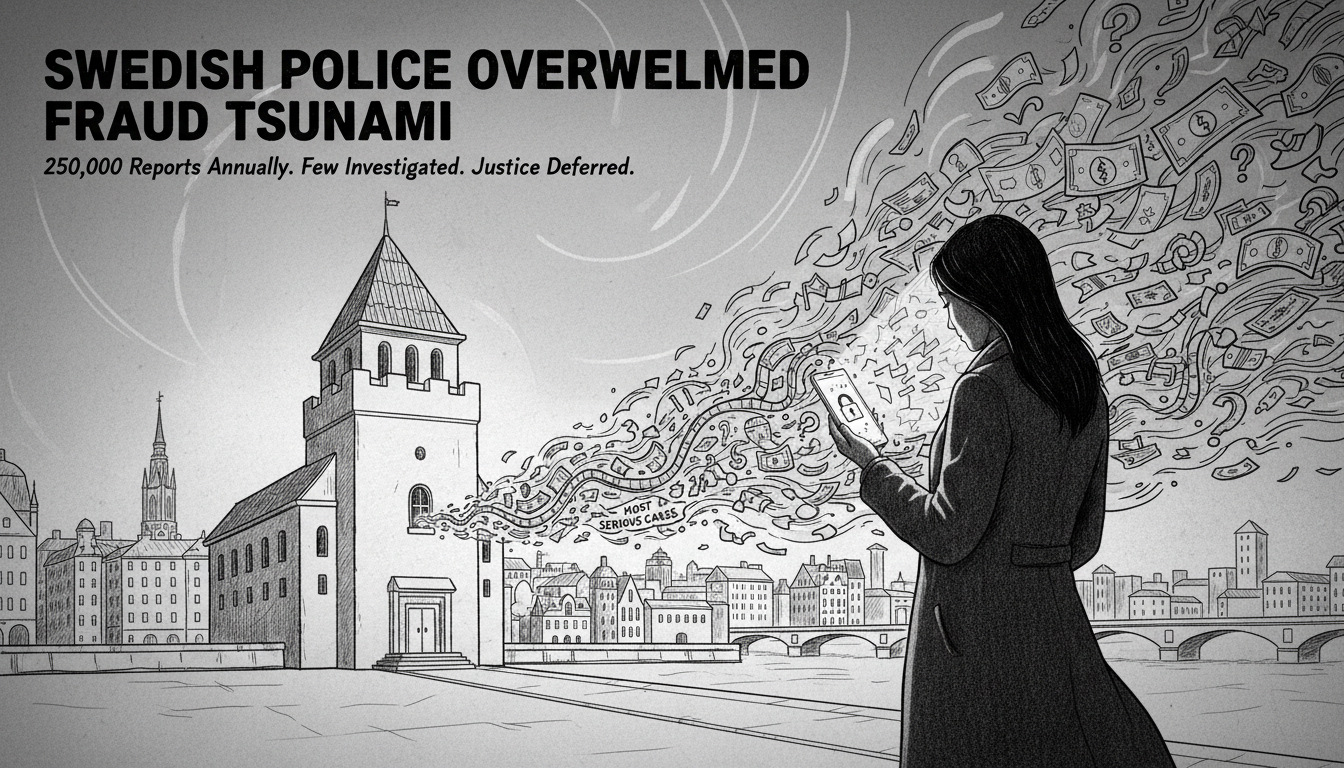
Imagine filing a police report for fraud and hearing nothing back. For Zuzannah Gun Lidekrans, this is a familiar reality. She has filed three separate reports. None have been investigated. Her experience reflects a massive challenge in Swedish society today. Around 250,000 fraud reports land with Swedish police every year. A staggering 90 percent of these are internet-related. Yet most cases never see an investigator's desk.
Jan Olsson, a criminal commissioner with the national IT crime center, explains the harsh reality. 'We can do the most advanced digital forensics,' he said in a statement. 'But it is a question of priorities. Police can only focus on the worst crimes. The rest end up at the bottom of the list.' The sheer volume forces difficult choices. Cases deemed less significant are often closed immediately. These investigations demand substantial police resources.
The problem deepens when crimes cross borders. If a fraudster operates from abroad and funnels money to a foreign bank account, the case becomes a legal maze. Police must engage courts, prosecutors, and law enforcement in that specific country. 'These countries are also hit by fraud to the same extent as we are,' Olsson notes. 'So you realize it is completely impossible to investigate all of these. It just cannot be done.'
This trend speaks to a broader tension in Swedish society. Sweden is a digital leader with high internet penetration and cashless adoption. This creates a fertile ground for online crime. The national ethos of trust and open systems, celebrated in Stockholm's tech hubs like Kista and the innovative spaces of Södermalm, is being tested. The annual Lucia celebrations or the Midsummer gatherings feel a world away from these anonymous digital thefts.
For victims, the advice remains to always file a report. Even if a stolen identity continues to be misused after blocking a passport, a report creates a crucial record. It helps authorities map the scale of the problem. The current situation, however, leaves many feeling the system is failing. It highlights a gap between Sweden's advanced digital lifestyle and the capacity of its institutions to protect it. The police are effectively triaging, leaving thousands of citizens without recourse. This is the new normal in one of the world's most connected societies, where convenience and risk are increasingly two sides of the same coin.