
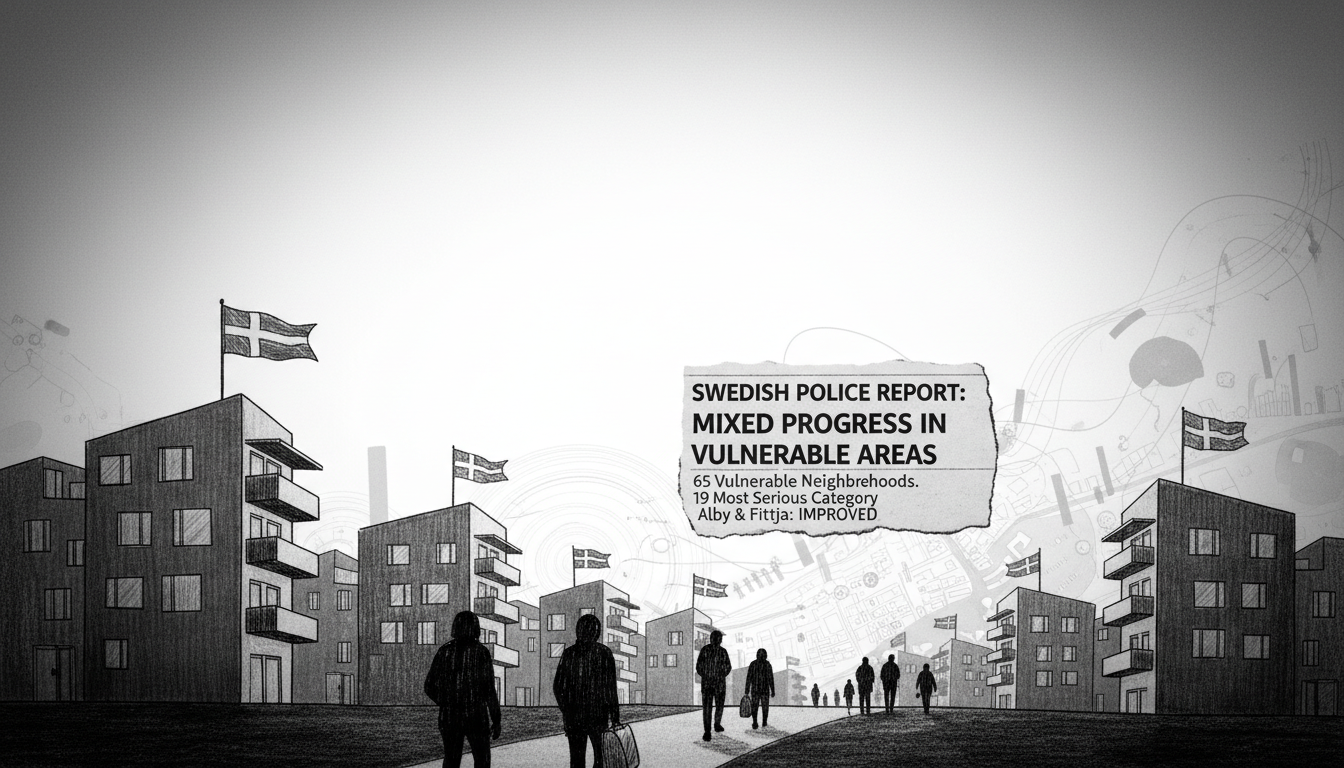
A new police report paints a complex picture of Sweden's so-called 'vulnerable areas.' The number of neighborhoods classified as vulnerable has increased to 65. Within that total, 19 areas are now labeled 'particularly vulnerable,' the most serious category. Police officials say the situation in these neighborhoods has generally improved, even as the list grows. This apparent contradiction stems from how the areas are now subdivided and mapped. The report highlights positive trends in several suburbs, including Alby and Fittja in Botkyrka municipality, southwest of Stockholm. Authorities note conditions there have gotten better, but not enough to remove the 'particularly vulnerable' designation. This ongoing classification affects daily life for residents and shapes national debates on integration and urban policy.
For international readers, understanding 'utsatta områden' is key to grasping modern Swedish society. These are neighborhoods where criminal networks can challenge the state's authority, impacting social services and community safety. The list, first published several years ago, has become a political lightning rod. It influences everything from real estate prices in Stockholm to national election debates. The latest assessment suggests targeted interventions might be working in some places. Progress in Alby and Fittja, for example, could point to effective local policing and social investment. Yet the expansion of the overall list indicates deep-seated challenges persist across Swedish cities.
What does this mean for Stockholm and Swedish society trends? The report reflects a nation grappling with the consequences of rapid demographic change and segregation. Many vulnerable areas are suburbs built during the 'Million Programme' housing boom of the 1960s and 70s. They were designed for a different Sweden. Today, they are often the first home for new immigrants. Success here is measured in small steps: safer public spaces, more trust in police, and better opportunities for youth. The police assessment is cautiously optimistic, but residents in these areas often speak of a gap between official reports and lived reality. They want sustained investment in schools, jobs, and community centers, not just police metrics.
The human angle is often lost in these reports. In neighborhoods like Alby, community organizers work tirelessly to create positive alternatives for young people. They host football tournaments in the local park and homework help sessions at the library. These efforts build the social fabric that official policy alone cannot. The police acknowledge this, noting improvement requires partnership with local actors. For Sweden, the path forward involves balancing security with social inclusion. The latest map is not just a crime report. It is a snapshot of a society deciding what kind of future it wants to build in its diverse urban centers. The real test will be whether next year's report shows more areas graduating from the list entirely.