
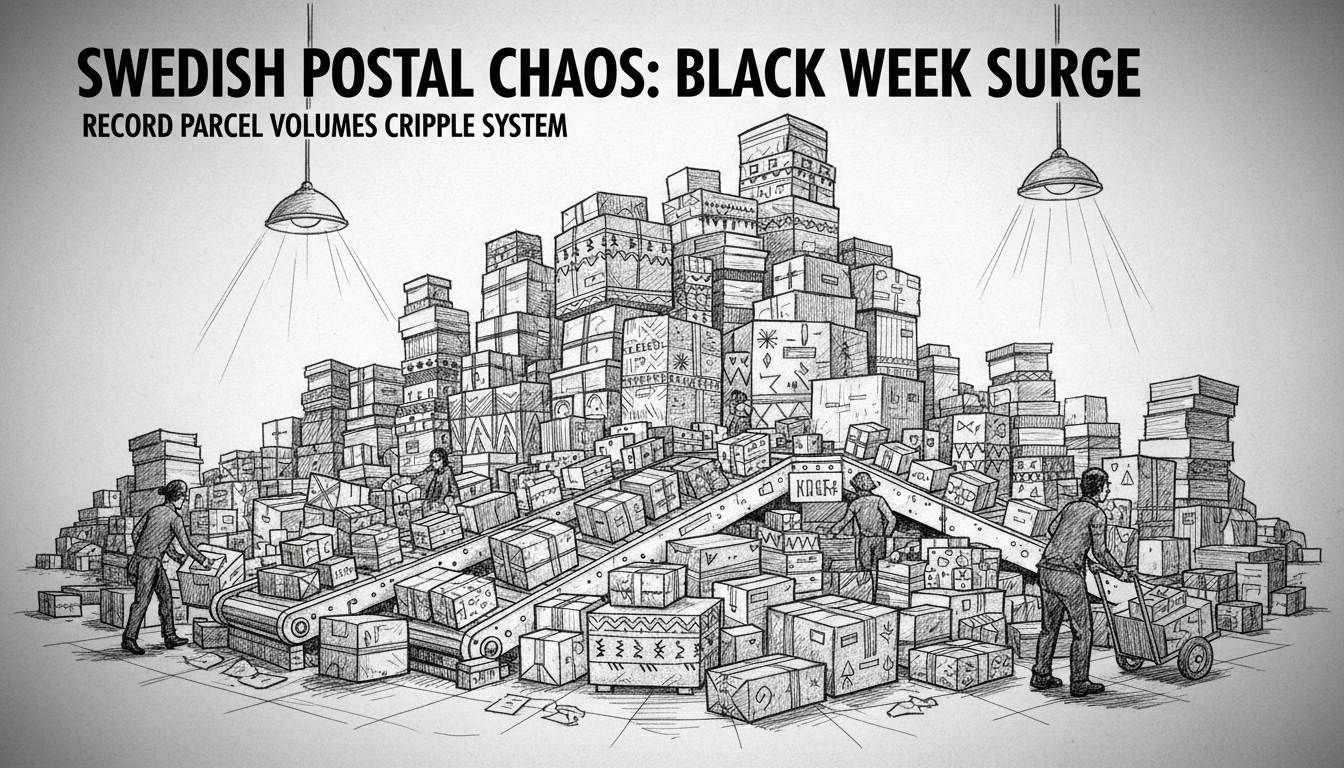
The packages are piling up in Jönköping. Sweden's postal system is facing a familiar but massive challenge in the wake of Black Week, the Nordic answer to Black Friday. At one of the country's largest sorting terminals, the scene is one of controlled chaos. Extra staff work around the clock to manage the flood of parcels ordered during the major sales event.
Per Sahlin, the terminal manager at the Torsvik facility, explained their strategy. He said in a statement that planning for this peak period begins as early as spring. The team uses a detailed 'Peak Plan' to forecast volumes and identify needed resources. This year, staffing at the Jönköping terminal increased by about 30 percent. The facility now operates for 22 hours a day instead of the usual 16.
'We review our forecasts and identify what measures are needed, both in terms of staff and traffic,' Sahlin said. 'Records will be broken this year.'
This annual surge is a direct reflection of Sweden's deep and rapid embrace of e-commerce. While Swedes have long valued in-person shopping at local markets and design stores, online buying has become a dominant force. The pressure on logistics highlights a society balancing its digital convenience with physical infrastructure limits. For international readers, it's a window into how even highly efficient Nordic systems strain under consumer demand.
To handle future growth, a new national terminal is under construction in Vaggeryd Municipality. It is slated to become Sweden's largest postal hub upon completion. This expansion signals a long-term bet on continued growth in parcel delivery, a trend accelerated by the pandemic and now solidified by annual shopping rituals like Black Week.
For residents in Stockholm neighborhoods like Södermalm or Vasastan waiting for deliveries, the message is one of patience. The backlog from the national shopping spree will take time to clear. This event is more than a logistics story. It is a cultural snapshot of modern Sweden, where traditional lagom—the concept of 'just the right amount'—meets the global frenzy of consumer sales. The system is adapting, but the sheer volume of packages shows a society fully engaged in the digital marketplace.
The real test is whether the planned infrastructure can keep pace with Sweden's evolving shopping habits. The new Vaggeryd terminal represents a major investment. Its success will determine if future Black Weeks lead to celebration for shoppers and postal workers alike, or just more stress on the system.