
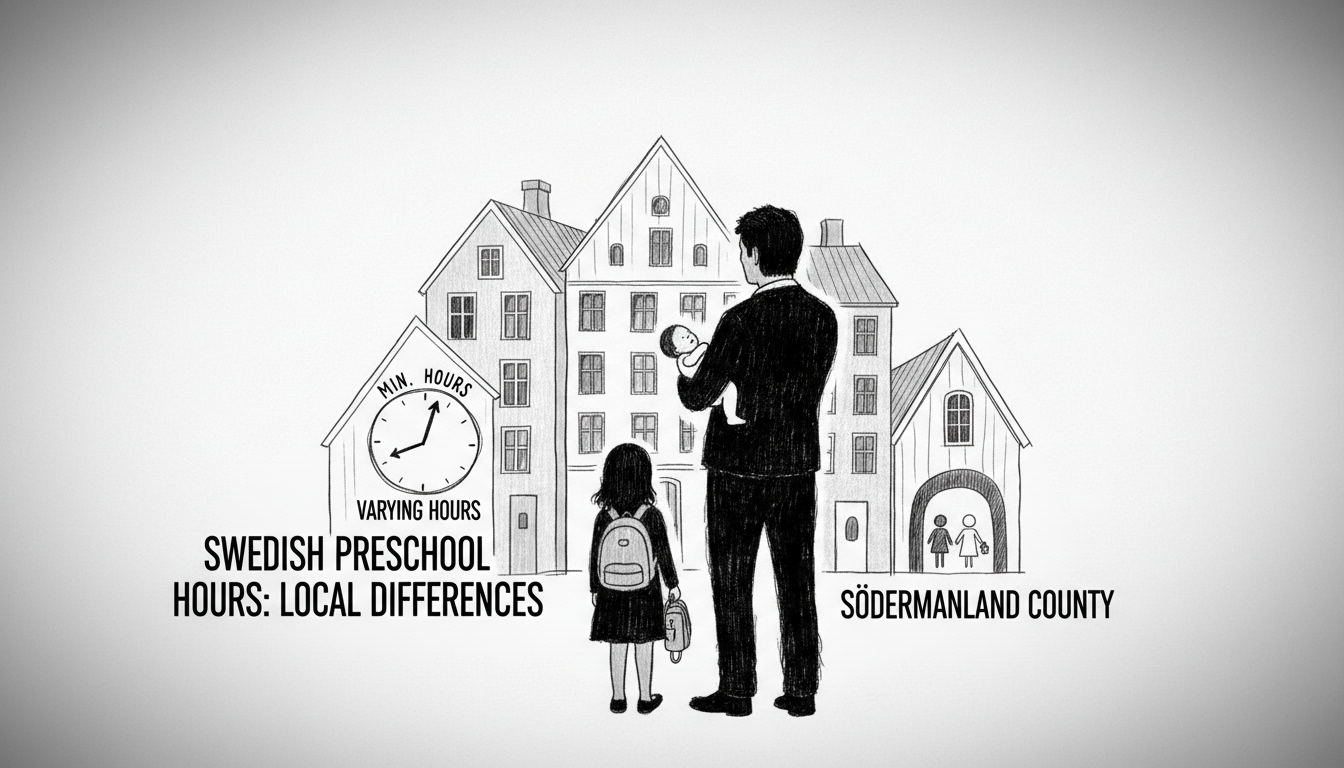
Walking through Stockholm's Södermalm district, I watched parents navigating strollers through cobblestone streets while older siblings played in preschool yards. This daily scene reflects a crucial Swedish family policy now unfolding across Södermanland County. When new babies arrive, municipalities determine how many preschool hours older siblings receive during parental leave.
The national education law guarantees a minimum of three hours daily or fifteen hours weekly. But local councils decide whether to extend this support. In Södermanland's municipalities, families encounter different approaches. Some areas provide exactly fifteen hours weekly, distributed across three days after families return home with newborns. Others offer more generous arrangements.
Several municipalities provide twenty hours weekly, with schedules like Tuesday through Friday sessions. Children can often continue their previous attendance patterns for several weeks after their sibling's birth. One community even provides twenty-five hours weekly, among the most generous offerings in the region.
This patchwork system reflects Sweden's decentralized approach to family policies. Municipal autonomy creates both flexibility and inconsistency. Families in neighboring towns might experience completely different support levels during this transitional period.
Swedish culture strongly values both parental leave and early childhood education. The system aims to balance newborn care with maintaining older children's routines. Preschool provides stability while parents adjust to expanded family responsibilities.
International readers might find Sweden's systematic approach noteworthy. The country invests significantly in family support systems, recognizing that early childhood transitions affect broader societal wellbeing. These policies reflect Nordic commitments to work-life balance and child development.
Local parents I spoke with expressed mixed feelings about the variations. Some appreciated the guaranteed minimum hours, while others wished for more consistency across municipal boundaries. The system works reasonably well but reveals how local implementation creates different experiences for similar families.
As Sweden continues refining its family policies, these preschool hour allocations represent ongoing balancing acts. Municipalities weigh budgetary constraints against family needs, creating the current mosaic of support levels across Södermanland.