
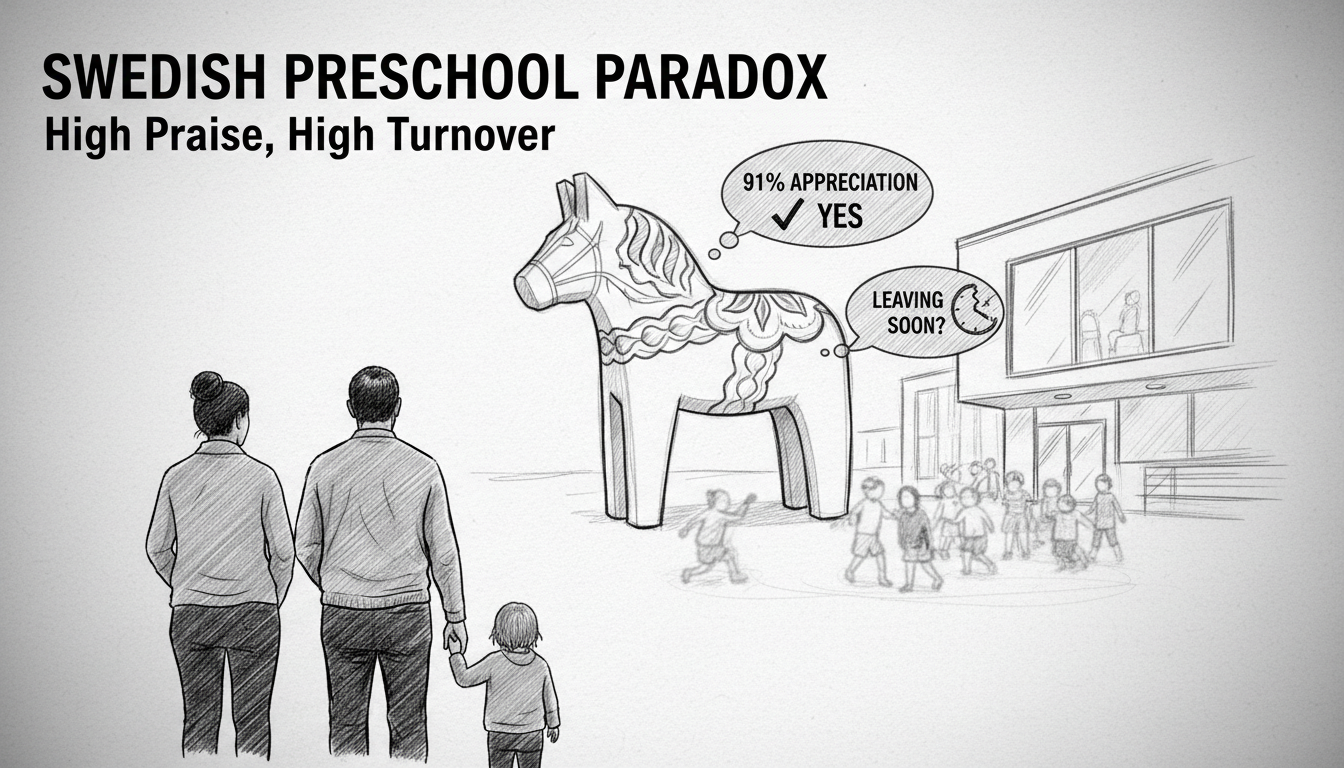
A new international study reveals a complex picture of life in Swedish preschools. Nearly all staff feel appreciated by the children's parents. Yet many believe they will leave the profession within five years. This is the central finding from a major survey of Swedish early childhood education workers.
The study, called TALIS, gathered responses from nearly 1,100 preschool employees across Sweden. It shows that 91 percent of staff report overall job satisfaction. They clearly enjoy their work. But a looming sense of burnout and career change hangs over the sector. This contradiction sits at the heart of Swedish society trends in education and care work.
To understand this, you need to see a Swedish preschool in action. Visit a typical facility in neighborhoods like Södermalm or Vasastan. You will find a focus on play, outdoor learning, and democratic values. The staff, known as 'förskollärare', are highly educated. They are central figures in the Swedish model that supports dual-income families. Parental trust is a cornerstone of this system. So the 'A grade' from parents is a vital sign of social health.
But why the planned exodus? The answer lies in the pressures behind the scenes. Swedish preschools have faced growing demands for years. Groups are larger. Administrative tasks have increased. The pay, while decent, often does not match the emotional and physical workload. Many staff feel the societal respect for their profession has not kept pace with its complexity. This is a quiet crisis brewing in a system the world often admires.
This trend has real implications. High turnover disrupts the stable, trusting relationships young children need. It creates a revolving door of caregivers. This can affect the quality of the famous Swedish early childhood experience. For international families moving to Stockholm, understanding this dynamic is key. The preschool system is a pillar of Swedish lifestyle, but its foundations are under strain.
The report should serve as a wake-up call. Swedish culture news often highlights innovation and design. Yet the people caring for the next generation are considering leaving en masse. The high satisfaction shows the job's core is rewarding. The planned departure shows the conditions around that job are becoming unsustainable. Solving this will require more than gratitude. It will need concrete improvements in working conditions and professional recognition to keep these dedicated educators in the classrooms where they are so clearly valued.